
Researchers Wire a Welding Robot to Open 5G, Hitting a Bandwidth Wall
A new open-source 5G testbed streams 30MB point-cloud frames from a welding cobot to edge-AI servers, testing semantic compression trade-offs.
 Pro
Takeaways
- An end-to-end O-RAN 5G testbed for connected industrial robotics is presented, demonstrated on an autonomous welding cobot.
- Raw 3D perception generates 30 MB per frame and 1.2 to 2.4 Gbps uplink, with 95 to 99 percent traffic asymmetry.
- The stack combines srsRAN DU and CU, Open5GS core, FlexRIC, and USRP B210 radios.
- Robotic side uses a Zivid 2+ camera, FANUC CRX-10iA cobot, ROS 2 with MoveIt, and RTX 4070 GPUs.
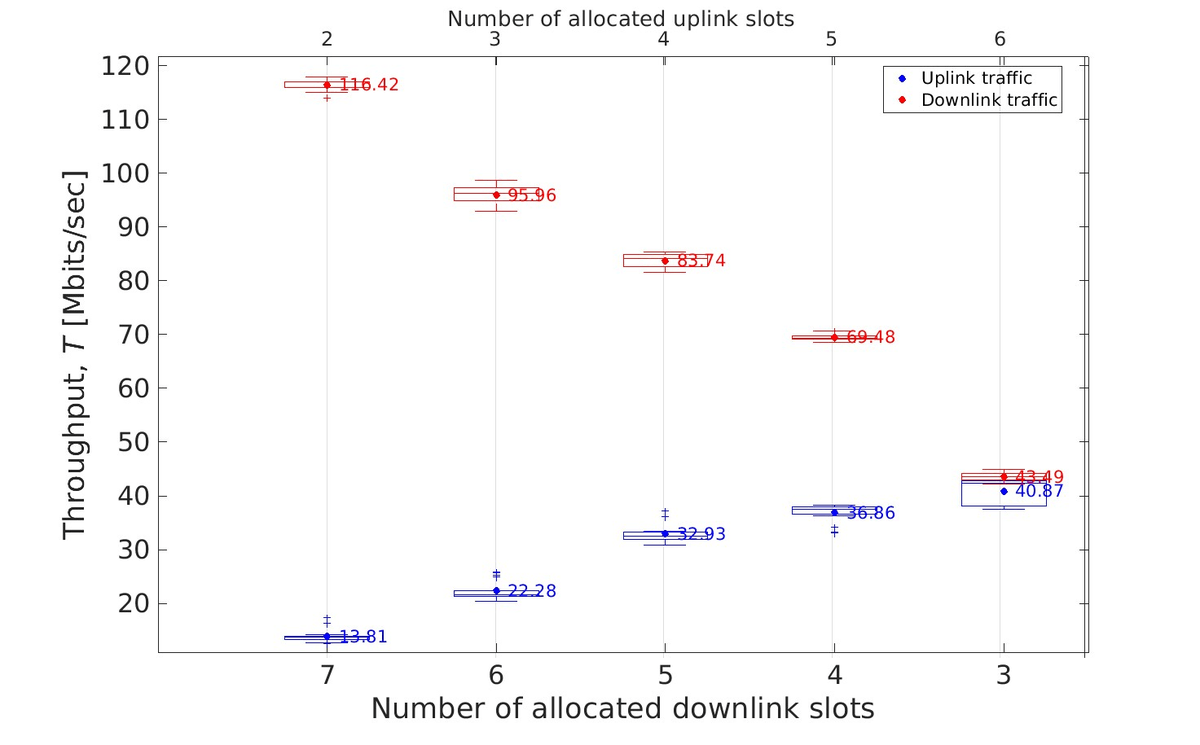
- Initial throughput reaches 43 to 116 Mbps downlink and only 13 to 40 Mbps uplink, with 16 to 32 ms latency variation.
- Framework supports raw, MPEG PCC, and semantic task-oriented encoding to study compute-communication trade-offs.
A team of researchers has stood up a full end-to-end 5G testbed built entirely from open O-RAN components, then wired it into a collaborative welding robot to figure out how factory robots should actually talk to edge-AI servers over cellular. The setup, described in a new arXiv paper, targets a concrete pain point: 3D vision sensors generate absurd amounts of data, and pushing that data across a wireless link to a GPU sitting at the network edge is nowhere near a solved problem.
The motivating scenario is autonomous welding. A cobot needs to see a workpiece in 3D, figure out its pose, plan a trajectory, and adjust in real time. Traditional industrial cells hard-code trajectories; a perception-driven cell keeps re-scanning the scene and adapting. The catch is bandwidth. The 3D sensing system produces dense point clouds containing approximately 5 million points per frame, corresponding to a spatial resolution of 2448 × 2048. Each frame lands at roughly 30 MB, and the traffic is almost entirely one-way: 95 to 99 percent of the total traffic volume is concentrated in the uplink direction.

The bandwidth wall nobody talks about
Raw streaming numbers are eye-watering. A 5 FPS stream hits about 1.2 Gbps; 10 FPS doubles that to 2.4 Gbps. Even with aggressive geometric compression, the authors estimate 120 to 240 Mbps of sustained uplink. On top of that, closed-loop welding demands the communication and edge inference together contribute under 100 ms of extra delay, with emergency stop commands under 10 ms and reliability at 99.999 percent. That is squarely in ultra-reliable low-latency territory.
To study these trade-offs empirically, the authors built a portable rack running a disaggregated 5G base station. Four Quanta D51B-1U servers, each with two Intel Xeon E5-2600 v3 processors, 32 GB of RAM, and a 500 GB hard drive, are used in the testbed. 10G SFP+ DAC Twinax cables connect each server to a Cisco N5K-C56128P switch. The RAN itself uses open-source software: ran1 hosts the srsRAN DU set up for TDD operation at 3825 MHz, 2×2 MIMO, and 20 MHz channel bandwidth; ran2 hosts the matching srsRAN CU; and ran3 hosts the Open5GS-based 5G core. FlexRIC lives on a fourth node as the near-real-time RAN Intelligent Controller, where custom xApps can steer scheduling for the specific traffic profile.
On the radio side, a National Instruments USRP B210 with four antennas plugs into the DU over USB 3.0, and two commercial Quectel RM500Q-based 5G modems act as the user equipment endpoints.
The robot side of the wire
The robotic cell pairs a Zivid 2+ MR130 3D camera mounted overhead with a FANUC CRX-10iA cobot. The robot is controlled using a ROS 2-based setup integrated with the MoveIt motion planning framework. Perception and trajectory generation run on workstations with NVIDIA RTX 4070 GPUs. The perception pipeline is worth noting because it does something clever with fixtures: welding clamps are permanently bolted to the table, so the system tags them with ArUco markers and surgically removes their geometry from the point cloud before pose estimation runs, which also doubles as marking forbidden zones for collision-free planning.

The most interesting architectural bet is what the authors call the Compression/Semantic Encoding Layer. It supports three modes on the same rig:
- Raw transmission: full RGB and 3D point clouds, maximum bandwidth, no preprocessing overhead.
- Classical compression: MPEG Point Cloud Compression at roughly 5:1 to 10:1 ratios.
- Semantic encoding: only task-relevant features (segmented regions, descriptors) are transmitted instead of the full geometry, at the cost of extra local compute.
This is the goal-oriented communication idea in practice. Instead of shipping every pixel, ship what the downstream model actually needs. Streaming uses a Rust-based WebRTC selective forwarding unit extended to carry these encoded feeds.
Where the numbers land, and where they do not
The paper is honest that this is a platform paper, not a benchmark blowout. Sample results show downlink throughput of 43 to 116 Mbps under 2×2 MIMO and uplink of only 13 to 40 Mbps on a single antenna at 20 MHz, well short of the 120 Mbps floor that even compressed point clouds need at 5 FPS. Latency between UE and UPF sits at 16 to 32 ms with periodic variation the authors attribute to how srsRAN handles NR uplink scheduling.
Their planned fix is migration to a USRP X300 with 100 MHz channels and 4×4 MIMO on the uplink, which they project will bring a 5 to 20-fold rate increase. The paper does not release code, but the software stack itself is off-the-shelf open source: srsRAN, Open5GS, FlexRIC, ROS 2, and MoveIt. Anyone with similar hardware can reproduce the baseline.
Why this matters
The real contribution is not any single number. It is a reproducible harness for asking questions like: at what compression ratio does welding accuracy start to degrade? Does a semantic encoder that transmits only segmented weld seams beat MPEG PCC on end-to-end task success? What xApp scheduling policy hits the 100 ms budget while sustaining 99.999 percent reliability? Those questions are hard to study in simulation and impossible to study on a black-box commercial 5G deployment. Having a fully open stack from the radio scheduler up to the ROS trajectory planner means researchers can now intervene at any layer and measure what actually changes at the robot.