
Researchers Fix Federated Learning's Biggest Weakness on IoT Devices
A joint learning-and-resource optimization framework that squeezes more accuracy out of tiny sensor datasets while cutting energy and CPU costs at IoT edge nodes.
 Pro
Takeaways
- New framework jointly optimizes federated learning loss and wireless resource allocation for small-dataset IoT edge nodes.
- Derives a closed-form expected learning loss linking training samples and model dimension to accuracy.
- Proposed algorithm reaches 0.99 learning rate versus 0.97 for QoT-Max and 0.82 for SRM.
- First-order distributed solver keeps CPU time flat as edge nodes scale from 5 to 20.
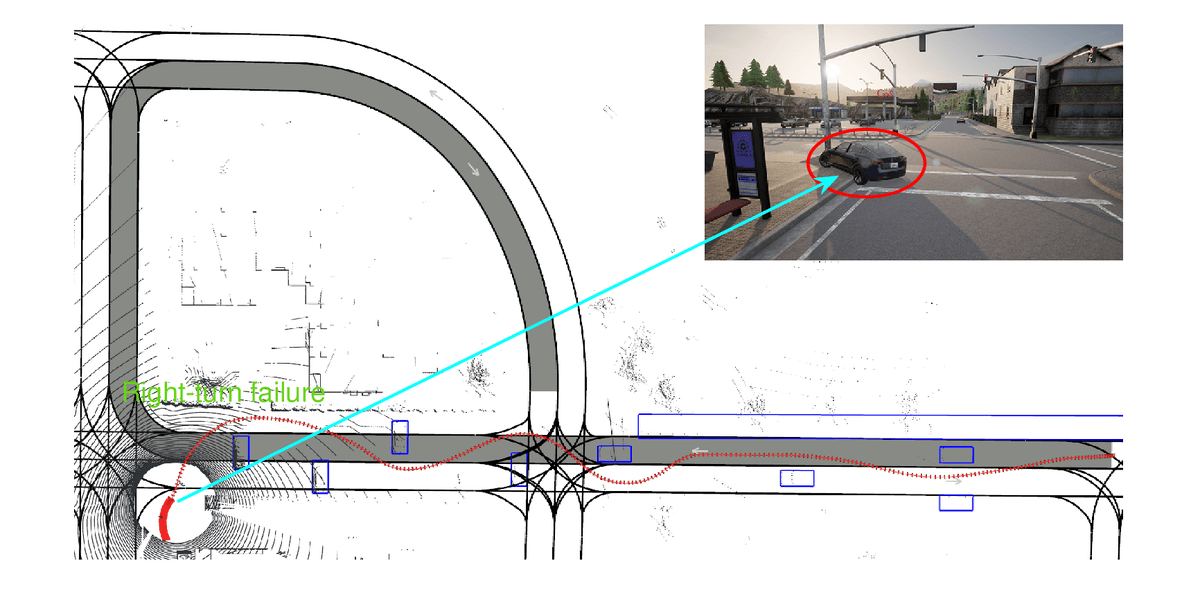
- Case study covers autonomous navigation with collision avoidance and intersection turning.
- Paper available on arXiv and IEEE Xplore; no code released.
Federated learning is usually pitched as a way to train models across thousands of phones or sensors without pooling their data. On the edge, the story gets messier: each IoT node collects only a small sliver of data, wireless bandwidth is limited, and the batteries on those devices are not getting bigger. A new paper tackles that gap by jointly optimizing learning and wireless allocation, backed by a convergence bound rather than heuristics.
The authors target large-scale IoT networks behind smart cities and autonomous driving, where sensory data is heterogeneous, per-node datasets are tiny, and independent edge nodes waste both spectrum and compute. Their fix is a cloud-edge-end collaborative framework that adapts the number of training samples, the transmit power, and the aggregation schedule together, instead of tuning each knob in isolation.
Why tiny datasets break the usual FL playbook
Most federated learning research assumes plenty of local data and worries mainly about non-IID distributions or straggler nodes. That assumption falls apart on a temperature sensor, a lidar unit on a delivery robot, or a roadside camera that only sees a handful of relevant events per hour. Existing designs mostly prioritize model accuracy and treat the radio link as a fixed cost, which leaves a lot of performance on the table when uplinks are scarce.