
POLITEHNICA Bucharest Exposes How Swapping Vocoders Breaks AI Voice Forensics
A controlled study reveals how self-supervised audio features attribute deepfakes to their source model, and where those signals quietly break down.
 Pro
Takeaways
- Controlled study isolates prompt, vocoder, speaker, and checkpoint variables in SSL-based audio deepfake attribution. Paper
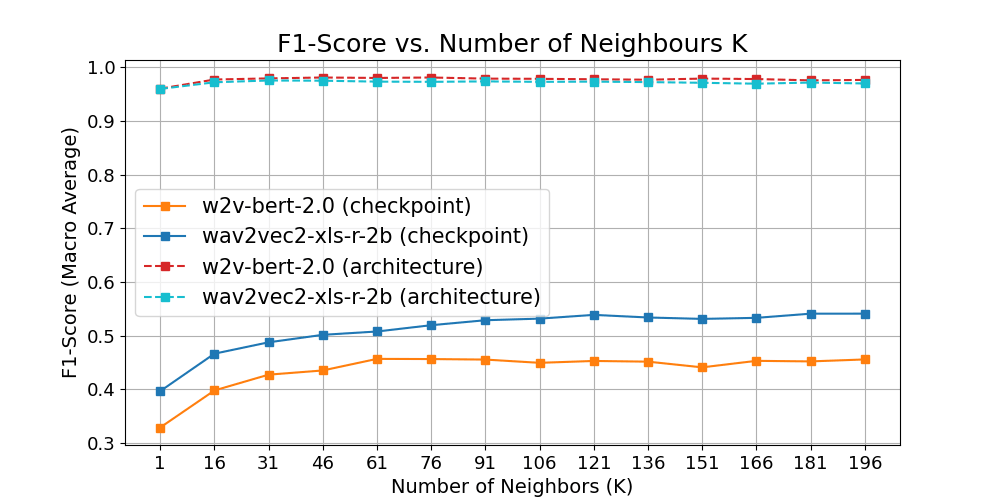
- Both wav2vec2-xls-r-2b and w2v-bert-2.0 hit F1=0.98 for architecture-level attribution across four TTS systems.
- Checkpoint-level attribution drops to around F1=0.50 when many checkpoints share an implementation.
- Swapping vocoders across TTS architectures cuts attribution F1 by roughly one third, the biggest failure mode.
- w2v-bert-2.0 is more robust to speaker finetuning, wav2vec2-xls-r-2b holds up better in-domain.
- Trained models and generated audio available on request; builds on the earlier TADA pipeline.
Figuring out which text-to-speech system generated a suspicious audio clip is called model attribution, and it matters because binary real-versus-fake detection is not enough for forensic accountability. A new controlled study from researchers at POLITEHNICA Bucharest and the Technical University of Cluj-Napoca digs into the leading approach, using features from self-supervised speech models, and maps out exactly where it works, where it fails, and why.
The paper, Understanding the strengths and weaknesses of SSL models for audio deepfake model attribution, isolates variables that prior benchmarks tangled together: implementation code, training checkpoint, text prompt, vocoder, and speaker identity. The result is a much clearer picture of what SSL features actually latch onto when they identify a synthesizer.
The attribution problem in plain terms
Most anti-deepfake research asks a yes-or-no question. Attribution is harder: given a clip, name the specific system, or at least the architecture family, that produced it. Effective countermeasures require model attribution, i.e., identifying the specific system or vendor responsible for generating a deepfake. That capability is what lets platforms trace fraud back to a vendor or an internal checkpoint.
SSL models like wav2vec2-xls-r-2b and w2v-bert-2.0 are pretrained on massive amounts of unlabeled speech and have emerged as the strongest feature extractors for this task. But the underlying factors driving their success and the limits of their discriminative power remain unclear, which is exactly what this paper set out to fix.
A pipeline with every knob pinned down
The authors retrained four popular TTS architectures from scratch under identical conditions: FastPitch, VITS, Grad-TTS, and Matcha-TTS. To control for speaker variability, they used the LJSpeech dataset, which contains 13,100 audio samples from a single female speaker reading different text prompts, totalling 24 hours of recordings. Each architecture was trained from scratch for 500k iterations on the LJSpeech data, retaining nine checkpoints at early (50k, 75k, 100k), mid (250k, 275k, 300k) and late (450k, 475k, 500k) training stages.
Rather than train a heavy classifier on top, they deliberately kept the downstream model trivial. Each clip becomes a single averaged feature vector, and attribution is done with plain k-Nearest Neighbours. Each audio deepfake sample is represented by either a 1920-dimensional feature vector derived from wav2vec2-xls-r-2b or a 1024-dimensional vector derived from w2v-bert-2.0, and these vectors serve as support and query in the kNN-based attribution. This keeps the spotlight on what the SSL features encode, not on classifier tricks.

What actually gets recognized
At the architecture level, both SSL feature extractors are excellent. Both models achieve high accuracy at architecture-level (F1=0.98), while checkpoint attribution is notably weaker (F1 around 0.50) when using several checkpoints from the same model implementation. For context, random guessing across 40 classes would land at F1=0.025, so distinguishing individual weight snapshots is still working, just not stellar.
The interesting patterns show up when you perturb one variable at a time:
- Text prompt leakage. SSL models were originally trained for speech recognition, so they encode linguistic content. When the same prompt appears in both support and query sets, checkpoint attribution drops sharply while architecture attribution barely budges. This suggests that linguistic content definitely and significantly influences attribution.
- Vocoder mismatch is catastrophic. Swap only the vocoder on a TTS architecture and architecture-level F1 collapses from ~0.98 to 0.63 (wav2vec2) or 0.55 (w2v-bert). The features are partly attributing the vocoder, not the acoustic model.
- Speaker adaptation confuses attribution. When only a pretrained checkpoint is available in support but the query comes from a finetuned voice-cloned model, wav2vec2-xls-r-2b crashes to F1=0.36, while w2v-bert-2.0 hangs on at 0.66. w2v-bert-2.0 appears more robust to speaker identity, likely due to its larger pretraining dataset capturing greater speaker variability (4.5M hours vs 450k for wav2vec2-xls-r-2b).
- Untrained models still have fingerprints. Random-init checkpoints produce noise, yet architecture attribution among them reaches F1=1.0, hinting at inherent architectural biases baked into untrained weights.
The real breakthrough
The headline isn't a new benchmark number. It's the diagnostic map. The two SSL backbones have non-overlapping weak spots: w2v-bert-2.0 wins out-of-domain and shrugs off speaker changes but leaks more prompt content, while wav2vec2-xls-r-2b holds up better in-domain. That complementarity is actionable, because it suggests ensembling or routing based on which perturbation you expect at inference time.
The paper also delivers an uncomfortable truth for anyone deploying this in the wild: if your adversary swaps vocoders between generations, current SSL-based attribution loses roughly a third of its accuracy overnight. That is the single most exploitable seam.
Availability
There is no public repository link in the paper, but all trained models and generated audio samples are made freely available upon request. The attribution setup follows the earlier TADA training-free approach from the same group, and the four TTS systems evaluated (FastPitch, VITS, Grad-TTS, Matcha-TTS) are all available in their official implementations if you want to reproduce the pipeline.
When it is worth reaching for
SSL-based kNN attribution is a strong choice when you need to identify which of a known set of architectures produced a clip, especially if you can control or estimate the vocoder. It is less trustworthy when the adversary can finetune for a new speaker, mix vocoders, or share prompts between the reference set and the sample under test. For a forensic pipeline, treating architecture attribution and checkpoint attribution as separate confidence layers, rather than a single label, is the takeaway that will save teams from overtrusting a single score.