
Osaka Researchers Built a Chatbot That Fights Elderly Loneliness by Bridging Families
A LINE chatbot quietly relays daily updates between grandparents and grandchildren, boosting engagement and cutting anxiety across a 10-day field study.
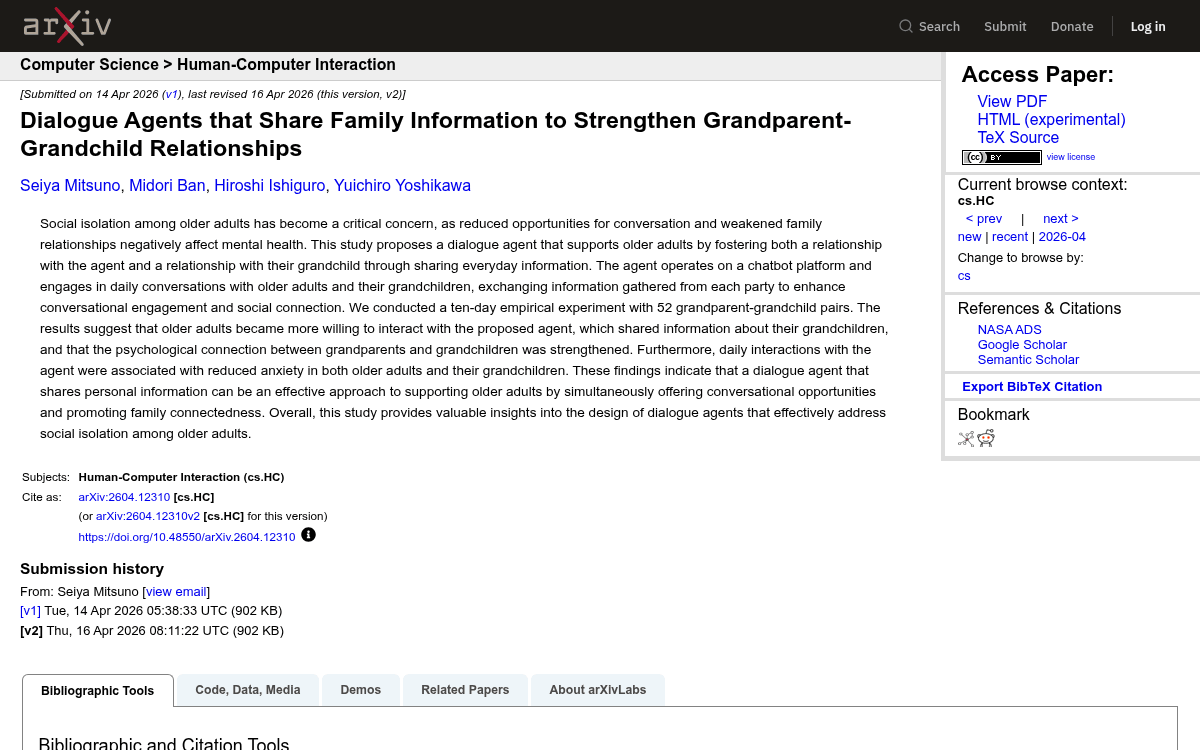
Takeaways
- A LINE chatbot shares daily info between grandparents and grandchildren to fight elderly isolation.
- Ten-day study with 52 pairs showed grandparents engaged more actively when the bot mentioned their grandchild.
- Sharing condition produced significantly more self-reported positive changes in grandparent-grandchild closeness.
- Anxiety dropped in both generations after ten days, though not differently between conditions.
- Stack: LINE Messaging API, Heroku, OpenAI API, Google NLP API, PostgreSQL, agent-initiated intermittent dialogue.
- Limits: shallow topics, short study window, no code release, privacy controls needed for deeper disclosure.
Loneliness among older adults is one of those problems where the obvious tech fix, sticking a chatbot on their phone, tends to backfire. Recent work has shown that when isolated people talk only to bots, they can grow more dependent on them and less connected to real humans. A team from the University of Osaka and Kyoto Tachibana University tried a different angle: build a chatbot that acts as a bridge between family members instead of a replacement for them.
Their paper introduces a dialogue agent that chats separately with a grandparent and their grandchild every day, then quietly shares snippets of what each said with the other. A ten-day field study with 52 pairs suggests the design improves engagement, perceived closeness, and anxiety, without users ever having to message each other directly.

Why a solo chatbot falls flat
In Japan, 61.1% of older adults living alone communicate with others only once every two to three days or less, and that thin social contact is a known risk factor for depression, chronic anxiety, and dementia. Prior studies show daily conversations with an agent can reduce anxiety in older adults, but when individuals with limited human connections interact exclusively with agents, they may develop excessive dependence, which deepens loneliness and shrinks engagement with the people around them.
The authors' pitch is that agents should stop pretending to be the whole social world and start acting like connective tissue between existing relationships. Grandchildren, they note, carry unusual psychological weight for older adults, tied to a sense of generational continuity, which makes them a natural anchor for that bridge.