
OPPO's AI Flash Portrait Challenge Exposes How Phone Cameras Fail Human Faces
A new benchmark tackles the hardest problem in mobile portrait photography: turning noisy weak-flash shots into studio-grade images without wrecking the background.
 Pro
Takeaways
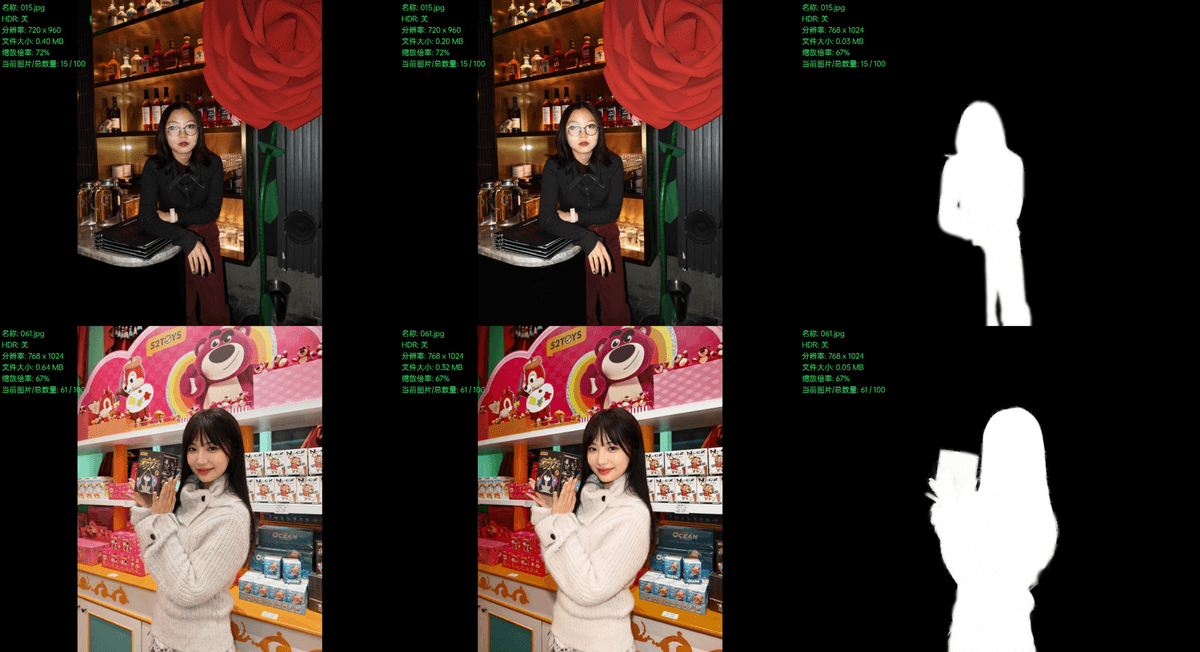
- NTIRE 2026 RAIM Track 3 releases 800 paired low-light portraits with designer-retouched flash-style ground truths.
- Task maps weak-flash phone captures to studio-flash aesthetics, not just denoising or brightening.
- Region-aware scoring uses LPIPS and deltaE on the face, PSNR on background, SSIM globally.
- Final ranking blends 70% objective metrics with 30% expert blind-test jury across six perceptual axes.
- 118 teams and 3,187 submissions competed; nunucccb from Fuzhou University won with 86.79.
- Dataset, baseline, and CodaBench server are public for non-commercial academic research use.
Low-light portraits on phones are still ugly. Sensors are tiny, light is scarce, and results come out as noisy faces with washed-out skin and blotchy backgrounds. A new challenge report from the NTIRE 2026 workshop lays out an industrial-grade benchmark for fixing exactly this, along with winning solutions from 118 competing teams.
The setup
The task, called AI Flash Portrait, is the third track of the Restore Any Image Model (RAIM) Challenge, jointly organized by OPPO Research Institute, Shenzhen University, The Hong Kong Polytechnic University, and Nankai University. The dataset contains 800 groups of real-captured low-light portraits, each consisting of a 1K low-light input, a 1K ground truth, and a 1K person mask.
Why existing restoration models fall apart on faces
Current approaches each fail in a specific way:
- Low-light image enhancement (LLIE) methods are usually trained on synthetic or globally brightened data. Applied to people, they flatten facial lighting, distort skin tones, and amplify background noise because they lack any real understanding of how flash physically falls off with distance.
- Real-world restoration models trained with synthetic degradation cannot simulate the nonlinear jump from a weak flash to a strong flash. Without professionally retouched paired data, the models never learn what a good result should even look like.