
OpenRR-5k Benchmark Finally Teaches AI to Remove Real-World Reflections
A new 5,300-image real-world benchmark and a public challenge push reflection removal past synthetic data limits, with cascaded RDNet-style networks winning out.
 Pro
Takeaways
- NTIRE 2026 released OpenRR-5k, 5,300 real-world paired reflection images with clean ground truth
- Ground truth built by running OPPO's phone AI reflection remover, then manual Photoshop cleanup
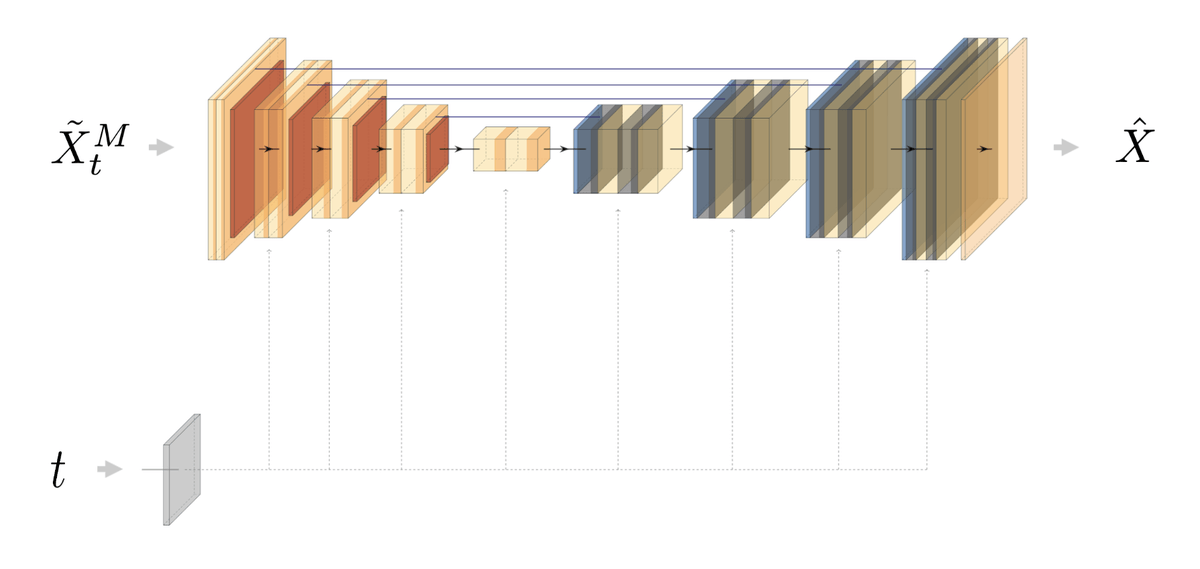
- Winner RRay used a two-stage RDNet plus NAFNet cascade, scoring PSNR 36.17 and subjective 4.45
- Top methods share a pattern: multi-stage refinement designs plus extra external training data
- Generative models like Nano Banana restore sharper detail but hallucinate textures, hurting PSNR
- Dataset, evaluation code, and several team implementations are open on GitHub
Shooting through a car window, museum glass, or a shop front usually means giving up on a clean photo. Single image reflection removal (SIRR) has been studied for years, but most academic models train on synthetic composites or a handful of lab captures, so they tend to fall apart on the messy pictures people actually take. A new benchmark and open competition set out to close that gap.
The NTIRE 2026 challenge on single image reflection removal introduced OpenRR-5k, a dataset of real-world reflection-contaminated photos paired with clean transmission images, and asked teams to recover the underlying scene. Over 100 teams registered, more than 1,000 submissions came in, and eleven teams completed the testing phase with model outputs, source code, and technical fact sheets.
Why real reflection data is so hard to collect
The task is deceptively simple to state: recover the transmission layer T from a blended image I that also contains a reflection R. The hard part is training data. Researchers typically rely on props such as glass and cloth, then construct pairs by either removing the glass or blocking the background or reflection light with light-absorbing black velvet. Li et al. obtained transmitted images by manually removing the glass. Zhu et al. proposed a pipeline that blocks all reflection light generated by the surrounding environment. Environmental factors like wind and vibration can still induce misalignment and color shifts, degrading pair quality.
The organizers took a different route, using a shipping consumer product as the first-pass ground-truth generator. The pipeline adopts the AI reflection removal editor built into OPPO smartphones, one of the few effective and widely used tools currently on the market. That architecture first runs YOLO/YOSO for reflection detection, then LaMa for inpainting the masked regions, and finally NAFNet for reflection removal. The team then performed manual post-processing in Adobe Photoshop and MeituPic to clean up residual reflections and artifacts.