
MUNIChus Benchmark Exposes How Badly AI Fails Multilingual News Captioning
The first multilingual news image captioning benchmark spans nine languages including Sinhala and Urdu, exposing where today's vision-language models still fail.
 Pro
Takeaways
- MUNIChus is the first multilingual news image captioning benchmark, spanning nine languages.
- It contains 145,314 training and 8,993 test images across 58,663 BBC articles.
- Low-resource coverage includes Sinhala and Urdu, which most vision-language models handle poorly.
- Instruction fine-tuning more than doubles BLEU-4 and CIDEr over the best prompting strategies.
- Generic captioners like BLIP and PaliGemma-3b collapse to near-zero BLEU-4 on news data.
- Dataset, scripts, and fine-tuned models are available on Hugging Face.
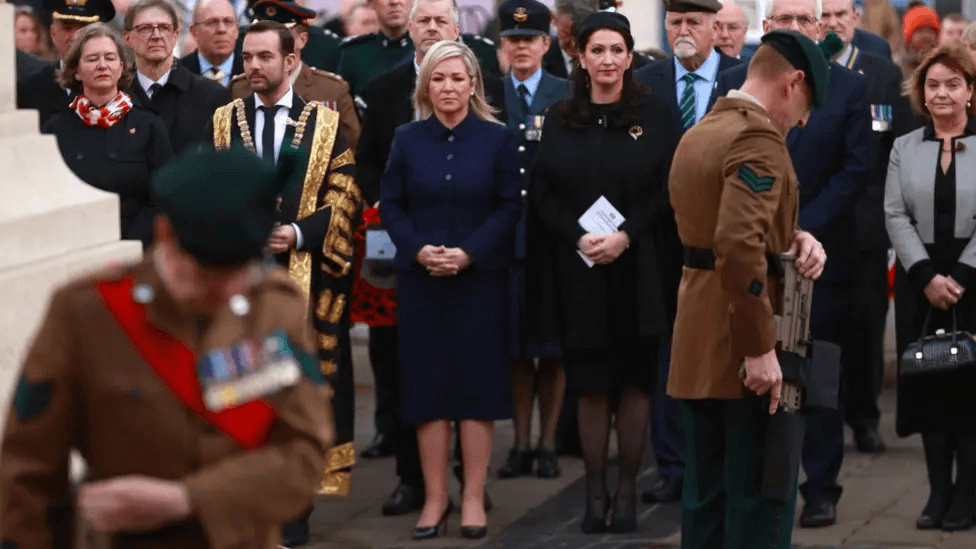
News image captioning is a peculiar corner of multimodal AI. A generic captioner might describe a photo as a woman holding a trophy in front of a crowd, while the actual newspaper caption reads Maren Mjelde won the Women's Super League in her final season with Chelsea. That gap between describing pixels and interpreting them in context is exactly what a new benchmark called MUNIChus is built to measure, and for the first time, it measures it in nine languages.
The team behind the work argues that news image captioning requires generating an informative caption, rich in entities such as the names of people or news events, based on the provided news image and associated news article. Until now, essentially every benchmark for this task, including VisualNews, NYTimes800K, and GoodNews, has been English-only, which leaves a large chunk of the world's news reporting unmodeled.
What sits inside the benchmark
MUNIChus is built entirely from BBC news content, chosen for its editorial rigor and multilingual reach. A Python scraper pulled articles published before the end of 2024, filtered out images smaller than 180 pixels on either side, and kept only captions with more than three words. The final release covers nine languages grouped by resource level:
- High-resource: English, French, Chinese
- Mid-resource: Arabic, Hindi, Japanese, Indonesian
- Low-resource: Sinhala, Urdu
The final dataset consisted of 145,314 training images and 8,993 test images across nine languages, sourced from 58,663 unique BBC news articles. The language mix is uneven in ways that matter for modeling. English contributes the most to the corpus, with over 79,000 training images and 38,000 unique articles. The average content length varies widely across languages, ranging from 461 tokens in English to 1,968 in Hindi. The full dataset, including article titles and metadata, is hosted on Hugging Face.
How the models were tested
The authors ran more than twenty model configurations through four evaluation regimes. Three are prompting-based and one is fine-tuning:
- Zero-shot: the model gets only the article text, the image, and instructions to write a journalistic caption in the target language.
- Random few-shot: three randomly sampled article-image-caption triples from the same language are prepended as in-context examples.
- Similar few-shot: three examples are retrieved using cosine similarity on
nomic-embed-vision-v1.5image embeddings, so the demonstrations are visually close to the test image. - Instruction fine-tuning: aya-vision-8b and Llama-3.2-11B-Vision-Instruct were fine-tuned with QLoRA. For both models, they load the base backbone in 4-bit NF4 quantisation with double quantisation and bf16 computation, then prepare it for k-bit training before injecting the LoRA adapters. They configure LoRA with rank r=64, alpha=32, dropout = 0.1, and bias=none, and apply it to the standard attention and MLP projection modules.
Evaluation used BLEU-4 and CIDEr rather than newer metrics like BERTScore or BLEURT, since those lack support for Sinhala and Urdu. Chinese was tokenized with Jieba and Japanese with MeCab so that n-gram overlap actually measures word-level agreement.
What the numbers reveal
Fine-tuning wins, and it wins convincingly. Fine-tuned Llama-3.2-11B achieves the highest overall BLEU-4 score of 8.40, while fine-tuned Aya-vision-8b achieves the highest overall CIDEr score of 56.34, both representing more than a twofold improvement over the best prompting results. Hindi and Japanese see the biggest lifts under fine-tuned Aya-vision-8b, jumping to CIDEr scores of 100.12 and 92.56 respectively.
Among prompting strategies, GPT-4o with random few-shot learning performs best, with an average BLEU-4 score of 3.57 and CIDEr score of 36.17. The surprising result is that semantically similar examples do not help. Retrieved images look alike but rarely share the specific people, places, or events the caption needs to name, so the in-context examples add little useful signal.
A few other findings are worth calling out:
- Generic captioners collapse in this domain. A BLIP + NLLB translation pipeline averages just 0.20 BLEU-4, and PaliGemma-3b scores 0.03, with complete failures on Urdu. Describing pixels is not the same task as writing news copy.
- Bigger is not always better. The larger Aya-vision-32b model actually underperforms its smaller 8b counterpart in the majority of the languages, most notably in the random few-shot scenarios.
- Sinhala is a wall. Sinhala performs the worst across all models and experimental conditions on MUNIChus, with BLEU-4 scores consistently below 1.2 and CIDEr scores rarely exceeding 17 under prompting-based approaches. Even after fine-tuning, CIDEr stays around 10 to 12, suggesting the underlying pre-training corpora simply do not contain enough Sinhala news content.
Why this matters
The real contribution here is not a new architecture but a hard, honest measurement stick. Current multimodal leaderboards mostly reward describing what is in a picture. MUNIChus rewards knowing who is in it, why they are there, and how to say so in Urdu or Sinhala. Even frontier systems like GPT-4o land in the low single digits on BLEU-4, which is a sobering baseline for anyone building news assistants, accessibility tools for visually impaired readers, or automated media pipelines outside English.
The fine-tuned checkpoints are already published: Aya-vision-8b and Llama-3.2-11B-Vision-Instruct. Combined with the dataset and evaluation scripts, that gives anyone working on multilingual multimodal generation a fresh, non-trivial target to beat, and a clear signal about where general-purpose vision-language models still fall short.