
Mosquito-LLaMA3-8B Beats Gemini and GPT-4o at Explaining Deadly Breeding Sites
A new open dataset pairs 1,828 annotated breeding-site images with segmentation masks and natural-language explanations, plus a fine-tuned LLaMA3-Vision model.
 Pro
Takeaways
- VisText-Mosquito unifies detection, segmentation, and natural-language explanation for mosquito breeding sites in a single benchmark.
- Dataset: 1,828 detection images across 5 container classes, 142 segmentation images, 3,762 explanation triplets.
- YOLOv9s leads detection at 0.929 mAP@50; YOLOv11n-Seg tops segmentation at 0.798 mAP@50.
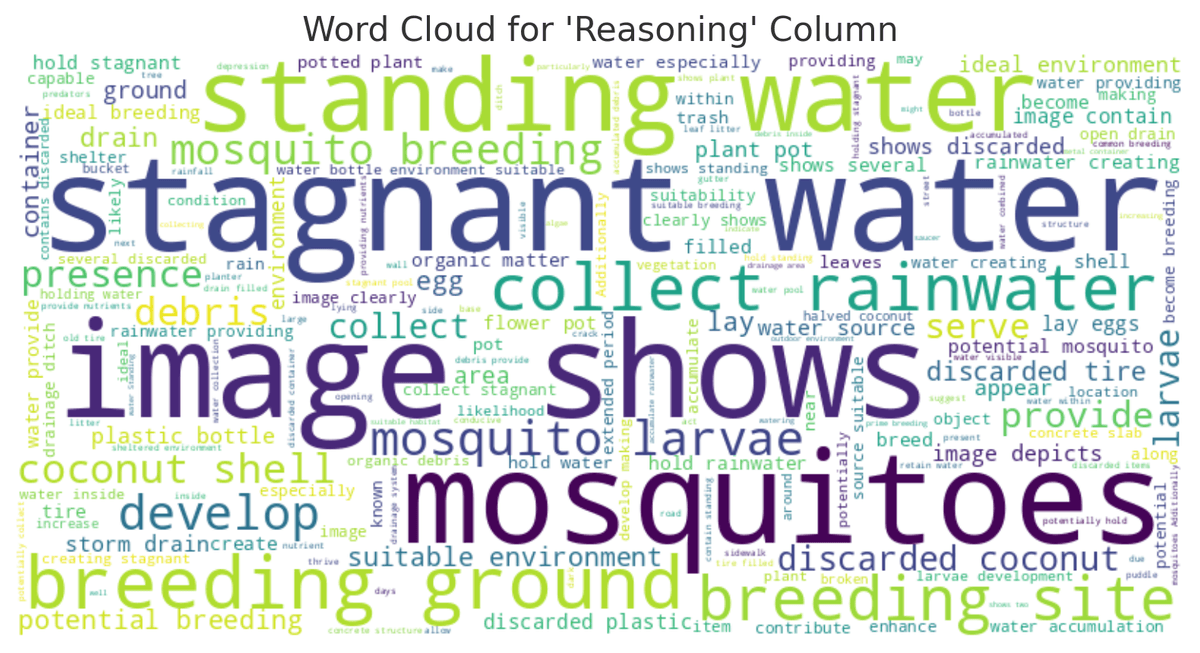
- Fine-tuned Mosquito-LLaMA3-8B hits 54.7 BLEU, beating Gemini-2.5-Flash and GPT-4o mini on the explanation task.
- Qwen2-VL regressed under few-shot prompting; ablations show training data size matters more than epoch tuning.
- Dataset, code, and model weights available on GitHub.
Mosquito-borne illnesses kill more than a million people every year, and the primary defense is still someone walking around looking for standing water in tires, vases, and clogged drains. A team from United International University, BRAC University, and the University of Arizona wants to automate that inspection loop with computer vision, and they have released the pieces needed to try: a multimodal dataset, benchmark numbers for a dozen models, and a fine-tuned vision-language model that explains its own predictions.
The project, called VisText-Mosquito, bundles three tasks into one benchmark: detecting containers that typically hold stagnant water, segmenting the actual water surfaces inside them, and generating a short written justification for why a given image counts as a breeding risk. Code and data are on GitHub.
Why breeding-site detection is harder than it looks
Existing computer vision models tend to underperform here because no specialized datasets handle both detection and segmentation, and most of what exists is unimodal, with no contextual explanations to support human decision-making. That last point matters for public health, where a field worker needs to know not just that an image was flagged, but why.
The images were collected across Bangladesh under both daylight and nighttime conditions, shot from multiple angles and distances between one and three meters to improve generalization, and cover both natural and artificial breeding sites. Every image was manually annotated in Roboflow and then augmented with flips, rotations, and brightness variation.