
Michigan's RadarSplat-RIO Cuts Robot Navigation Drift by 90% in the Dark
A new arXiv paper adapts Gaussian Splatting to millimeter-wave radar, cutting indoor pose drift by 90 percent without loop closure.
Takeaways
- New arXiv paper RadarSplat-RIO presents the first radar bundle adjustment framework built on Gaussian Splatting.
- Jointly optimizes radar poses and scene geometry using full range-azimuth-Doppler radar cubes, not sparse points.
- Cuts average translational error by 90 percent and rotational error by 80 percent versus MRIO baseline indoors.
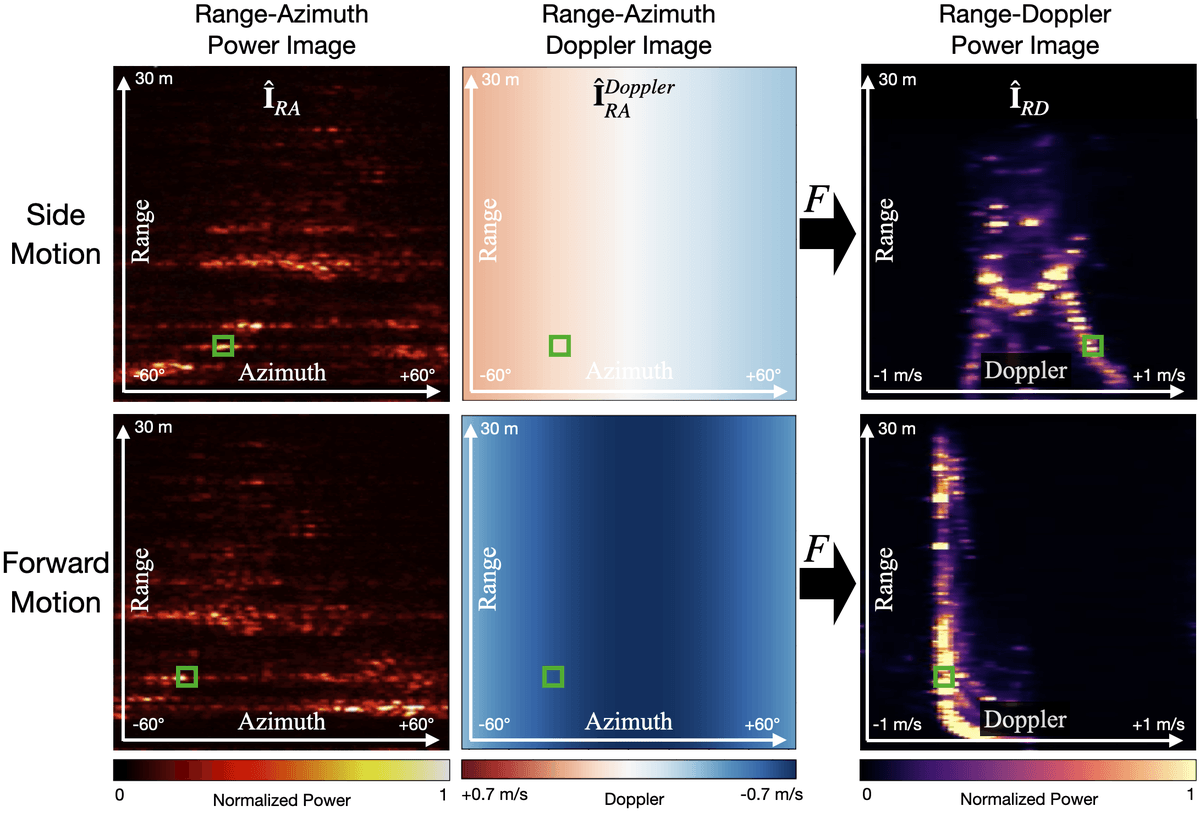
- Introduces RadarSplat++, a differentiable renderer supporting full radar measurements including Doppler.
- Led by University of Michigan PhD student Pou-Chun Kung with co-authors who were at Meta Reality Labs.
- No code release referenced; evaluated only on indoor scenes with a cascaded MIMO radar plus RealSense IMU rig.
Radar has always been the odd sibling in the SLAM family. It sees through smoke, fog, and pitch darkness where cameras and lidar fail, but the signal is noisy, sparse, and full of multipath ghosts. That has kept radar-based mapping stuck on frame-to-frame odometry, which quietly accumulates drift the longer a robot moves. A new arXiv paper called RadarSplat-RIO, led by University of Michigan PhD student Pou-Chun Kung with collaborators who were at Meta Reality Labs when the work was completed, proposes a fix borrowed from computer vision: bundle adjustment, rebuilt on top of Gaussian Splatting.
The paper claims the first radar bundle adjustment framework of its kind, and the reported gains are large. Across multiple indoor scenes, the method cuts average absolute translational error by 90% and rotational error by 80% compared with the prior radar-inertial odometry baseline.

Why radar SLAM keeps drifting
Visual SLAM systems solved the drift problem years ago with bundle adjustment (BA), which jointly re-optimizes camera poses and 3D landmarks over a sliding window of frames. Radar never got that treatment. Most radar pipelines still lean on frame-to-frame odometry, which accumulates error fast. Loop closure can correct long-term drift, but it requires revisiting places and relies on robust place recognition. An equivalent BA formulation for radar has remained largely unexplored.