
Denver's SSL-V3 Turns Blurry Video Into a Training Signal, Hitting 94.87% Accuracy
A new self-supervised framework called SSL-V3 injects video quality scores into a Vision Transformer, boosting classification accuracy on noisy real-world footage.
 Pro
Takeaways
- SSL-V3 fuses No-Reference Video Quality Assessment into a ViViT classifier, boosting accuracy on noisy video by up to 13 points.
- Combined-SSL trains the quality regressor without labels by routing its output through the classification loss via chain rule.
- Hits 94.87% MCI detection on I-CONECT, beating the prior MC-ViViT baseline of 90.63%.
- Reaches 98.6% on Hockey Fight Detection, competitive with SepConvLSTM-C's 99.5% top score.
- Tune-CLS module multiplies the winning logit by the quality score before softmax, amplifying confident predictions on clean clips.
- Code is not released; I-CONECT dataset available on request, Hockey Fight is public.
Anyone who has trained a video classifier on real-world footage knows the pain: a model that hits 100% on crisp interview clips can crater below 60% the moment cameras go blurry, lighting drops, or subjects move too fast. A team from the University of Denver has built a Vision Transformer variant that treats video quality as a first-class training signal instead of a nuisance, and the results on healthcare and surveillance datasets suggest the idea is worth borrowing.
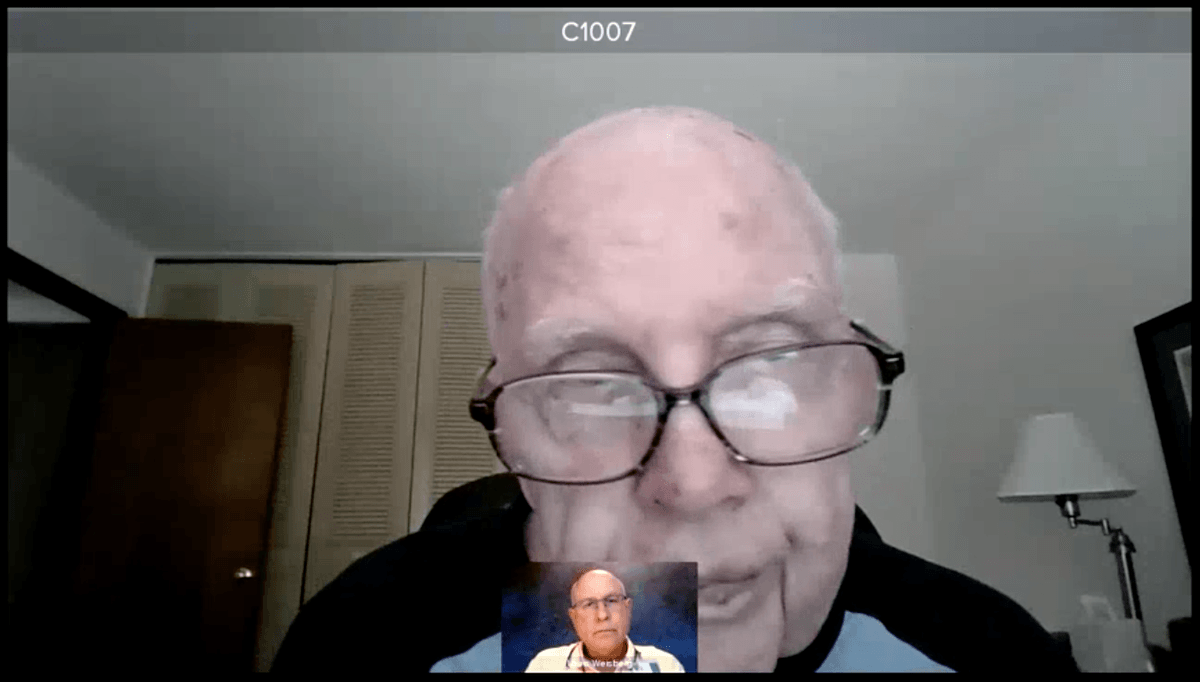
The model, called SSL-V3 (Self-Supervised Learning-based ViViT combined with No-Reference Video Quality Assessment), was born out of a specific frustration. In earlier work on detecting Mild Cognitive Impairment from interview footage, the authors found their ViViT-based classifier got 20 out of 20 subjects right on clean video but only 5 out of 12 when the recordings were degraded. Video quality, in other words, was silently deciding who got diagnosed.
The label problem nobody wants to solve
The obvious fix is to feed a quality score into the classifier. The obvious blocker is that almost no video dataset ships with quality labels. Traditional No-Reference Video Quality Assessment (NR-VQA) leans on Mean Opinion Scores collected from human raters, which is slow, expensive, and impossible to retrofit onto clinical or surveillance corpora. SSL-V3's central trick is to skip the labels entirely and let the classification task teach the quality regressor what a good score looks like.
The architecture has two identical branches with shared weights, in the style of contrastive learning. Each branch runs a ViViT factorised encoder to pull out spatio-temporal features, then splits into two heads: a classification head (borrowed from the earlier MC-ViViT model, which extracts spatiotemporal features and augments representations by a multi-branch classifier module) and a hierarchical VQA head.

How the quality score sneaks into training
The VQA head has two stages. A Sequence Score Regressor takes each tubelet's features, learns a weight vector via a fully-connected layer and softmax, and produces a per-sequence quality score. A Video Score Regressor then fuses those sequence scores using three parallel channels: a 1D convolution capturing how past frames influence the current one (motion effect), a direct fully-connected regression, and another 1D conv capturing how the current sequence affects later ones (hysteresis effect). The three signals concatenate into the final video quality score.
That score then meets the classifier in a module the authors call Tune-CLS. Rather than adding a loss term, Tune-CLS directly multiplies the maximum logit in the classification vector by the quality score before softmax:
CLS[i_max] = CLS[i_max] * VQS
Y_hat = argmax(softmax(CLS))
High-quality clips get their winning class amplified; low-quality clips get suppressed. Crucially, because the quality score sits inside the classification graph, back-propagation through the chain rule optimizes the VQA head's parameters using only the classification label. No quality ground truth required.
Numbers that back the claim
The team validated on two datasets: I-CONECT, a facial video corpus of 186 adults over 75 (roughly split between MCI and normal cognition) recorded during 30-minute themed interviews, and the Hockey Fight Detection set of 1,000 short clips. Faces were cropped with RetinaFace and fed as 16-frame sequences.
On MCI detection across four interview themes, SSL-V3 reached:
- 94.87% accuracy on School Subjects (37 of 39 subjects), the headline result
- 93.75% on Crafts Hobbies
- 90.24% on Day Time TV Shows
- 88.57% on Movie Genres
For context, the previous state of the art on this dataset was MC-ViViT at 90.63% accuracy on some of the interview videos. Ablating the VQA head dropped SSL-V3 by 8 to 13 percentage points depending on theme, isolating the contribution of the quality-aware pathway. On Hockey Fight Detection, the full model hit 98.6% accuracy, close to the SepConvLSTM-C leader at 99.5% but ahead of most CNN and 3D-CNN baselines.

What is actually new here
Combined-SSL is the real contribution. It uses a downstream supervised task to train a pretext task that has no labels of its own, by making the pretext output a differentiable input to the downstream loss. The recipe generalizes beyond quality assessment: any auxiliary signal you cannot label directly (aesthetic score, occlusion, motion intensity) could ride the same pipeline as long as it plugs into the classifier's forward pass.
Caveats before you plug it in
There are honest limitations. Without quality ground truth, the authors cannot report Pearson or Spearman correlations against human raters, so SSL-V3 is not yet a full multi-task VQA model, just one that uses quality-like signals to help classification. The gains also shrink when input videos are uniformly high quality, and small datasets with short clips risk overfitting. Code is not currently released; I-CONECT is available on request from the study, while Hockey Fight remains a standard public benchmark.
For teams working on noisy real-world video, whether that means telehealth footage, body cameras, or user-generated content, the takeaway is that quality-aware training is worth the wiring. A learnable scalar between the regressor and classifier, plus a contrastive twin branch, gets you most of the way.