
Columbia's ArkSim Finds 33% More Agent Bugs Than Standard AI Simulators
A knowledge-grounded simulator built on ideal customer profiles and business infrastructure finds 25-33% more agent bugs than generic prompt-based user simulators.
 Pro
Takeaways
- SAGE grounds user simulators in ICPs and business infrastructure, finding 25-33% more agent bugs than prompt-based baselines.
- Four-stage pipeline: configure knowledge, build scenarios, generate multi-turn interactions, then LLM-as-judge scores every turn.
- Tested on a production RAG sales agent and a Shopify shopping agent with 13 APIs across five different LLMs.
- Found 38.6 unique bugs vs 14 in real human logs, suggesting simulation beats human trials for iterative debugging.
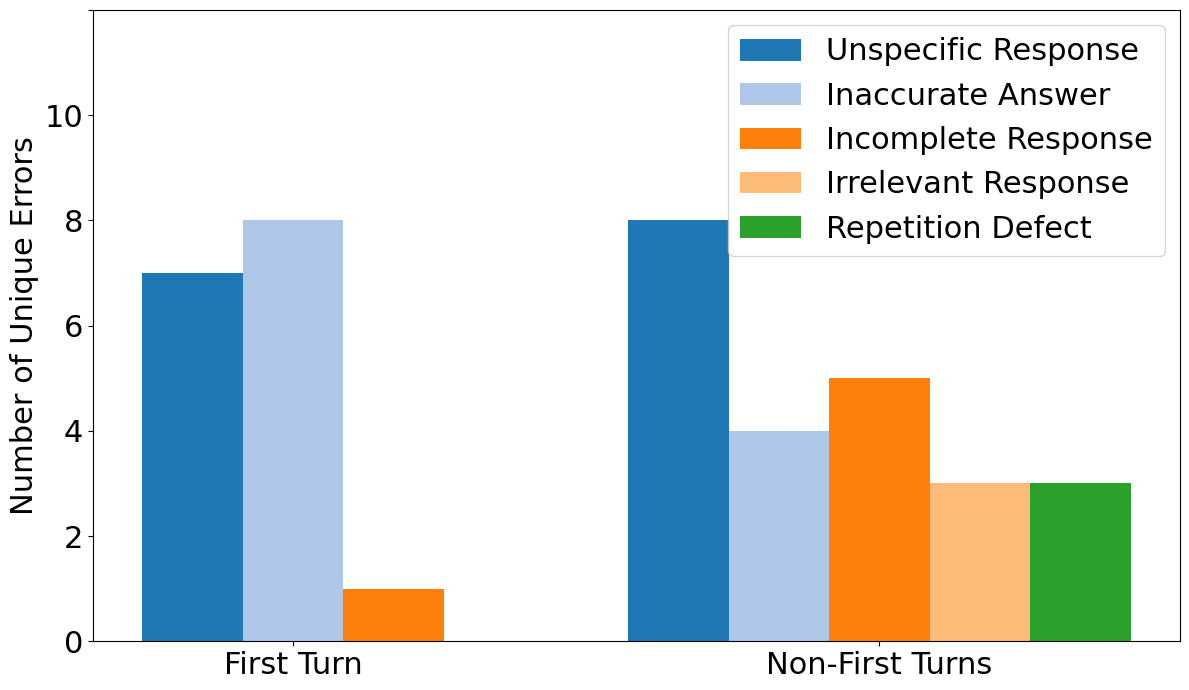
- Most agent failures emerge after the first turn, confirming single-turn benchmarks miss the real production failure modes.
- Available as open-source ArkSim under Apache-2.0, works with HTTP, A2A, or Python-class agents.
Testing a multi-turn agent is a chicken-and-egg problem. You need realistic users to expose failures, but recruiting real users for every iteration is slow and expensive. The usual workaround is a prompted LLM playing customer, but those simulators tend to sound like nobody in particular and miss the specific ways real buyers push a system until it cracks. A team from Columbia University and Arklex.ai is proposing a fix called SAGE, and they have shipped it as an open-source framework called ArkSim.
The pitch is straightforward: ground the simulator in the same business context the agent lives in. SAGE incorporates top-down knowledge rooted in business logic, such as ideal customer profiles, grounding user behavior in realistic customer personas. On the other side, it integrates bottom-up knowledge taken from business agent infrastructure like product catalogs, FAQs, and knowledge bases. In experiments across two production-style agents, this combination surfaced up to 33% more bugs than the prompt-based simulators used in current benchmarks.
Why generic personas miss the interesting failures
Most existing simulators rely on either scarce human dialogue data or generic prompts. The authors point out that prompting-based methods typically portray users as domain-general interlocutors, with goals and behaviors only loosely tied to the target application. That is fine for smoke-testing coherence, but it leaves entire failure modes untouched. If your synthetic shopper does not know your catalog contains a floor-cleaning robot rated for 21,958 sqft/hr, they will never ask the specific follow-up that catches your RAG pipeline returning the wrong spec.
This matters because in production, context gets lost by turn five, tool calls break, contradictions appear, and static benchmarks catch none of it. Multi-turn evaluation is where drift actually shows up, and SAGE is designed to stress-test those trajectories.
Top-down meets bottom-up
SAGE's central move is combining two knowledge sources that prior simulators use in isolation:
- Top-down (who the user is): Attributes drawn from marketing frameworks, including Big Five personality traits, demographics, and Ideal Customer Profiles. For B2B, this includes firmographics, decision-making authority, deal stage, and budget. For B2C, it swaps in decision-making style, purchasing preference, spending behavior, and loyalty level.
- Bottom-up (what the user knows): The company's actual product catalogs, FAQs, inventory tables, and webpages. The reasoning is simple: a real customer will likely have read some of the company's webpages before interacting with the agent, so the simulator should too.
An ICP (Ideal Customer Profile) is a marketing artifact describing the type of customer most valuable to a business. Think decision-making authority, budget range, and deal stage rather than just "a curious shopper." The authors argue these business-relevant attributes are more predictive of customer behaviors than generic personality traits alone.
How a simulation actually runs
The pipeline has four stages, and it is worth walking through because it is the part developers will actually wire into their CI:
- Configure knowledge. Load user attributes, the agent capabilities you want to test, and the business's infrastructure knowledge (structured DBs, unstructured docs).
- Build task scenarios. Each scenario is a triple of user goal, a relevant piece of infrastructure knowledge, and a coherent user profile. Goals are derived from agent capabilities so coverage is systematic. Knowledge is picked via hierarchical clustering to keep diversity high and avoid re-using the same product page twice.
- Generate interactions. The user simulator and the agent share an environment with running history. The interaction terminates when the user emits a sentinel token (###STOP###) or the turn budget is reached.
- Evaluate and identify bugs. LLM-as-judge scores every agent turn on helpfulness, coherence, verbosity, relevance, and faithfulness. Turns scoring below 2 get flagged and then clustered into unique bug statements.
That last step is where SAGE earns its keep as a tool rather than just a paper. Instead of dumping raw rubric scores on you, it produces concrete statements like "did not provide weight capacity for Product A when explicitly requested," linked to the exact turn. The authors validated the threshold by hand: sampling 50 low-scoring turns and finding that 94% contained bugs, while only 4 of 50 high-scoring turns had issues.
The numbers
SAGE was tested against two ablations that mirror existing methods: w/o ICP (matching prompt-based simulators like those in tau-bench and CRMArena) and w/o Agent-Infra (matching persona-based simulators like DuetSim). Two agents were used as the target: a production RAG sales agent for a robotics company, and a Shopify shopping agent integrating 13 APIs including get_recommendation, return_item, and cancel_order.
On bug discovery with GPT-4.1 as the simulator, SAGE found 38.6 unique bugs on the RAG-based agent and 18.0 on the tool-augmented shopping agent, versus 29.0 and 14.4 for the ICP-less baseline, and 13.6 and 13.0 when infrastructure knowledge was removed. Notably, there are fewer bugs present in the human interactions which suggests that user simulation methods may actually be more effective at identifying and correcting agent errors compared to relying on human interactions. The paper reports that only 14 unique bugs surfaced from 150 sampled real customer conversations, well below what SAGE dug up.

Human evaluators also rated SAGE's dialogues closer to real customer chats on human-likeness and coherence. Ablations tell a useful story here: infrastructure knowledge matters more than ICP for making a RAG agent's retrieval capabilities show weak spots, while ICP matters more for generating diverse conversational trajectories. Skip one and you get either generic small talk or off-topic questions about products the business does not even sell.
Where the errors actually hide
One finding worth flagging for anyone building CI for agents: the vast majority of errors emerge after the first turn, underscoring the need for multi-turn evaluation when assessing agent behavior. Categories like "Incomplete Response," "Irrelevant Response," and "Repetition Defect" almost always appear in non-first turns. If your evaluation harness only tests single-turn Q&A, you are catching the easy failures.
The paper's case study makes this concrete. In one dialogue, SAGE's simulator asked whether a delivery robot was suitable for outdoor farming use (an ICP-driven question, since the persona was an agriculture operations lead) and then followed up on charging time (an infrastructure-driven question). The agent confidently claimed the robot was designed for robust outdoor use with a 3-hour charge time. The ground truth: indoor use only, 5.5 hours to charge. Neither of the ablation simulators caught either failure.
Limits worth knowing
SAGE is explicitly optimized for customer-facing agents. Developers creating internal-facing agents for education, invoicing, or other back-office tasks may need to customize the attributes for their specific needs. Task scenarios also currently include one user goal and one knowledge piece per session, so if you need to test topic-switching within a single conversation, that is future work.
There is also the honest ethics note that generating user attributes with LLMs risks over-representation of majority groups and under-representation of minority groups, which can skew evaluation. SAGE is a stress-testing tool, not a fair-population simulator, and the authors are clear that fidelity depends on the attribute specifications you provide.
Getting hands on
The framework is available as ArkSim under Apache-2.0, and works with any agent that exposes an HTTP endpoint, speaks the A2A protocol, or is a Python class. The docs walk through defining scenarios, running simulations, and reading the evaluation reports. Basic setup:
pip install arksim
export OPENAI_API_KEY="your-key"
arksim init
arksim run --scenario refund_escalation --agent http://localhost:3000/api --turns 42 --users 5
Results generalize across the LLMs the team tested, including GPT-4.1, GPT-5, Gemini 2.5 Flash, Qwen2.5-7B, and Llama-3.3-70B, with SAGE consistently coming out on top for bug discovery. If your agent evaluation currently means eyeballing traces from a handful of hand-written test dialogues, this is a reasonable place to look next.