

Zoetrope Turns Chaotic Claude Code Sessions Into Live Flow Graphs
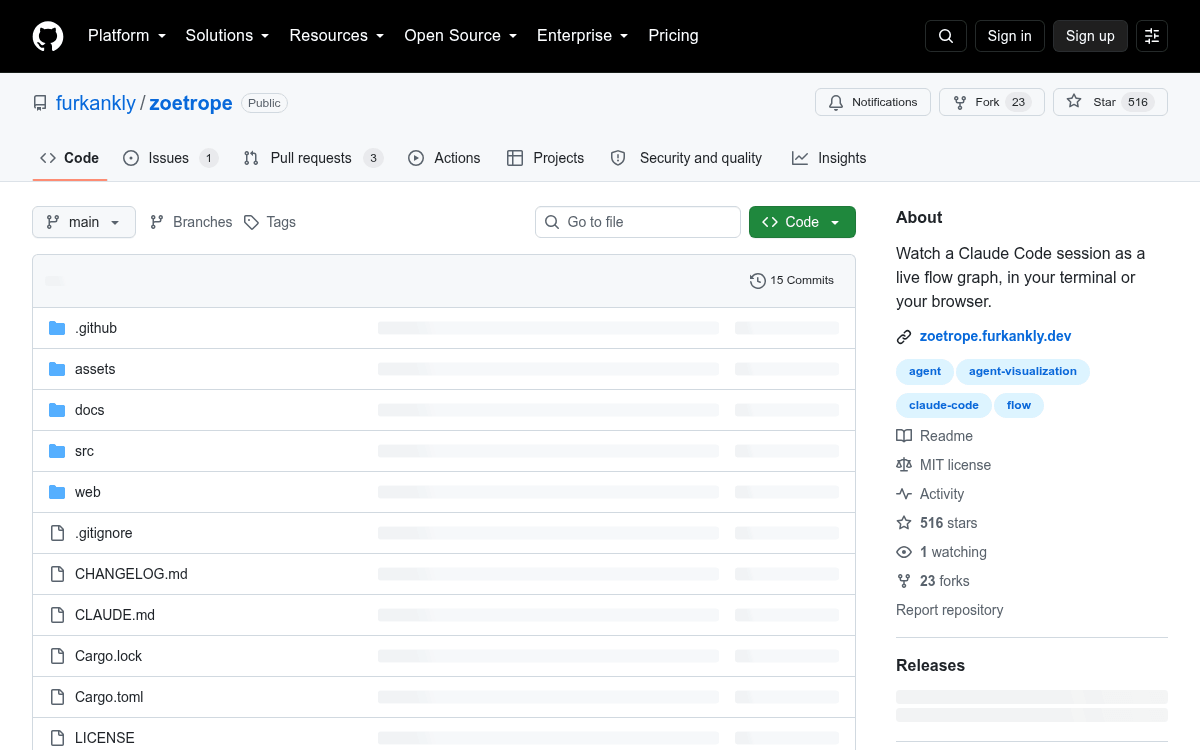
A new open-source Rust tool renders Claude Code sessions as a live, scrubbable flow graph inside your terminal or browser.

 PRO
PRO- Zoetrope visualizes Claude Code sessions as a live, scrubbable flow graph in your terminal.
- Reads JSONL transcripts from
~/.claude/projects/, read-only, with zero network calls in the dependency tree. - Same Rust engine compiles to WebAssembly and runs in the browser.
- Timeline is indexed by event count, not wall-clock, so busy periods get proportional space.
- Click any agent for its spawning prompt, reasoning, model, and every tool call with timings.
- Install with
cargo install zoetrope, MIT licensed, built on ratatui and ratzilla.
If you have ever kicked off a Claude Code session, walked away for coffee, and come back to a wall of streaming text that spawned four subagents you did not ask for, zoetrope is worth a look. The open-source visualizer turns a Claude Code session into a live flow graph, showing which agents ran, which tools they called, and how the tree evolved over time. It runs in your terminal, or in your browser as a WebAssembly build of the same engine.
The project is written in Rust, ships under an MIT license, and has picked up around 500 stars in its first week. The binary is called zoe, and installation is a single cargo install zoetrope.
Reading transcripts Claude Code already writes
The core trick: zoetrope does not hook into Claude Code at all. Claude Code writes a JSONL transcript for every session under ~/.claude/projects/, and zoetrope reads it and draws the session as a graph in your terminal. You see the main agent, the subagents and workflows it spawned, and the tools each one ran, updating live as it goes. Point it at a finished run and it replays, paced by the session's own timestamps. Point it at a running one and it follows along.
Two properties matter. The tool is read-only, and nothing leaves your machine. The author frames this as verifiable rather than a marketing claim: there is no HTTP client anywhere in the dependency tree, and tokio is pulled in without its net feature.
This story is for Pro members
You've reached the end of the free preview. Upgrade to AlphaSignal Pro to read the full article - and everything else behind the paywall.
Comments
