

Yale and Hong Kong Baptist Researchers Finally Bring Order to the KAN Chaos
A new review maps the sprawling Kolmogorov-Arnold Network ecosystem, offering theory, basis-function trade-offs, and a decision guide for picking the right variant.
 PRO
- New review systematizes the fragmented Kolmogorov-Arnold Network literature with a practitioner-focused guide.
- Clarifies that KANs are inspired by, not exact realizations of, the Kolmogorov superposition theorem.
- Shows shallow 1D KANs are mathematically equivalent to classical kernel methods.
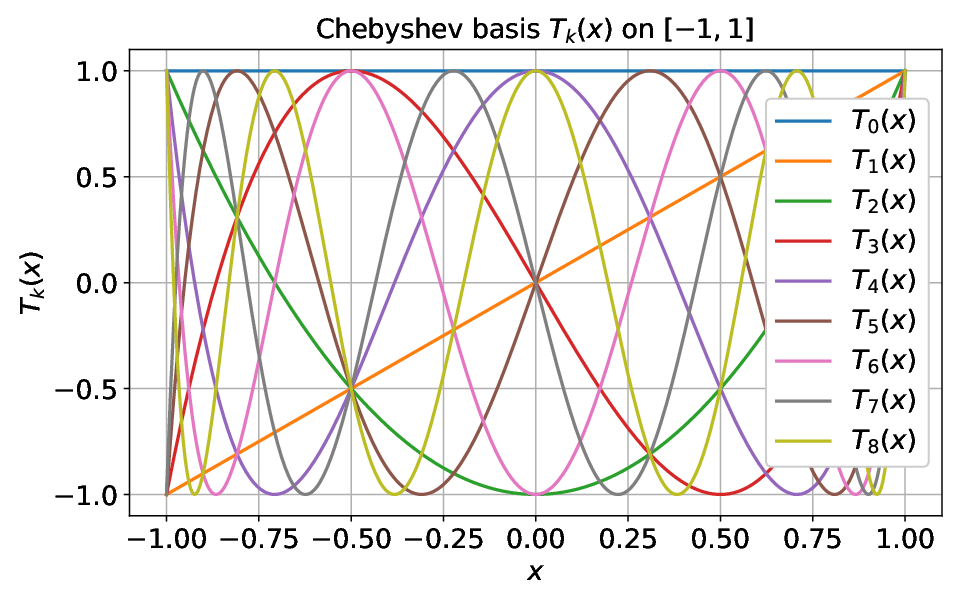
- Positions basis choice (spline, Chebyshev, Fourier, wavelet, RBF) as the dominant design decision.
- Provides a seven-step Choose-Your-KAN decision algorithm covering basis, optimizer, and scaling.
- Accompanying GitHub repo catalogs dozens of open-source KAN implementations.
The last two years have seen an explosion of Kolmogorov-Arnold Network (KAN) variants, each claiming to beat multilayer perceptrons on some task. A new review from researchers at Hong Kong Baptist University, Yale, and Universidad de Sevilla tries to bring order to that chaos, cataloguing the theory, the basis functions, and the practical tricks that actually move the needle. It also ships with a companion repository that tracks the ecosystem.
Too many KANs, too little guidance
KANs were introduced as a structured alternative to MLPs. Instead of applying a fixed activation at each node, they place learnable univariate functions along the edges of the network and sum them at the nodes. That switch from mix-then-activate to activate-then-mix gives you more interpretable, adaptable mappings, and it echoes the structure of the Kolmogorov superposition theorem, which says any continuous multivariate function can be written as sums of univariate functions.
The paper documents dozens of KAN variants with wildly different bases (B-splines, Chebyshev, Fourier, wavelets, Gaussians, Sinc, Jacobi, ReLU compositions, rational functions) and even more inconsistent benchmarks. Fair comparisons often reach contradictory conclusions because the optimal basis depends heavily on the PDE or function being fit. The review argues KANs are best understood as a
This story is for Pro members
You've reached the end of the free preview. Upgrade to AlphaSignal Pro to read the full article - and everything else behind the paywall.
Comments
