

Why your enterprise needs a team agent, not a solo bot
How Viktor replaces isolated solo bots with shared memory, secure access, and team-wide coordination.

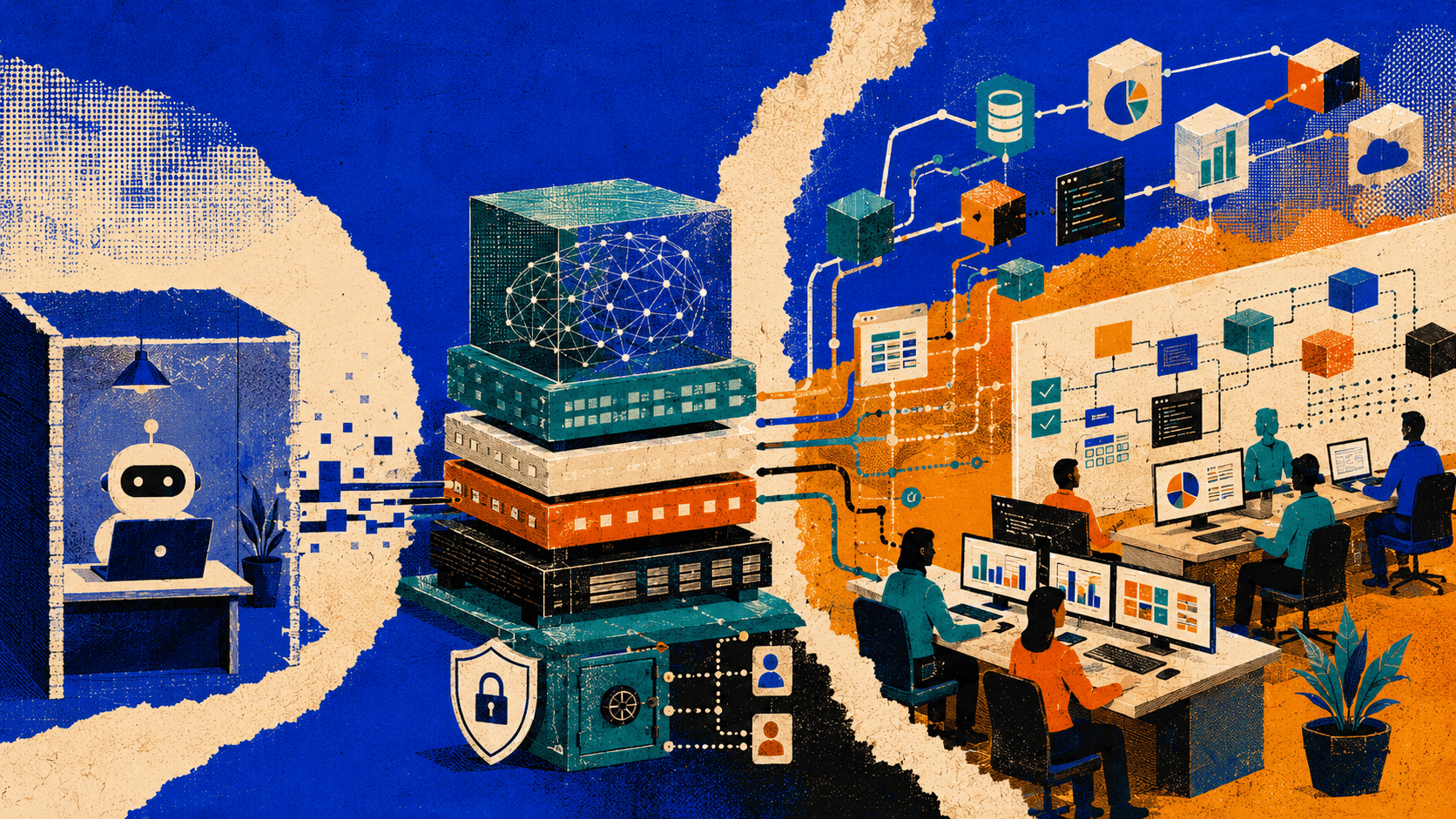
- Solo AI agents like OpenClaw and Claude Code are designed for single-user use and break down when enterprises attempt to scale them across large teams, creating security and context-management failures.
- Viktor partitions shared memory across team, topic, and task dimensions and connects to over 3,000 enterprise integrations, avoiding the context-compaction failures that caused one local agent to silently delete hundreds of emails.
- Unlike local agents that store credentials in plaintext .env files, Viktor vaults API keys in an encrypted backend and routes all integration requests through an abstraction layer, reducing exposure to prompt injection and credential theft.
- Viktor's persistent, organization-wide memory compounds over time — a nonprofit using it grew from simple grant research to 58 distinct operational skills, enabling deployment of 10 web platforms, 2 mobile apps, and 27 scheduled automations with no paid staff.
The tech industry is currently obsessed with solo agents like OpenClaw, Claude Code, and Hermes. These tools act like a brilliant junior engineer sitting next to you, executing commands and solving complex problems inside a local terminal.
However, there is a fundamental difference between a coding harness built for a single user and a shared digital coworker. Enterprises are fundamentally team sports. Software that fails to natively understand team dynamics eventually creates isolated silos across the organization.
When enterprises attempt to scale solo bots to hundreds of employees, the underlying architecture breaks. Viktor takes a different approach by building an agent natively for multi-player enterprise environments, solving the core issues of shared context and security.
The right tool for the right job
AI agents such as OpenClaw are designed to be solo agents. You are responsible for setting them up on your device and giving them access to the right files, applications, and accounts.
They expect to have full access to their environments and resources. They work fine as long as you're working solo and are power user who knows when to look over the agent's shoulder as it works.
They are not meant to be deployed in enterprise infrastructure with the nuances and complexities that come with granting permissions and resources.
This makes it tricky to integrate them in shared workspaces and applications without causing management or security nightmares.
Memory powered by 3,000 integrations
A solo agent treats memory as a single, finite chat history. When the context window reaches its limit, the agent compacts and summarizes the data. This often strips out critical operational instructions, as seen when an overwhelmed local OpenClaw agent silently discarded a Meta director's safety constraints and
Don't miss what's next in AI
Join 300,000+ engineers and researchers who get the signal, not the noise. Create a free account to read the rest of this story.
- Full access to in-depth AI research breakdowns
- Be the first to know what's trending before it hits mainstream
- Daily curated papers, repos, and industry moves
Comments
