

UC Irvine's DA-Dreamer Beats Every Baseline When Robot Sensors Arrive out of Order
A new delay-aware framework built on top of Dreamer-v3 teaches reinforcement learning agents to reason correctly when sensor observations arrive late and out of order.
 PRO
- DA-Dreamer tackles random observation delays in POMDPs, a setting no prior RL method addressed.
- Method filters delayed and out-of-sequence observations through a Dreamer world model belief state.
- Beats DCAC and Encoding baselines across six MuJoCo tasks, including 220k vs 145k on HumanoidStandup.
- Generalizes to unseen delay distributions when trained on wider support, unlike frame-stacking baselines.
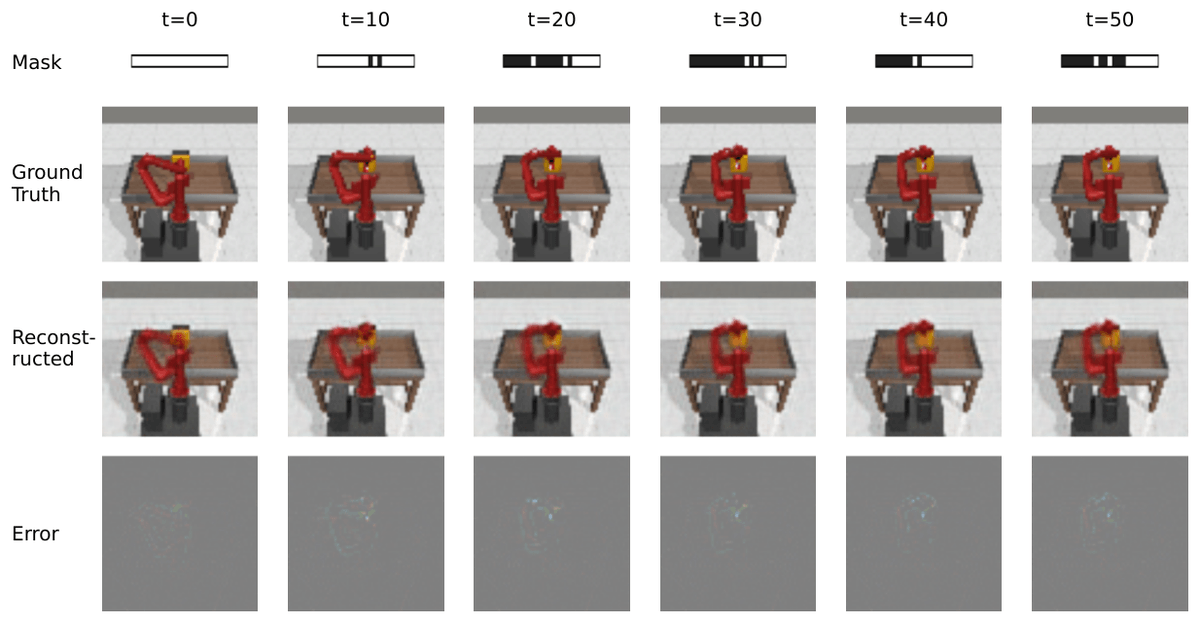
- Hits 0.91 success on visual Meta-World button-press under 20-step mean delay versus 0.12 memoryless.
- Open source at github.com/indylab/DA-Dreamer, built on Dreamer-v3 with linear-in-D inference cost.
Real-world sensors are late, jittery, and sometimes deliver readings in the wrong order. A team from UC Irvine has released a paper and codebase tackling a corner of reinforcement learning that most algorithms quietly ignore: what happens when observations arrive out-of-sequence because of random sensor delays. Their approach, DA-Dreamer, extends the Dreamer world model to filter through delayed observations and beats every existing delay-aware baseline on the tasks they tested.
The problem nobody wanted to model
Standard RL algorithms assume delay-free interaction with the environment, but in practice latency is pervasive and often unavoidable, particularly in robotics, autonomous driving, and distributed control. Prior work has handled either fully observable MDPs with delays or POMDPs with a single fixed delay. Neither captures what actually happens on hardware.
The tricky case is what the authors call out-of-sequence (OOS) observations. If two sensor readings are emitted at times 5 and 6 but arrive at times 8 and 7 respectively, the agent sees them in reversed order. This does not arise in fixed-delay settings and is harmless in MDPs, but it is critical in POMDPs, where relying only on the latest observation is insufficient for optimal control.
The paper first shows why the obvious workarounds fail:
- No-op waiting. Sitting still until the observation arrives is unsafe for an autonomous vehicle reacting to a low-latency obstacle sensor.
- Frame stacking. Feeding the last D observations to the network treats delays as generic input noise and, as the results show, collapses in high-dimensional environments like Humanoid.
This story is for Pro members
You've reached the end of the free preview. Upgrade to AlphaSignal Pro to read the full article - and everything else behind the paywall.
Comments
