

TU Munich's Open-Source TRACE Chatbot Nudges Travelers Toward Greener Trips
A multi-agent LLM system that gently steers travelers toward greener choices using counterfactual explanations, without overriding user intent.
 PRO
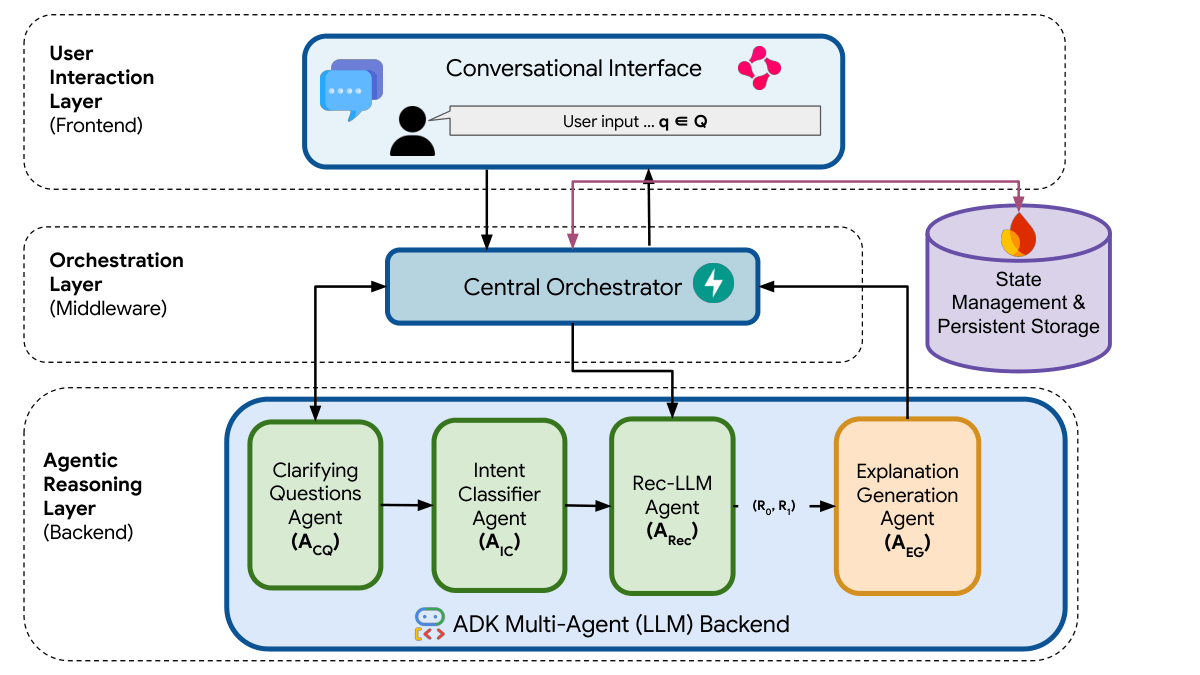
- TRACE is a multi-agent LLM system for sustainable travel recommendations built on Google's Agent Development Kit and Gemini 2.5 Flash.
- Four specialized agents handle clarifying questions, intent classification, recommendation generation, and counterfactual explanations.
- When users resist sustainability trade-offs, the system serves their preferred choice with a conditional explanation of the greener alternative.
- In user studies, 75.5% of primary recommendations were sustainability-aware, and 16.7% of users switched to the greener alternative when offered.
- End-to-end latency averages 23 seconds, competitive with other multi-agent frameworks. Code on GitHub.
- Currently limited to single European city trips; authors note a paradox where nudging to hidden gems could shift overtourism rather than reduce it.
Travel chatbots have gotten good at booking your dream vacation, but they tend to funnel everyone toward the same overcrowded hotspots and carbon-heavy flights. A team from TU Munich and the Polytechnic University of Bari built TRACE, a conversational recommender that nudges users toward lower-impact trips without stripping away their agency, and released the whole stack as open source.
Rather than hard-coding sustainability rules or treating environmental impact as a secondary constraint, TRACE infers preferences through conversation and uses a chain of specialized agents to elicit them, build a persona, and generate recommendations that balance relevance with emissions. When the user clearly does not want to compromise, the system serves what they asked for but attaches a counterfactual: here is what you would have gotten if you cared about carbon.
Why generic travel bots keep pushing Barcelona
Most existing conversational recommender systems for travel optimize for relevance and convenience, which reinforces popular destinations and carbon-intensive choices, leaving signals like emissions, congestion, and seasonality as afterthoughts. The authors are explicit that they are not chasing state-of-the-art ranking metrics. Their goal is to explore how multi-agent LLM architectures can steer users toward greener choices without violating explicit preferences or degrading trust.
This story is for Pro members
You've reached the end of the free preview. Upgrade to AlphaSignal Pro to read the full article - and everything else behind the paywall.
Comments
