

Topaz Labs' Hyperion 2.5 Pushes AI Video Into Professional HDR Pipelines
Topaz Labs releases Hyperion 2.5, an AI model that lifts 8-bit generative video into true 10-bit and 16-bit HDR for pro pipelines.
- Topaz Labs launched Hyperion 2.5, an AI SDR-to-HDR video conversion model targeting professional post-production.
- Converts 8-bit generative video to 10-bit ProRes, 16-bit EXR, and H.265 10-bit HDR outputs.
- Supports BT.2020 PQ and ACES 2065-1 color spaces for grading and VFX interchange.
- Available now in Astra from $19/mo (400 credits), coming soon to Topaz Video desktop.
- Fits into Resolve, Nuke, After Effects, Baselight, and Final Cut Pro pipelines.
- Aims to make GenAI footage viable alongside live action in VFX and color pipelines.
Generative video models spit out 8-bit SDR files. Professional post-production pipelines demand 10-bit or 16-bit HDR. That gap is why AI footage still feels stuck in a sandbox, unable to sit next to live-action plates in Resolve or Nuke without visible banding and crushed highlights. Topaz Labs is trying to close it with Hyperion 2.5, a new AI SDR-to-HDR conversion model.
From 8-bit to broadcast-grade
Hyperion 2.5 transforms 8-bit SDR input to professional-grade 10-bit ProRes or 16-bit EXR HDR output while expanding color, luminance, and visual data. The model outputs ProRes 10-bit, EXR 16-bit, and H.265 10-bit, and supports the color spaces that actually matter in finishing: BT.2020 PQ for HDR delivery and ACES 2065-1 for VFX interchange.
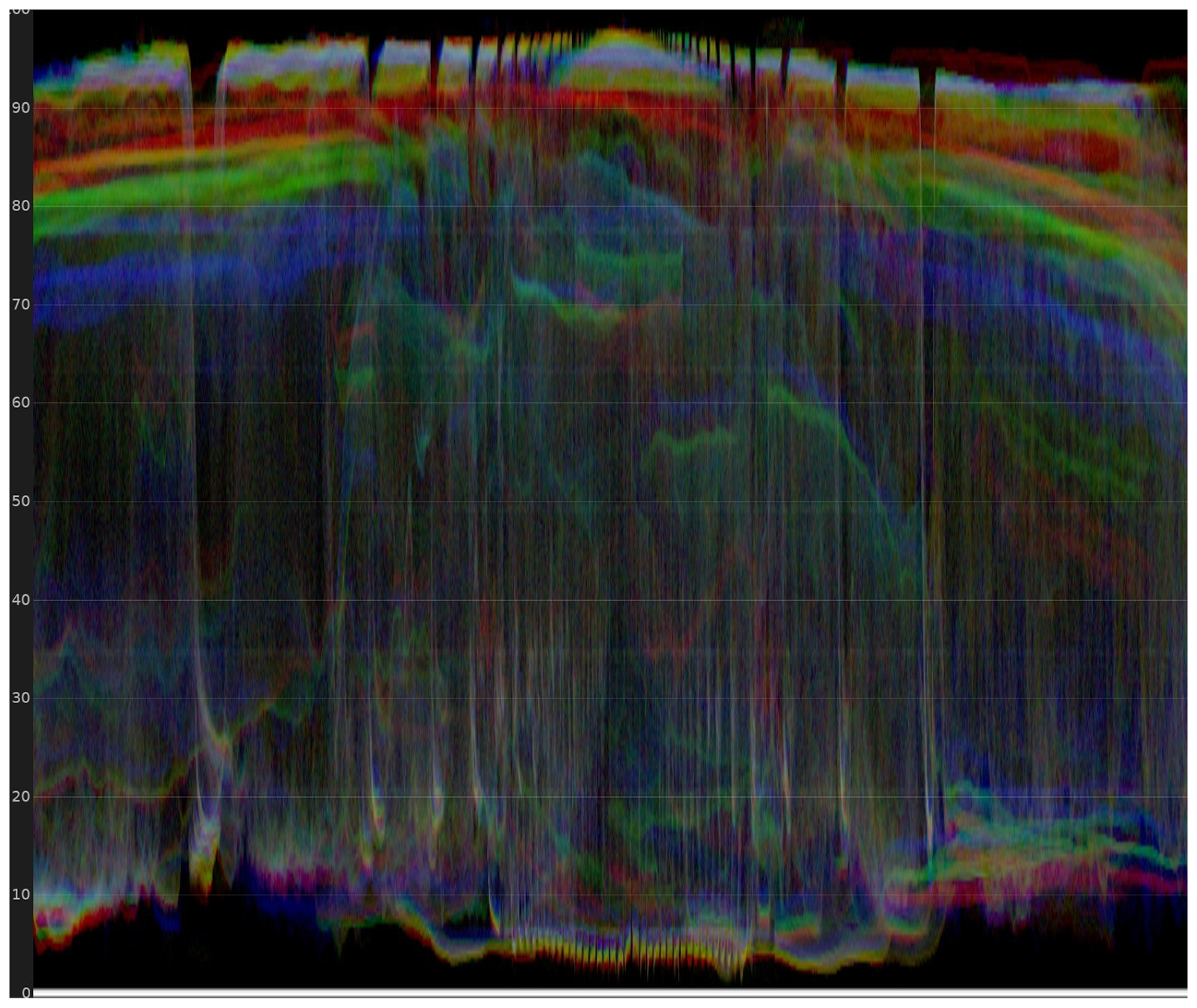
The practical difference between the two color spaces comes down to the number of tonal steps the model can preserve. 8-bit gives you 256 values per channel with harsh, fixed steps. 10-bit and 16-bit deliver smooth gradients with millions of values, which is the difference between a sky that bands under a color grade and one you can push hard without artifacts.
Why this is not just a color tweak
Naive SDR-to-HDR conversion is a math operation: stretch the luminance curve, remap into a wider color space, done. The result looks like an SDR image in an HDR container. Hyperion is doing something different. Its predecessor, Hyperion 2, was described as a model that automatically redistributes luminance and color information across highlights, midtones, and shadows. The 2.5 release extends that approach and pushes it into professional deliverables.
Topaz frames Hyperion 2.5 as a workflow bridge rather than a filter. The intended pipeline looks like this:
- Generate a still with Nano Banana or Midjourney
- Image-to-video with Seedance, Veo, Kling, or Runway
- Edit in Premiere, Resolve, or Final Cut
- Upscale via Astra or Topaz Video
- Convert to HDR with Hyperion 2.5 (10-bit ProRes or 16-bit EXR)
- Send to Nuke or After Effects for VFX and CGI
- Finish and color grade in Resolve or Baselight
What it is good at, and what it is not
Based on Topaz's own positioning and independent reviews, Hyperion sits in a specific niche. Hyperion 2 is currently the best model to convert from SDR to HDR. It can output 10-bit ProRes or 16-bit EXR. Reviewers describe its predecessor as automatically converting SDR video to HDR , redistributing luminance and color while improving text, small faces, and fast motion.
What it will not do:
- It is not an upscaler. If you need higher resolution or texture recovery on GenAI faces, Topaz recommends chaining Starlight Precise 2.5 first, then running Hyperion for HDR.
- It is not designed for long continuous scenes with hard cuts inside a single render. Topaz's own support recommends scene splitting for tricky footage.
- It does not fix source-level compression artifacts, contrast crush, or blown highlights that were already lost in the 8-bit master.
Availability and pricing
Hyperion 2.5 is available now in Astra, Topaz's cloud video product, and is coming to the desktop Topaz Video app. Astra Standard runs $19 per month promotional pricing (regularly $39), which includes 400 credits per month, 4K output, and 2-video concurrency, with additional credits at $0.10 each. Heavier users can move up to Plus at $99/mo (1400 credits) or Pro at $299/mo (5400 credits).
The bigger shift
Diffusion video models have gotten remarkable at generating plausible motion, but the industry has quietly accepted an unspoken ceiling: their output belongs on the web, not on a color-graded timeline destined for a spec-sheet deliverable. Hyperion 2.5 is a bet that the bit-depth ceiling is a solvable ML problem, not a fundamental limitation of generative video. If it holds up under real colorist scrutiny in Astra and later Topaz Video, the pipeline for mixing AI plates with live action gets a lot shorter.
Comments
