

StackBlitz's Bolt Template Marketplace Kills the Blank Canvas for Solo Builders
Bolt.new launches a free Template Marketplace of designer-built, full-stack apps you can clone and customize with a prompt
- Bolt.new launches the Template Marketplace: 21 free, fully functional full-stack app templates built with top designers.
- Every template runs immediately in Bolt's browser IDE -- no mockups, no themes, actual working apps with backends.
- Token-efficient design: browsing and previewing templates costs zero tokens; charges only begin when you start editing.
- Categories span portfolios, SaaS, internal tools, ecommerce, editorial, and vertical apps like finance dashboards and real estate sites.
- Competitive context: Bolt hit ~$40M ARR within 6 months of launch and competes directly with Lovable and Vercel's v0 in the AI app builder space.
- Free tier offers 1M tokens/month with no credit card; Pro is $20/month for 10M tokens -- all templates are free on any plan.
Bolt.new just addressed the blank-canvas problem that kills momentum for solo builders and small teams. The AI app builder from StackBlitz launched the Bolt Template Marketplace: a curated library of designer-built, fully functional full-stack apps that anyone can open, fork, and reshape with a prompt. Every template is free.
A polished website typically costs tens of thousands of dollars in design work. Bolt partnered with a handful of top designers and agencies to build that quality in from the start, at no cost to users. Instead of staring at a blank project, you start from something that already runs, already looks finished, and already has a backend.
Running apps, not mockups
Most template ecosystems ship static HTML themes or Figma files. Bolt's templates are complete, working projects. Open one and it runs immediately in Bolt's browser-based IDE, powered by StackBlitz's WebContainers technology, which runs a full Node.js environment inside a browser tab with no local setup required. From there, you prompt your changes: swap the brand, add a search bar, wire in a database. Templates consume no tokens until you begin making actual edits, a meaningful advantage given Bolt's token-based pricing model.
What's in the catalog
The launch covers 21 templates across seven categories:
- Portfolios: Architect Portfolio, Studio Portfolio
- Editorial: Design Magazine, Fashion Editorial, Travel Journal, Urban Journal
- Apps: Finance Tracker, Meditation App, Recipe Finder
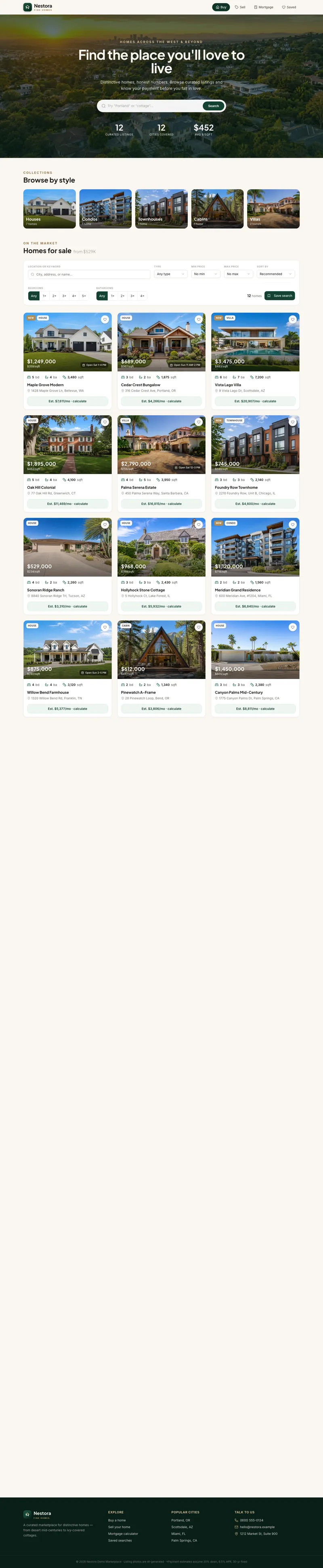
- Websites: Events Guide, Market Guide, Nonprofit Site, Property Listing, Real Estate, Space Tourism
- SaaS: SaaS Landing Page
- Internal Tools: Commerce Admin, Revenue Dashboard, Social Analytics
- Ecommerce: Skincare Brand
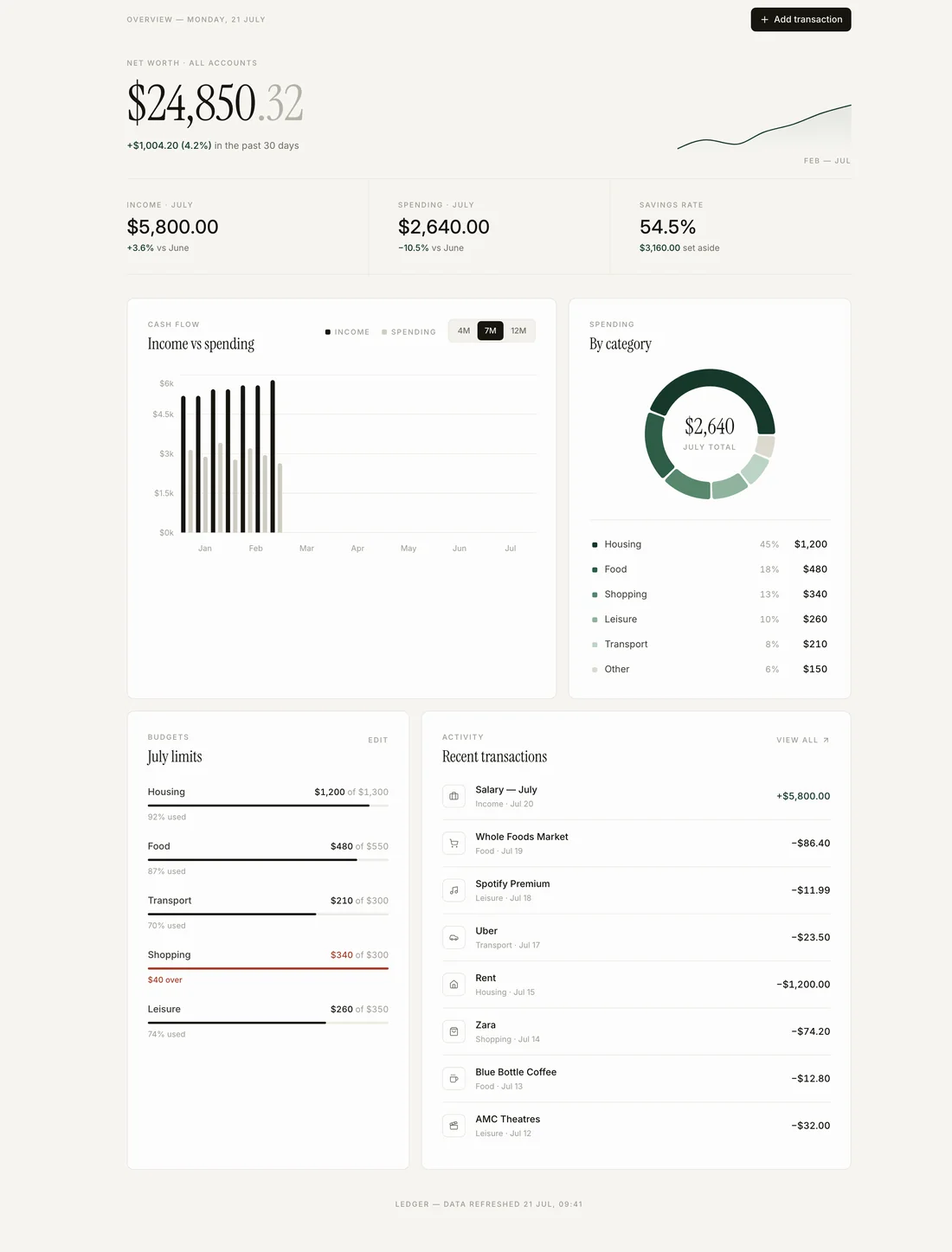
Each template page includes a live preview URL, a one-click "Use Template" button that forks it into your Bolt workspace, and a breakdown of what's included. The Finance Tracker ships with KPI tiles for net worth, income, and savings rate, a cash-flow chart, budget usage bars with over-budget flags, and a transaction feed, all wired up and ready to connect to real data.

The strategy behind the launch
Bolt.new launched in October 2024 and reportedly reached approximately $40M ARR within its first six months, making it one of the fastest-growing developer tools on record. The Template Marketplace continues a push to reduce the distance between idea and shipped product, while also formalizing vertical expansion into a single browsable destination.
The competitive timing is deliberate. Two AI app builders have dominated since late 2024: Bolt.new and Lovable (formerly GPT Engineer). Both turn natural language prompts into working applications, both have attracted millions of users, but they take different approaches. Lovable leans on a guided, conversational experience with tight Supabase integration. Bolt prioritizes developer control and speed, and now adds design quality as a third pillar.
Bolt has also been building enterprise credibility in parallel, with SOC 2 Type II compliance and integration with Claude's marketplace. The Template Marketplace slots into that story too: industry-specific starting points that could expand to any vertical where teams currently waste time rebuilding the same boilerplate.
Who benefits
The clearest winner is the solo builder or small team with technical skills but no design budget. Starting from a working, polished foundation rather than zero cuts the cost-to-first-working-product significantly, especially combined with the token efficiency of editing rather than generating from scratch.
For competitors, the pressure is tangible. Vercel's v0 still leads on raw UI generation fidelity, and Lovable still has the edge for non-developers who want a fully guided experience, but Bolt is closing both gaps at once. The designers and agencies who contributed templates also gain distribution: their work is now the first thing hundreds of thousands of users encounter when they open Bolt, a foundation that could eventually evolve into a paid creator marketplace.
What comes next
Bolt confirmed that cloned templates function as fully independent projects. The team has signaled more templates are coming, with vertical-specific expansions likely given the platform's earlier real-estate-focused releases. The recently introduced Teams plan, which added shared workspaces, role-based permissions, and native integrations with GitHub, Figma, and Supabase, pairs naturally with the marketplace: a team can fork a shared starting point and build from it with design consistency already in place.
For pricing context: Bolt.new offers a free tier with 1M tokens per month, no credit card required. Pro is $20 per month for 10M tokens. All templates are free on any plan tier.
Comments
