

SpaceX Closes $60B Cursor Deal to Challenge Anthropic and OpenAI
SpaceX closes its $60B all-stock acquisition of Cursor, folding the AI coding giant into SpaceXAI to challenge Anthropic and OpenAI in the developer tools market.
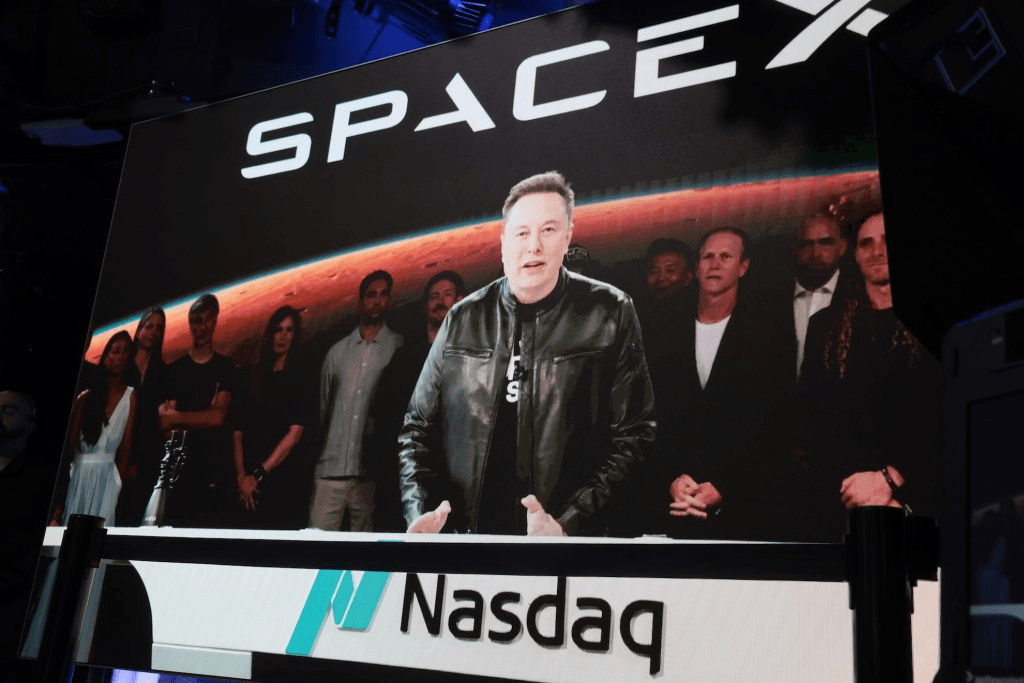
- Deal closed: SpaceX officially completed its $60B all-stock acquisition of Cursor (Anysphere) on August 14, 2026 -- the largest startup acquisition ever.
- Integration: Cursor will be absorbed into SpaceXAI; its workforce folds into existing Grok/SpaceXAI structures, with the Cursor brand potentially phased out over time.
- Strategic rationale: SpaceX's xAI division was struggling against Anthropic and OpenAI; Cursor brings $2B ARR, 7M+ monthly active users, and Fortune 500 enterprise penetration.
- Product impact: The Cursor coding assistant keeps its name for now, but new products like the "Sand" agent may launch as "Grok Bot"; Grok 4.5 is already the default model in Cursor.
- Privacy concern: Cursor's default Privacy Mode now routes session data into Grok model training -- users with proprietary code should audit their settings immediately.
- Market context: The AI coding market hit $12.8B in 2026; GitHub Copilot leads on users, Claude Code on satisfaction, and Cursor on revenue growth velocity.
SpaceX has completed its $60 billion acquisition of AI coding startup Cursor, with the deal becoming effective today, two months after SpaceX formally announced it had agreed to acquire the company. Cursor will join the SpaceXAI team to help improve Grok Build, Grok Bot, Grok API, and Cursor itself. This is not just a product acquisition -- it is SpaceX planting its flag in the most competitive corner of the AI market.
The biggest startup exit in history
On June 16, SpaceX announced it would acquire Anysphere -- the company behind Cursor -- for $60 billion in an all-stock deal, the largest acquisition of a venture-backed startup ever recorded. At the August 14 effective time, outstanding Cursor common and preferred shares were converted into the right to receive an aggregate of 389,289,254 shares of SpaceX Class A common stock, based on an implied Cursor equity value of $60 billion and a price per SpaceX share equal to the volume-weighted average closing price over the seven trading days before closing.
The $60 billion in Class A common stock that SpaceX agreed to pay represented a 3.4% dilution at the aerospace and tech conglomerate's IPO valuation. If, for some reason, the deal had not been consummated, SpaceX had agreed to pay Cursor a termination fee of $1.5 billion and $8.5 billion in computing resources, according to its IPO filings. The structure of that breakup fee alone -- $10 billion total -- signals just how badly SpaceX wanted this deal.
How we got here: a startup on a rocket trajectory
Launched in 2022 by CEO Michael Truell and three of his classmates from MIT, Cursor helped spark a trend called "vibe coding" as AI coding tools became increasingly capable of autonomously producing computer software. Cursor hit $2 billion ARR with 1 million paying users, a trajectory from $1M to $2B in approximately 28 months that no SaaS company in history had achieved at that speed. Cursor now has over 7 million monthly active users and more than 1 million daily active users, with over 50,000 paying teams and deployment at more than half of Fortune 500 companies, including Nvidia, Uber, Adobe, Salesforce, and PwC.
Despite those numbers, the company was burning cash. One source told TechCrunch that the $2 billion Cursor was planning to raise was not going to be enough to help it break even -- and that was despite the startup previously raising $900 million in a Series C in June 2025, and another $2.3 billion in late 2025. SpaceX's offer gave Cursor's investors a clean, enormous exit without the risk of another fundraise.
The xAI wreckage that made this deal necessary
To understand why SpaceX paid $60 billion for a coding tool, you have to understand the state of its AI division. Prior to being acquired by SpaceX in 2026, the division's assets were part of a standalone corporation named X.AI Corp., founded by Elon Musk and 11 researchers in 2023. xAI was folded into SpaceX on May 6, 2026, with Grok and X now being part of the SpaceXAI division.
All 11 of Musk's co-founders in xAI had left the company by the end of March, and Musk publicly admitted that xAI "was not built right the first time around" and that he was rebuilding it "from the foundations up." xAI's Grok chatbot had failed to compete with AI coding tools from rivals like Anthropic's Claude Code and OpenAI's Codex, and Grok had fallen behind Claude's market share as Anthropic's platform was boosted by the success of its AI coding tools.
SpaceX told investors in its IPO filings that behavior like allowing users to generate nudes and sexual deepfakes of women and children was a risk to its business, and the company currently faces a number of legal challenges as a result of these actions. Cursor was, in many ways, a reputational reset button as much as a product acquisition.
The IPO that made it all possible
Four days before the Cursor deal was announced, SpaceX had gone public at $135 per share, raising $75 billion in the largest IPO in history. Since going public, SpaceX's stock went from its IPO price of $135 per share to more than $200 per share in pre-market trading just days later, adding nearly $1 trillion -- or roughly 16 Cursors -- to its valuation in the span of just a few days. Paying $60 billion in stock was suddenly a lot easier when that stock was appreciating at that pace.
SpaceX told investors it faces a total addressable market of around $28 trillion, with nearly all of that -- $26 trillion -- centered around the company's AI efforts. The collaboration combines Cursor's software engineering platform with SpaceX's AI compute infrastructure, including the Colossus training supercomputer operated through its xAI business. Cursor is now the consumer-facing proof point for those trillion-dollar promises.
Who wins, who loses
The winners here are clear:
- Cursor's early investors and employees -- Andreessen Horowitz, Thrive, and Nvidia were all set to participate in a $2B round that valued Cursor at $50B. Instead they got $60B in SpaceX stock from a company whose shares have been soaring since the IPO.
- SpaceX shareholders -- they get a product with $2B ARR, 7M+ monthly active users, and Fortune 500 penetration. The news prompted investment bank Morgan Stanley to revisit its valuation of SpaceX at an impressive $600 per share.
- SpaceXAI's Grok -- the acquisition will bring enterprise customers and critical coding data to SpaceX, helping its Grok model expand in the commercial market.
The losers are less obvious but just as important:
- Anthropic and OpenAI -- xAI's Grok had failed to compete with AI coding tools from rivals like Anthropic's Claude Code and OpenAI's Codex. Cursor is SpaceX's attempt to leapfrog that gap in one move.
- Cursor's enterprise customers -- companies that chose Cursor specifically because it was model-agnostic now face uncertainty about whether Claude and GPT access will remain available long-term.
- GitHub Copilot -- Cursor's market share had declined from 41% in June 2025 to about 26% in May, but a Cursor backed by SpaceX's compute and Grok's model development is a different competitive threat than Cursor alone.
The market Cursor is walking into
The AI coding assistant market reached $12.8 billion in 2026, growing at a 27% compound annual growth rate toward a projected $30.1 billion by 2032. Three names dominate: GitHub Copilot leads on raw users (4.7M paid subscribers, 75% YoY growth), Cursor leads on revenue (hit $2B ARR with 1M+ paying users), and Claude Code leads on satisfaction (46% most-loved per JetBrains April 2026 survey, versus Cursor at 19% and Copilot at 9%).
The most important trend is that 59% of developers use three or more AI coding tools in parallel, with the dominant workflow pattern being Cursor for editing and daily shipping, Claude Code for complex tasks, and GitHub Copilot for completions. SpaceX is betting that owning the editing layer -- the place where developers spend most of their time -- is the most valuable real estate in that stack.
What changes for you, the Cursor user
The short answer: not yet. Cursor will not run as an independent entity, and its workforce and operational tools will be folded directly into existing SpaceXAI structures. But the product itself is not going away overnight.
Here is what to watch for:
- Brand changes: Future releases such as "Sand," an internal project developing a general-purpose AI agent, might be launched under SpaceXAI's Grok branding, while existing offerings like the core Cursor coding assistant are expected to retain their current names for now.
- Model access: Every Cursor API call routed to Anthropic is revenue that does not stay inside SpaceX's ecosystem. SpaceX has a structural incentive to shift workloads toward its own models. However, abruptly removing Claude or GPT access would cause user churn. The more likely path is gradual: improve xAI's models until they are competitive, then make them the default while keeping third-party options available.
- Privacy and data: The privacy shift happened quietly. Cursor's standard Privacy Mode now permits session data to flow into Grok training. This changed on June 28, before the acquisition closed. If you work with proprietary code, it is worth auditing your settings now.
- Jointly trained model: SpaceX said it has been jointly training an AI model with Cursor and will release it soon. Grok 4.5 launched on all Cursor plans and is now the default model in Grok Build, available across the xAI API, SpaceXAI console, and Microsoft Office add-ins, with a 64.7% resolve rate on SWE-Bench Pro and a 500K context window.
What is now possible
The strategic logic is vertical integration. SpaceX is assembling an AI stack that spans model development (Grok), coding tooling (Cursor), and raw compute infrastructure (Colossus). SpaceX has also outlined broader AI expansion plans involving space-based infrastructure, asking regulators for permission to deploy up to 1 million AI satellites, creating solar-powered orbital data centers capable of performing computing workloads. The vision, if it works, is a closed loop: SpaceX trains models on Colossus, serves them through Cursor to millions of developers, and eventually runs that compute from orbit.
That is an ambitious bet. But SpaceX just closed the largest startup acquisition in history to make it real. The question is whether Cursor's users will come along for the ride -- or whether the model-agnostic freedom that made Cursor great will quietly disappear as SpaceX pushes Grok to the front of the queue.
Comments
