

Pollen Robotics Open-Sources Microduck, a Palm-Sized Robot That Walks and Self-Recovers
Pollen Robotics open-sourced Microduck, a 25 cm biped robot brain written in Rust that walks via reinforcement learning policies exported to ONNX.

 PRO
PRO- Pollen Robotics open-sourced Microduck, the full Rust brain for a 25 cm biped robot
- 50 Hz control loop drives 15 servos on a Rockchip RK3566 using ONNX neural policies
- Policies trained separately in microduck_rl using MuJoCo, PPO, and domain randomization
- Architecture uses independent Rust daemons on Unix sockets, no ROS or robotics framework
- Walks, grasps, stands up after falls, and hot-swaps to a rolling policy with wheels attached
- Apache-2.0 licensed; hardware sold at pollen-robotics.com/microduck
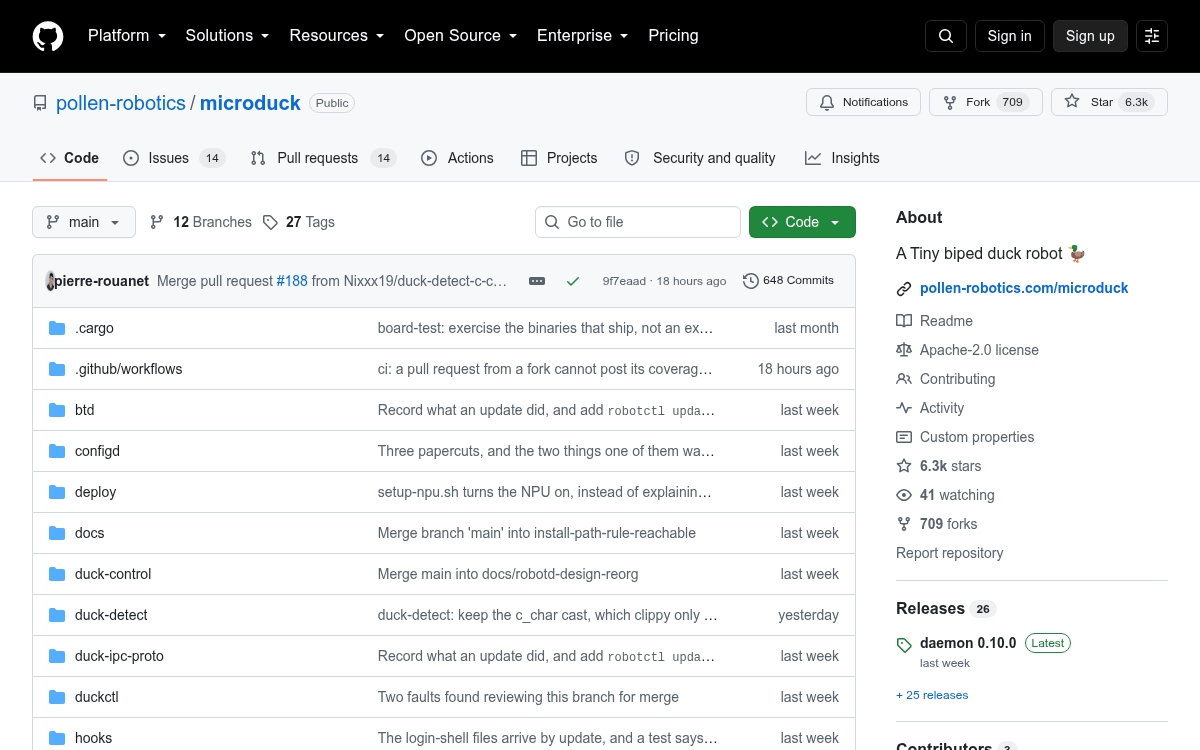
Pollen Robotics has open-sourced the full software stack for Microduck, a palm-sized bipedal robot that walks, grasps objects, kicks a ball, and recovers from a faceplant. The repository is a Rust workspace of daemons running on a Rockchip board, driving fifteen servos from neural network policies trained in simulation. The code is Apache-2.0 licensed, and Pollen sells the hardware if you want to run it on a physical robot.
Pollen, acquired by Hugging Face last year, has been building accessible open robotics platforms alongside projects like the LeRobot ecosystem. Microduck extends that work to legged locomotion, a domain that has historically required expensive research lab hardware.
Inside the repo
The robot stands roughly 25 cm tall, weighs 800 g, and runs a 50 Hz control loop on a Rockchip RK3566, with fifteen servos driven by neural policies loaded from ONNX files. Locomotion policies are trained in a sibling project, microduck_rl, using MuJoCo and PPO with domain randomization, then exported to ONNX for the main repo to run at inference time.
The entire stack is Rust, with no robotics middleware and a single Cargo workspace, a deliberate departure from ROS-heavy convention in hobby and research robotics. Instead of a middleware graph, a fleet of small daemons communicate over Unix sockets:
This story is for Pro members
You've reached the end of the free preview. Upgrade to AlphaSignal Pro to read the full article - and everything else behind the paywall.
Comments
