

OpenAI's GPT-Live Ditches Turn-Based Voice for Real-Time Two-Way Conversations
OpenAI launches GPT-Live, a full-duplex voice model that listens and speaks simultaneously, backed by GPT-5.5 reasoning for complex queries.

- OpenAI launches GPT-Live, a full-duplex voice model that listens and speaks simultaneously, replacing the turn-based Advanced Voice Mode.
- Two versions rolling out: GPT-Live-1 (for Go, Plus, Pro users) and GPT-Live-1 mini (for Free users), across iOS, Android, and web.
- Full-duplex architecture lets the model make interaction decisions many times per second — speaking, listening, pausing, or calling tools concurrently.
- For complex queries, GPT-Live delegates to GPT-5.5 in the background while keeping the conversation flowing; reasoning tiers (Instant, Medium, High) are user-selectable.
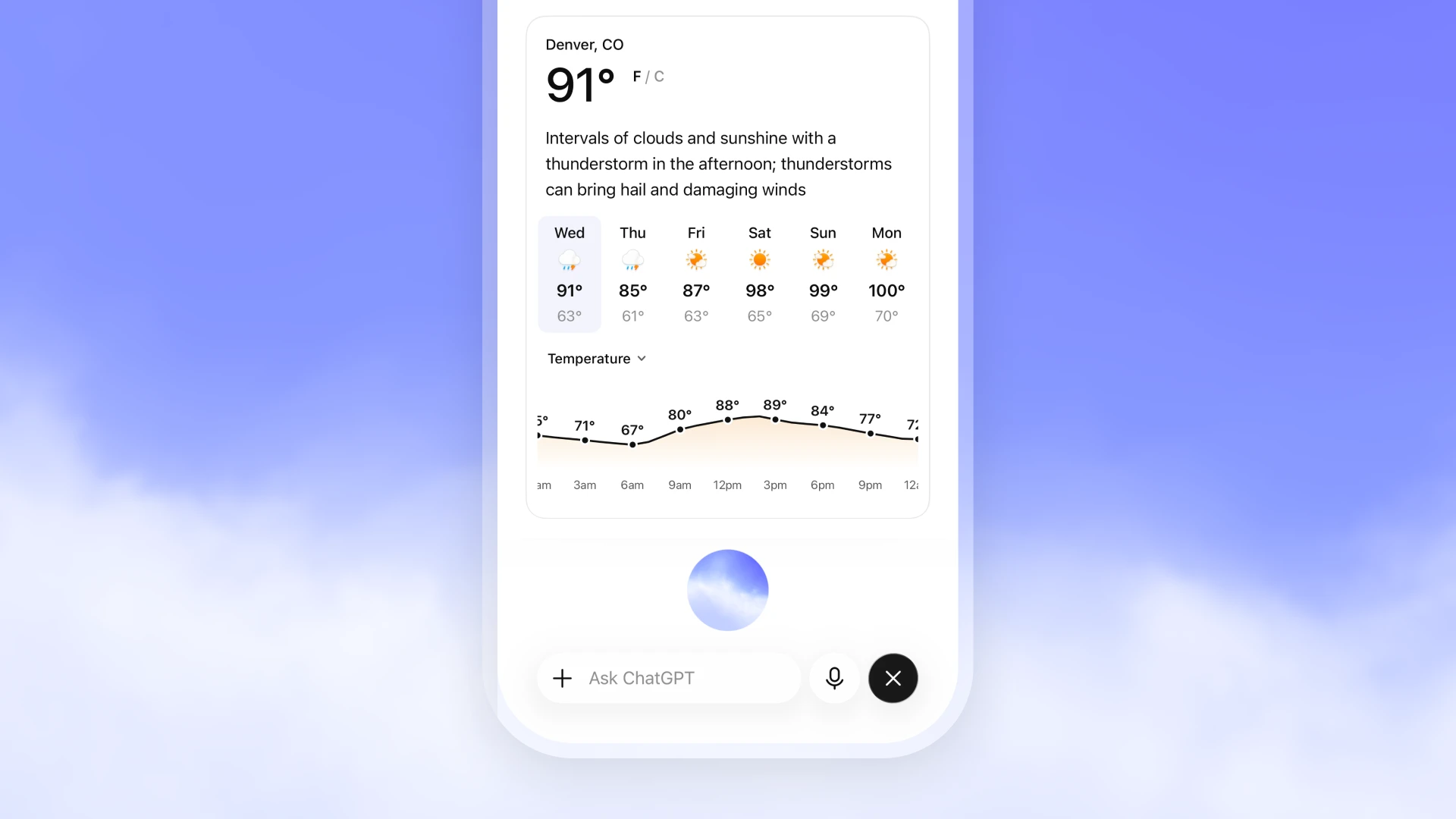
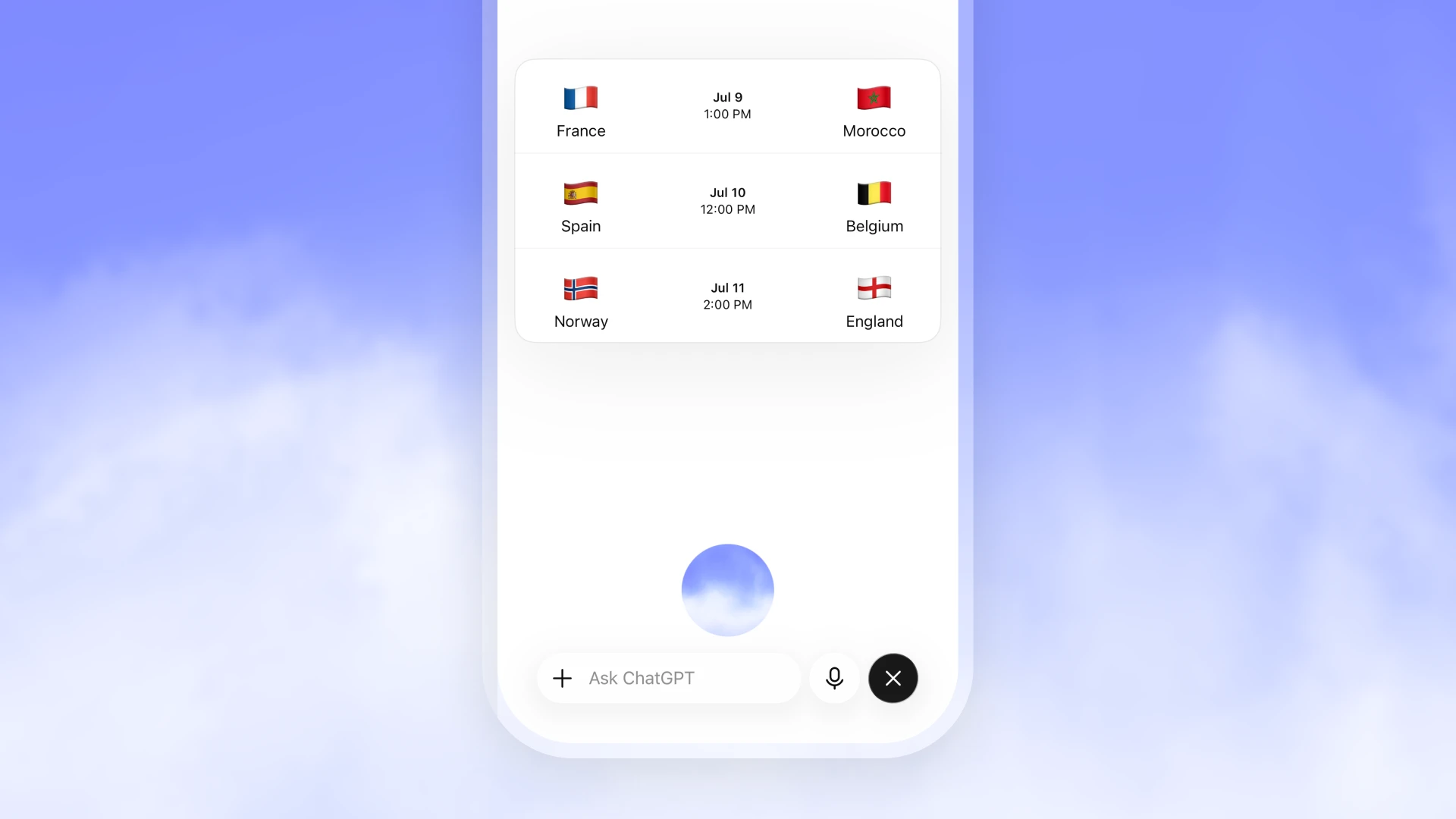
- New visual answer cards for weather, sports, maps, and stocks appear during voice conversations; video/screen sharing not yet supported at launch.
- API access coming soon — developers can sign up for early access; no extra cost beyond existing ChatGPT subscription tiers.
GPT-Live is OpenAI's biggest rethink of voice AI since Advanced Voice Mode launched. It's not just a smarter voice model , it's a fundamentally different architecture. While every previous ChatGPT voice system operated like a walkie-talkie (one side talks, the other listens, then they switch), GPT-Live works like a phone call: both sides are live at the same time.
The walkie-talkie problem
To understand why this matters, it helps to trace how we got here. The original ChatGPT Voice chained three models together: a speech-to-text model to transcribe your speech, a large language model to produce a response, and a text-to-speech model to convert it back into speech. This pipeline was slow and stilted , information got lost at every handoff, and the model had no idea what your voice actually sounded like.
Turn-based voice models like ChatGPT Advanced Voice Mode processed and generated audio within a single model, reducing latency and making conversations smoother , but they still operated through discrete turns. The model had to wait for the user to stop speaking before responding, resulting in rigid back-and-forth. Even a brief pause or background noise could be mistaken for the end of a turn, causing the model to cut in at the wrong moment.
Full-duplex: listen and speak at the same time
GPT-Live uses a full-duplex architecture that allows it to listen and speak simultaneously. This is the core architectural shift. Instead of processing a sequence of separate messages, GPT-Live continuously processes input while generating output. The model can therefore make interaction decisions many times per second: whether to speak, continue listening, pause, interrupt, or invoke a tool.
The practical effect: during conversations, the model can acknowledge input with phrases like "mhmm" or "yeah," engage in rapid exchanges, or remain silent when needed. You can interrupt mid-sentence, pause to think, or ask it to slow down , and it handles all of it gracefully. OpenAI also remastered all nine distinct voices in ChatGPT specifically for GPT-Live.
Delegation: the second architectural trick
Full-duplex solves the conversational flow problem, but it introduces a new one: a model that's optimized for real-time interaction can't also be doing deep reasoning at the same time. OpenAI's answer is delegation. When a question requires search, reasoning, or more agentic capabilities, GPT-Live can delegate the task to another model like GPT-5.5. This allows it to keep the conversation going, even as it handles multiple tasks in the background.
At launch, GPT-Live will use GPT-5.5 in the background. As OpenAI releases new frontier models, they'll continuously update the model used by GPT-Live. This decoupled design means the voice layer and the reasoning layer can evolve independently , a smart architectural bet.
There are also selectable reasoning tiers: users can choose the level of reasoning that fits their needs , Instant for fast responses, or Medium and High when they want ChatGPT to spend more time thinking. Under the hood, GPT-Live-1 (instant) and GPT-Live-1 mini use the GPT-5.5 Instant model in the background, while GPT-Live-1 Medium and GPT-Live-1 High use the GPT-5.5 Thinking model with medium and high reasoning effort.
What it's actually good at
OpenAI ran head-to-head human evaluations against Advanced Voice Mode across 5–10 minute conversations. GPT-Live-1 and GPT-Live-1 mini were preferred over Advanced Voice Mode in conversations lasting five to ten minutes, with evaluations measuring overall preference, turn-taking, interruptions, conversational flow, and how natural interactions felt.
On capability benchmarks, the gains are significant:
- GPQA (expert-level scientific reasoning across biology, chemistry, and physics): GPT-Live-1 substantially outperforms Advanced Voice Mode.
- BrowseComp (agentic web search for hard-to-find information): GPT-Live-1 shows strong gains over Advanced Voice Mode.
- τ³-Voice Telecom (realistic multi-turn telecom support tasks): GPT-Live-1 outperforms Advanced Voice Mode.
GPT-Live also gains a new feature that voice-only interfaces have always lacked: while you're talking, ChatGPT can now show rich visual cards for topics like weather, stocks, sports, and more. Voice continues to support search, memory, images, and file uploads.
Current limitations
GPT-Live is not a complete replacement for all existing voice modes yet. At launch, GPT-Live will not support voice with video or screen sharing in ChatGPT, but OpenAI is working to introduce these capabilities soon. You can still access legacy versions of ChatGPT Voice, including Standard and Advanced Voice Mode, where these features are available.
Language coverage is also uneven. OpenAI has optimized GPT-Live for some of the most popular languages in ChatGPT, but for certain languages, the model may have a non-native accent or gaps in fluency.
The industry context
OpenAI is not the only one racing toward full-duplex voice. Google's Gemini Live voice mode, launched in 2024, allowed interruptions but still operated in a half-duplex rhythm: the assistant stopped speaking the moment it detected voice, but re-processing lag made it feel less seamless. Apple's Siri, even after its 2025 revamp, remains largely half-duplex. Amazon's Alexa has long enabled "barge-in" on smart speakers, but the underlying architecture is simpler , it doesn't require the deep contextual understanding a large language model provides.
The broader pattern here is that text-model intelligence has been racing ahead of voice interfaces for years. GPT-Live is OpenAI's attempt to close that gap on the consumer side, while the Realtime API (with GPT-Realtime-2) targets the developer and enterprise side. For product teams and voice-UX engineers, a robust bidirectional voice layer would materially change interaction design patterns used for agentic features, live assistants, and voice-first hardware prototypes.
Who gets it and when
GPT-Live is rolling out now to ChatGPT users globally across iOS, Android, and ChatGPT.com. GPT-Live-1 will become the default model powering ChatGPT Voice for Go, Plus, and Pro users, and GPT-Live-1 mini will become the default for Free users.
No additional cost is required beyond your existing plan. ChatGPT plans range from Free ($0) to Go ($8/month), Plus ($20/month), and Pro tiers at $100 and $200/month. For developers, OpenAI plans to bring GPT-Live to the API soon, and developers and enterprises can sign up to be notified using the official form. To access it, just tap the Voice button in ChatGPT on any supported platform.
What this unlocks going forward
The delegation architecture is the part worth watching most carefully. By separating the real-time conversation layer from the reasoning layer, OpenAI has built a system that can keep improving on both dimensions independently. Over time, OpenAI believes this research will unlock the ability to use voice for increasingly complex, longer-running, and more agentic work. Voice as a first-class interface for agents , not just a chat wrapper , is the real bet being placed here.
More than 150 million people use ChatGPT Voice and Dictation features weekly, according to OpenAI. GPT-Live is the infrastructure that turns that user base into a foundation for something much more ambitious than hands-free Q&A.
Comments
