
OpenAI's Codex Transforms From Coding Tool Into a Full Enterprise Work Platform
OpenAI's Codex gets Sites, six role-specific plugins, and Annotations — turning the coding agent into a full enterprise work platform for non-developers
Takeaways
- Sites launched: Codex can now build, deploy, and host interactive web apps from a prompt, returning a shareable URL — no deployment setup required. (OpenAI)
- 5M+ weekly users, 6x growth: Codex has grown more than sixfold since February 2026; non-developers are now 20% of users and growing 3x faster than engineers.
- Six role-specific plugins: Data Analytics, Creative Production, Sales, Product Design, Public Equity Investing, and Investment Banking — bundling 62 apps and 110 skills.
- Internal tools only (for now): Sites is workspace-gated with no public sharing, no custom domains, and no SAML — purpose-built for internal team apps, not public websites.
- Annotations expanded: Surgical in-place edits now work on documents, spreadsheets, and slides, not just code and websites.
- Business and Enterprise only: Sites is in preview for ChatGPT Business and Enterprise plans; no timeline announced for Plus or Pro access.
OpenAI's Codex just made its biggest leap beyond software development. In a single update, the company shipped three major capabilities: Sites, a feature that turns a prompt into a live, hosted web app with a shareable URL; six role-specific plugins that wire Codex into the tools used by analysts, marketers, bankers, and designers; and expanded Annotations that let you point at any part of a document and ask Codex to refine it in place. The headline is Sites, but the real story is a platform repositioning.
OpenAI has dramatically expanded Codex from a specialized AI coding assistant into a full-fledged enterprise work platform , and the most striking signal of this shift is that non-developers now represent about 20% of Codex's 5 million weekly active users, adopting the platform at three times the rate of traditional software engineers. Codex is now up more than 6x since the launch of the desktop app in February. That growth curve is what explains the timing of this launch.
From code generator to app factory
Sites lets Codex "create, save, deploy, and inspect websites, web apps, and games hosted by OpenAI." You describe what you want in a thread, optionally calling the plugin explicitly with @Sites, and Codex builds the project, runs it for testing, deploys it, and hands back a production URL.
No Vercel config. No Docker. No CI pipeline. Just a conversation.
Users describe what they want , a dashboard, a project tracker, a knowledge base , and Codex builds the full application, deploys it to OpenAI-managed hosting, and returns a shareable URL with workplace authentication through Sign in with ChatGPT. The sites are hosted by OpenAI, built as Cloudflare Worker output, with D1 and R2 available for storage.
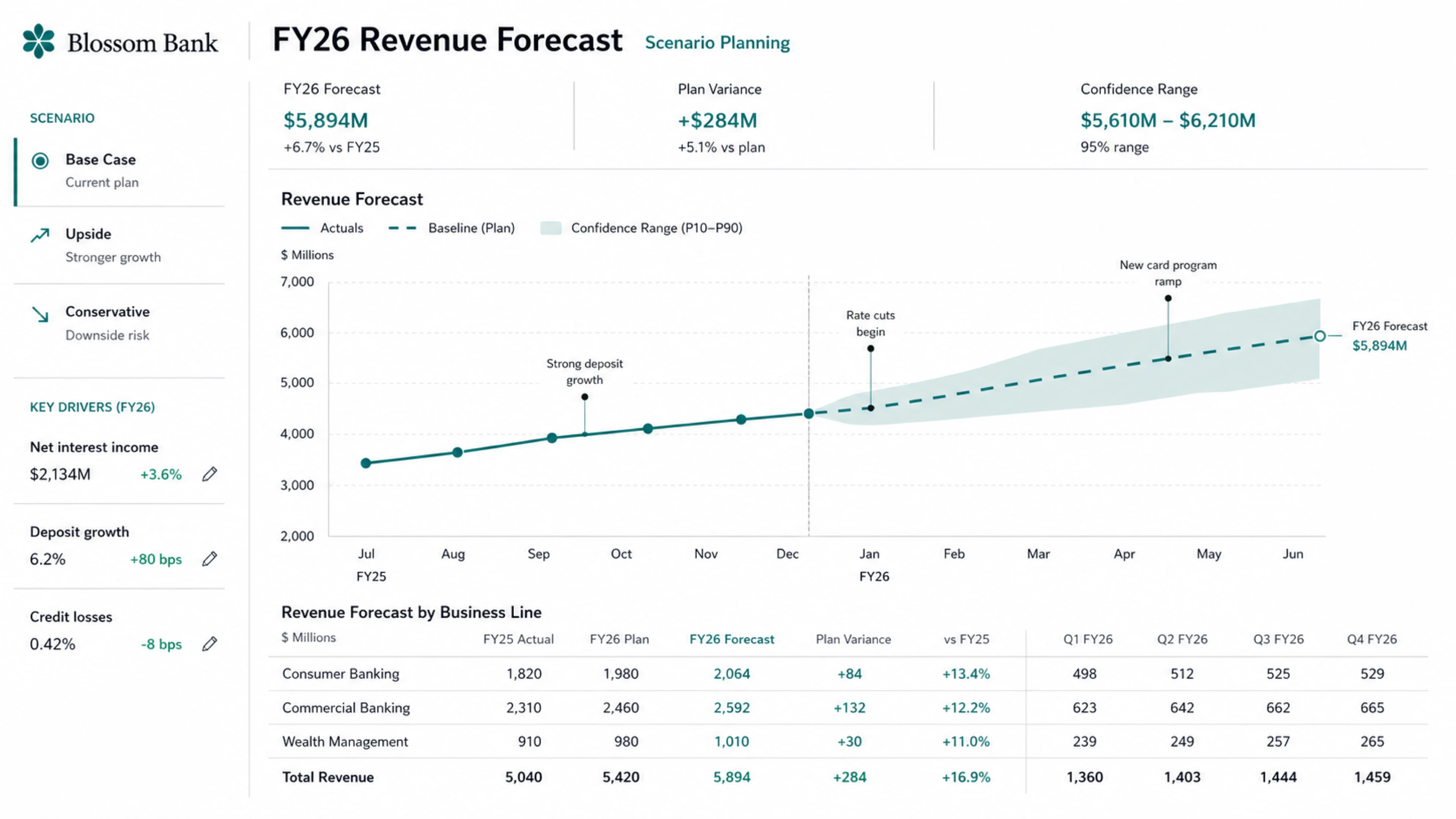
What can you actually build? OpenAI's examples include:
- Interactive revenue forecast planners where leaders can toggle assumptions instead of reading through spreadsheet tabs
- Customer review hubs with product updates, open questions, and usage trends
- Launch materials turned into living pages that track owners, milestones, and decisions
- Project boards, galleries, and lightweight internal tools that previously needed an engineer to spin up
From one prompt, Codex built and deployed a working app, with a database, in about 23 minutes. But you cannot make a Codex Site truly public , the only sharing options live inside your workspace, there is no "anyone with the link" mode, and there are no custom domains. It is an internal tool builder, not a public website builder. That constraint is a deliberate design choice, not a technical limitation.
Six plugins that encode entire job functions
The six role-specific plugins for Data Analytics, Creative Production, Sales, Product Design, Public Equity Investing, and Investment Banking bundle 62 popular apps and 110 automated skills. Each plugin is a pre-configured agent that already knows which tools your role uses and how to chain them together.
- Data Analytics: Connects to Snowflake, Databricks Genie, Hex, and Tableau to answer questions with data and explain why key metrics changed
- Creative Production: Turns a brief into campaign boards, display ad variations, and product image sets using Figma, Canva, Shutterstock, Picsart, and Fal
- Sales: Pulls context from Salesforce, HubSpot, Slack, Outreach, Clay, and Rox to prepare for meetings and update records
- Product Design: Prototypes from a live URL, audits user flows, and makes static screenshots interactive, with output that carries forward in Figma and Canva
- Public Equity Investing: Reviews earnings, compares companies, and tracks signals using Moody's, Daloopa, FactSet, LSEG, S&P, PitchBook, and Hebbia
- Investment Banking: Prepares pitch materials, analyzes comparable companies, and turns diligence into client-ready recommendations
OpenAI named five more roles on the roadmap, including Marketing Strategy and Legal. The plugin source code is open on GitHub, and teams can build and share their own custom plugins for internal systems.
Annotations: surgical edits without starting over
Annotations are not new to Codex , developers already used them to refine code and websites. What changed is the scope. You can now select a chart on a slide and ask for a clearer label, highlight a claim in an investment thesis and ask where it came from, or mark a navigation bar in a site and change the font. The expanded Annotations feature now reaches documents, spreadsheets, and slides. The idea is to make Codex useful after the first draft, when the work needs judgment and iteration rather than a full regeneration.
The competitive picture is messier than it looks
The obvious read is that Sites puts Codex in direct competition with Lovable, Replit, Bolt, and v0. The reality is more nuanced. Lovable, Replit, and Webflow are actually listed in OpenAI's official Sites partner ecosystem , not competitors. Sites and the no-code AI builders are not competing for the same exact buyer. Sites is purpose-built for internal company apps with company-managed authentication. Lovable and Replit are purpose-built for public web apps and developer-first MVPs that need full code portability.
The key difference is that Lovable, Bolt, and v0 give you the code and let you deploy anywhere, while Codex Sites hosts the result on OpenAI's infrastructure. For portability and control today, the standalone vibe-coding tools still win. If you need a public-facing product with a custom domain, Sites is not the right tool yet. If you need a fast internal app that your team can access with their ChatGPT login, it is the fastest path available.
Constellation Research noted that the purpose of OpenAI's Codex push is also to reclaim buzz versus Anthropic's Claude franchise , and with both companies headed toward the public markets, a drumbeat of dueling headlines is likely.
Who gets it and what comes next
Sites is currently in preview for ChatGPT Business (enabled by default) and Enterprise (available as a toggle in Early Access settings). OpenAI says more plans are rolling out later but has not given a date for Plus or Pro access, so individual subscribers cannot use it today. The role-specific plugins are rolling out in supported regions and are installable from the Codex plugin directory.
Sites authenticates with workspace identity, not SAML. It targets a Cloudflare Worker runtime, so not every existing app is portable onto it. It is free in preview with no published caps, no monitoring dashboard, and no approval workflow , which makes the low barrier both the opportunity and the risk. Enterprise admins should review access controls before teams start spinning up internal apps at scale.
The broader bet OpenAI is making is that Codex can be reframed from a tool for developers into something closer to an operating system for knowledge work. Knowledge workers primarily use Codex to create reports, spreadsheets, presentations, contracts, and other work products , and are increasingly using it for research, data analysis, workflow automation, and building lightweight tools that previously required engineering support. The fastest-growing tasks are data analysis, research, and knowledge artifact creation. Sites is the infrastructure layer that turns those outputs into something a whole team can actually use.