

OpenAI Rolls Out ChatGPT Health to 300 Million Weekly Users
ChatGPT Health graduates from beta to full U.S. rollout, letting users connect Apple Health and medical records directly into their AI conversations — powered by the new GPT-5.6 Sol model
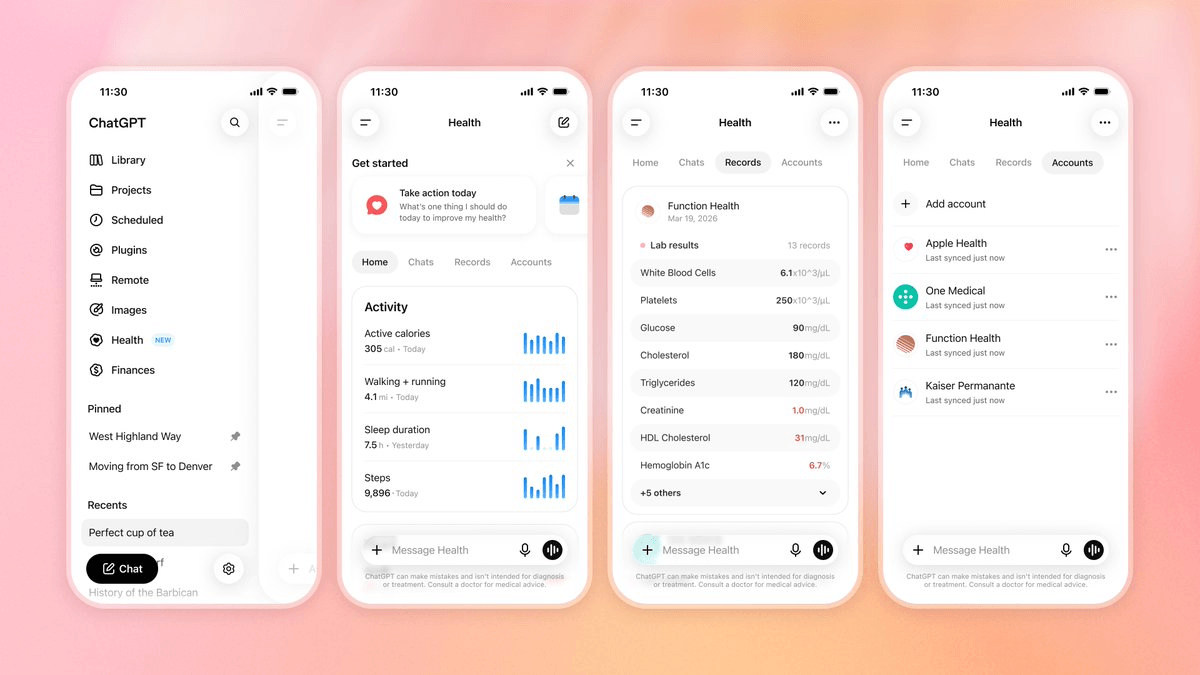
- Full U.S. rollout: Health in ChatGPT is now live for all U.S. users 18+ on Free, Go, Plus, and Pro plans on web and iOS.
- Cross-conversation context: Health data now flows into any ChatGPT conversation, not just a dedicated health tab — fixing a key UX flaw from the beta.
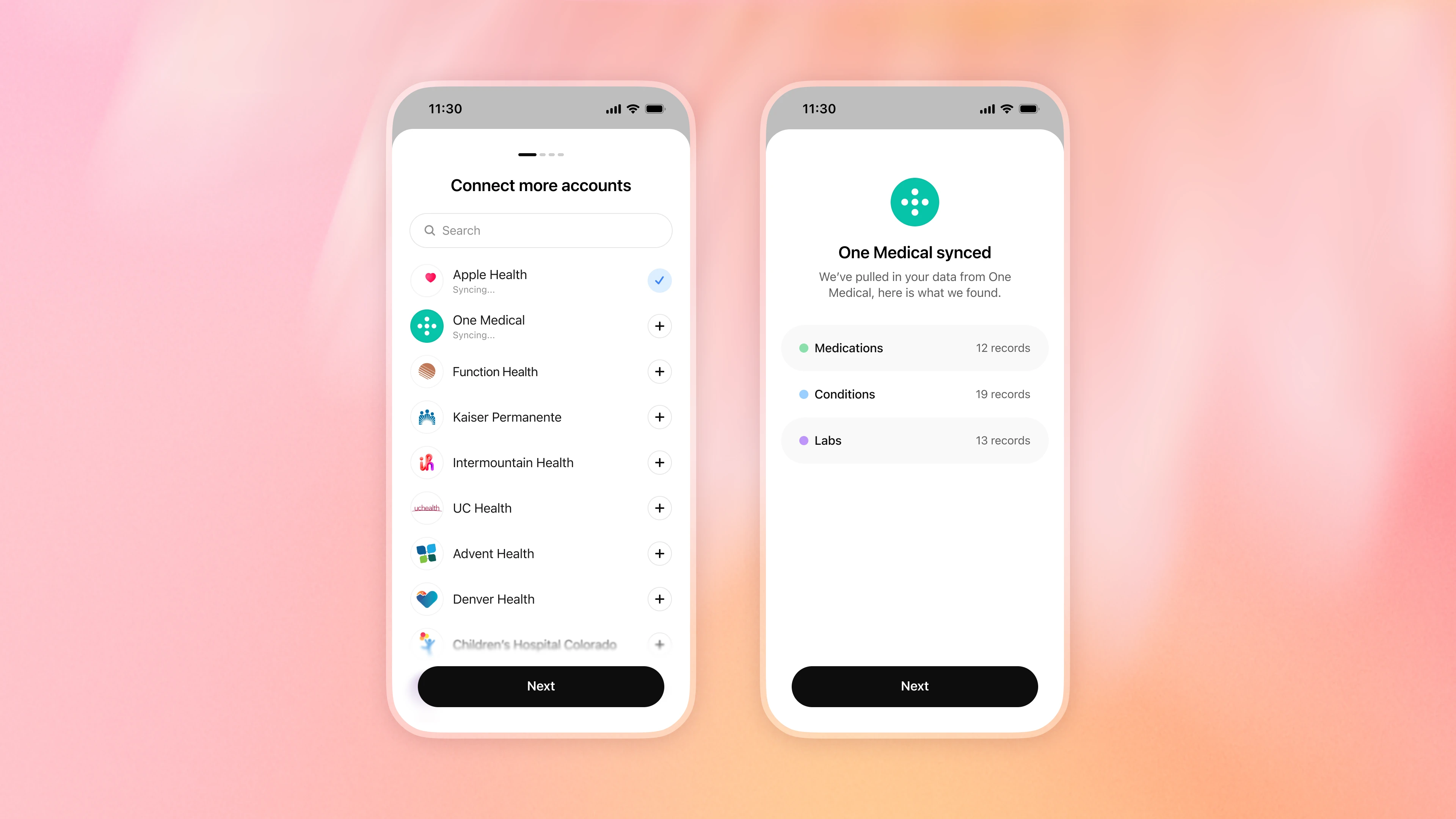
- Supported connections: Apple Health, One Medical, Function Health, and medical records from U.S. hospital systems can all be synced.
- Stronger model: GPT-5.6 Sol (paid users) scores 60.5 on HealthBench Professional, up 8.7 points over GPT-5.5; free users get GPT-5.5 Instant.
- Privacy caveats: Health data won't train OpenAI's models, but the product operates under consumer-grade terms, not HIPAA — a concern raised by privacy advocates.
- Market scale: OpenAI enters a $37B AI healthcare market with 300 million weekly health users already on the platform.
Health in ChatGPT is now rolling out broadly to U.S. users after a limited beta earlier this year. The feature is built directly into the ChatGPT sidebar, letting users connect Apple Health, medical records from major hospital systems, One Medical, and Function Health, then ask questions grounded in their own data.
The timing reflects something OpenAI observed in usage patterns. Every week, more than 300 million people bring health questions to ChatGPT: understanding a lab result, preparing for an appointment, making sense of a diagnosis, building a healthier routine. Health in ChatGPT gives that existing behavior a proper infrastructure.
From a dedicated tab to everywhere
The original beta required users to navigate to a separate health section for personalized responses. That design turned out to be wrong. More than 70% of health-related conversations among beta users happened outside the dedicated health experience, because health questions surface during meal planning, workout scheduling, or reviewing a doctor's note, not in a siloed tab.
OpenAI redesigned accordingly. You can now let ChatGPT draw on your connected health data across any conversation, not just those started inside the Health section. The Health sidebar remains the hub for managing records, browsing trends, and revisiting past health conversations, but the context flows into whatever you're discussing. ChatGPT can factor in a dietary restriction when helping you choose a restaurant, or account for a recent injury when planning weekend activities, without you re-explaining your situation each time.
What you can connect
Supported data sources at launch cover the main places personal health data actually lives:
- Apple Health — activity, sleep, workouts, and data from connected wearables or fitness apps
- Medical records from U.S. hospital systems, via a health data connectivity layer
- One Medical — medications, conditions, and lab records
- Function Health — lab testing data
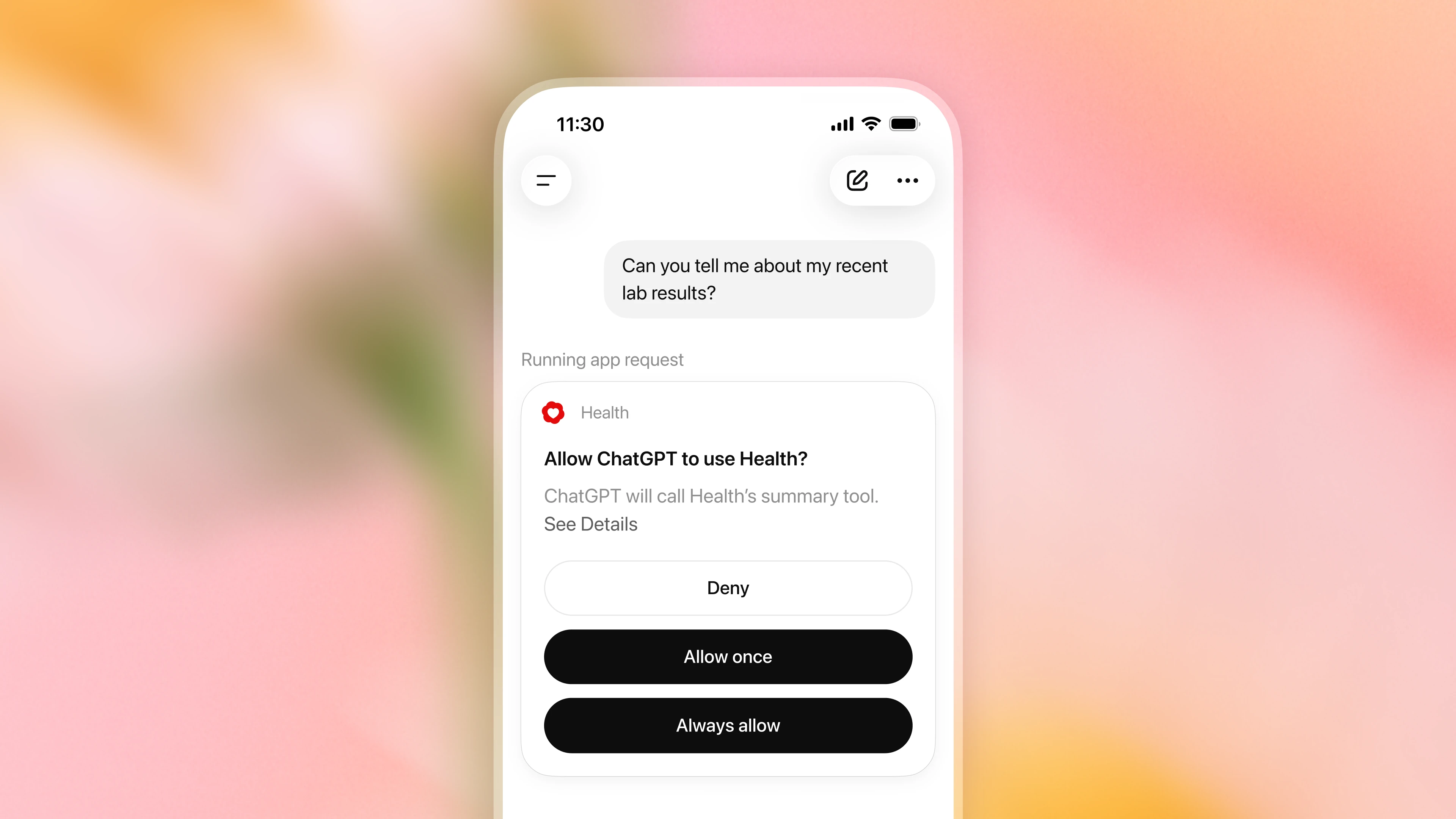
With your permission, ChatGPT can compare a new lab result with prior tests, summarize changes since your last appointment, or explore how sleep and activity relate to other patterns in your data. You can also type @Health in any message to explicitly pull in your health context.
The models behind it
OpenAI also upgraded the models powering health conversations. Two are now available:
- GPT-5.5 Instant — available to free users, with improved ability to recognize urgent situations, ask clarifying questions, and communicate uncertainty. On OpenAI's most challenging health evaluations, it performed at a level comparable to their frontier Thinking models at the time of evaluation.
- GPT-5.6 Sol — available to paid users, and the strongest model yet for health tasks. On HealthBench Professional, Sol scores 60.5, up 8.7 points over GPT-5.5.
HealthBench Professional is OpenAI's evaluation suite, developed with hundreds of physicians worldwide. It scores models across accuracy, safety, communication, context awareness, completeness, and appropriate escalation — including whether the model knows when to refer a user to a doctor. Every GPT-5.6 model outperformed GPT-5.5 on this benchmark. Physicians tested Health in ChatGPT extensively before release, helping measure and improve real-world performance with connected health data.
Privacy commitments and their limits
OpenAI has added several privacy protections on top of the standard ChatGPT baseline:
- Connected medical records and Apple Health data are not used to train foundation models, regardless of your model-training settings
- Connected health data receives additional encryption beyond standard ChatGPT conversations
- By default, ChatGPT asks for permission before using your health data in any response
- You can disconnect any source at any time, and data synced from that source is deleted from OpenAI's systems within 30 days
There is a meaningful gap, though. Health in ChatGPT does not use consumer inputs to train its models, but the product operates under consumer-grade terms rather than HIPAA standards. Users submitting medical records to Health would not render OpenAI a covered entity or business associate, keeping it outside HIPAA's regulatory scope.
Privacy advocates warn that sharing electronic medical records with ChatGPT Health strips those records of HIPAA protection. The U.S. has no comprehensive federal privacy law, which creates real exposure for users sharing health data with any consumer AI product. Researchers have also flagged that as OpenAI explores advertising as a business model, the separation between health data and the memories ChatGPT builds from other conversations needs to be airtight.
Who benefits and who should pay attention
For patients, the core problem is real: health data is scattered across portals, apps, and wearables, and making sense of it requires either a doctor's appointment or hours of manual work. An AI that already knows your medication list, recent labs, and sleep patterns, and can reason across all of it, is a genuine improvement over a blank chat window.
For the broader health AI market, the competitive pressure is substantial. The AI healthcare market hit $37.09 billion in 2025 and is projected to reach $110.61 billion by 2030, growing at a 38.6% compound annual rate. The digital health technology market overall is estimated to exceed $300 billion in 2026. OpenAI enters with 300 million weekly health users already in hand, a distribution advantage no purpose-built health AI startup can match.
The competitive landscape splits into two tiers. On the clinician side, OpenEvidence serves more than 860,000 clinicians with answers grounded in peer-reviewed literature; Abridge dominates ambient documentation by generating clinical notes during the visit itself. ChatGPT Health targets neither of those workflows. It occupies the consumer layer: the space between a patient's daily life and their next doctor's appointment.
The rollout is available now to logged-in ChatGPT users 18 and older in the U.S. on web and iOS, across Free, Go, Plus, and Pro plans. Open Health from the sidebar in ChatGPT to get started. The feature is not yet available in Codex.
Comments
