

NVIDIA's GDRCopy v2.5.2 Fixes Build Failures on Linux Kernels 6.15 and Beyond
GDRCopy v2.5.2 patches a kernel 6.15 build break, keeping NVIDIA's low-latency GPU memory copy library alive on the latest Linux kernels
 PRO
- v2.5.2 released: Fixes build failures on Linux kernel v6.15+ caused by a GPL symbol conflict in the kernel module.
- Core value: GDRCopy reduces GPU memory copy overhead from 6–7 µs (cudaMemcpy) to ~0.1–0.2 µs for small, frequent transfers.
- v2.5 API additions: New
gdr_pin_buffer_v2,GDR_PIN_FLAG_FORCE_PCIE, and persistent mapping support added in prior releases. - Blackwell + CUDA 13 support: v2.5.1 added compatibility with NVIDIA's latest GPU architecture and CUDA release.
- Best use case: MPI middleware, RDMA transports, and real-time inference pipelines doing many small GPU-CPU transfers.
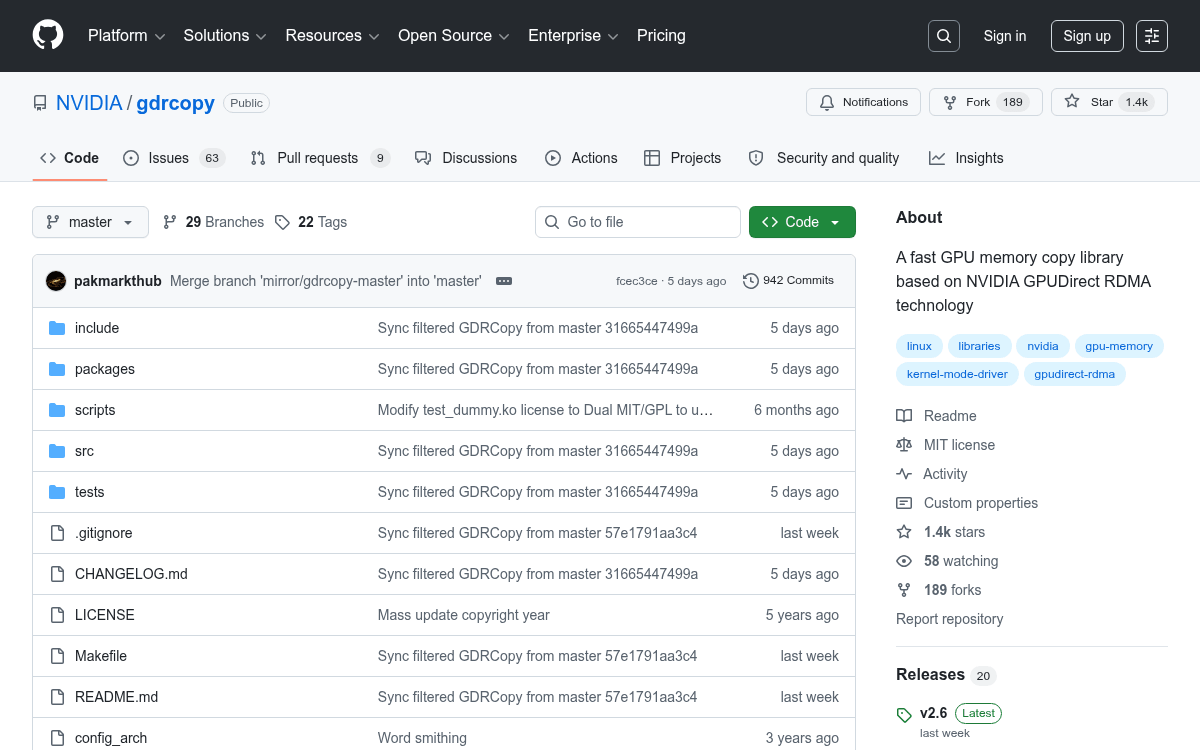
- Free and open source: MIT license, available at github.com/NVIDIA/gdrcopy.
GDRCopy, NVIDIA's open-source library for ultra-low-latency CPU-driven GPU memory copies, just shipped v2.5.2 , a targeted patch release that fixes build failures on Linux kernel v6.15 and newer. It's a small but important fix for anyone running cutting-edge kernel versions in HPC or AI infrastructure environments where staying current matters.
What broke and what got fixed
The issue was a licensing symbol conflict in the kernel module. The v2.5.2 release fixes build errors on recent kernels (v6.15+) by marking test-dummy.ko with Dual MIT/GPL so it may use the GPL-only symbol __vma_start_write (vm_flags_set). Without this fix, the module simply fails to compile on any system running a kernel from the 6.15 series onward.
This is a common friction point with Linux kernel modules: as the kernel evolves, GPL-only symbols get stricter enforcement, and out-of-tree modules that don't declare the right license can silently break. The fix is minimal but necessary to keep the build green on modern distros.
What GDRCopy actually does
GDRCopy is a low-latency GPU memory copy library built on NVIDIA's GPUDirect RDMA technology. It enables direct access to GPU memory from the CPU, providing significantly lower latency for data transfers compared to traditional CUDA memory operations.
This story is for Pro members
You've reached the end of the free preview. Upgrade to AlphaSignal Pro to read the full article - and everything else behind the paywall.
Comments
