

NVIDIA's DeepOps 26.05 Revives GPU Cluster Tool After Two Years
NVIDIA has cut a fresh DeepOps tag, the first release in nearly three years for its Ansible toolkit that provisions GPU clusters on Kubernetes or Slurm.
 PRO
- NVIDIA tagged DeepOps 26.05, first release since 23.08 for its GPU cluster automation toolkit.
- Kubespray moves to v2.31.0 with updated inventory group names replacing legacy kube-master and kube-node labels.
- GPU Operator bumped to v26.3.1, default driver 580.126.20, device plugin and feature discovery at 0.19.1.
- Slurm updated to 25.11.6 with better sacctmgr idempotency; Network Operator now at 26.1.1.
- Validation now focuses on Ubuntu 22.04/24.04, DGX OS 6/7, and RHEL/Rocky 8/9 for DGX platform software.
- Direct Kubernetes upgrades from 23.08 may fail Kubespray prechecks; staged upgrades or redeploy recommended.
NVIDIA has quietly tagged DeepOps 26.05, the first cut of its GPU cluster provisioning toolkit since the 23.08 release. If you have ever bootstrapped a rack of DGX boxes or a mixed GPU pool by hand, this is the sort of housekeeping release that quietly saves a weekend.
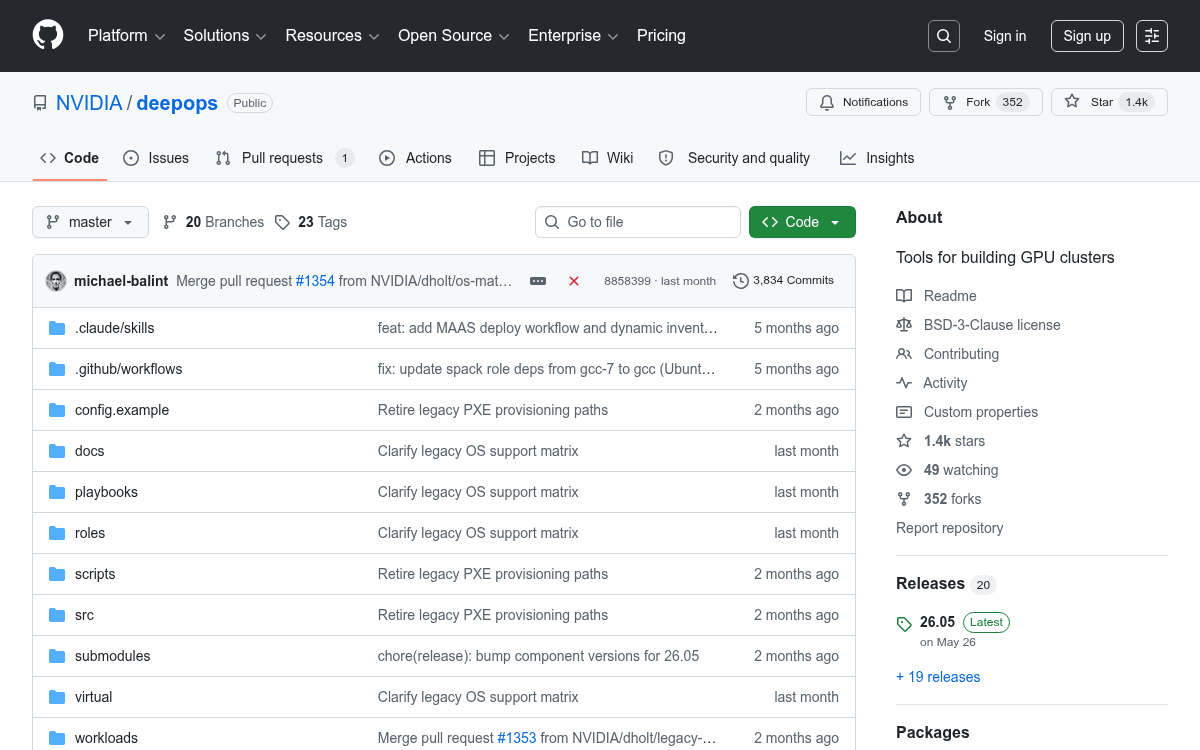
DeepOps is not a new product. It is a collection of Ansible playbooks and scripts developed by NVIDIA to automate the setup of GPU-accelerated clusters, supporting both Kubernetes and Slurm so users can deploy either or both depending on their needs. The repository has been around since 2018 and sits at roughly 1.4k stars, but activity slowed sharply after 23.08. 26.05 is the maintainers signalling that the project is still alive.
The gap that just closed
The release notes are unusually candid about the situation. DeepOps 26.05 is the first DeepOps release since 23.08. In the intervening period, Kubespray shipped many minor versions, Slurm cut multiple majors, and the GPU Operator moved through several driver generations. Anyone running master had to reconcile all of that themselves.
This release refreshes the Kubernetes, Slurm, GPU, monitoring, provisioning, and supporting dependency stack while keeping the existing release model of tagging
This story is for Pro members
You've reached the end of the free preview. Upgrade to AlphaSignal Pro to read the full article - and everything else behind the paywall.
Comments
