

NVIDIA RAFT Overhauls GPU Memory and Adds Randomized SVD in v26.06
NVIDIA RAPIDS RAFT v26.06 ships with a unified memory resource system, Randomized SVD, and CUDA 13.2 support — breaking changes included
 PRO
- v26.06.00 released: NVIDIA RAFT ships its latest update with breaking changes to the memory resource system.
- CCCL memory migration: RMM usage migrated to the CUDA C++ Core Libraries (CCCL) MR design, standardizing allocator APIs.
- Randomized SVD added: New GPU-native approximate SVD primitive for large-scale dimensionality reduction.
- CUDA 13.2 support: Official build and test support added; CUDA 13 binaries are ~50% smaller than CUDA 12 builds.
- Breaking changes: Three PRs affect
raft::resourcesand memory resource APIs — downstream C++ projects must update before upgrading. - Free & open source: Apache 2.0, installable via conda or pip for CUDA 12 and 13.
NVIDIA RAFT , the CUDA-accelerated primitives library underpinning RAPIDS , has shipped its v26.06.00 release. The update is a meaningful infrastructure overhaul rather than a headline feature drop: the team has restructured how memory resources are managed across the library, added Randomized SVD, and extended build support to CUDA 13.2. If you depend on RAFT directly in a C++ project, there are breaking changes you need to handle before upgrading.
What RAFT actually is
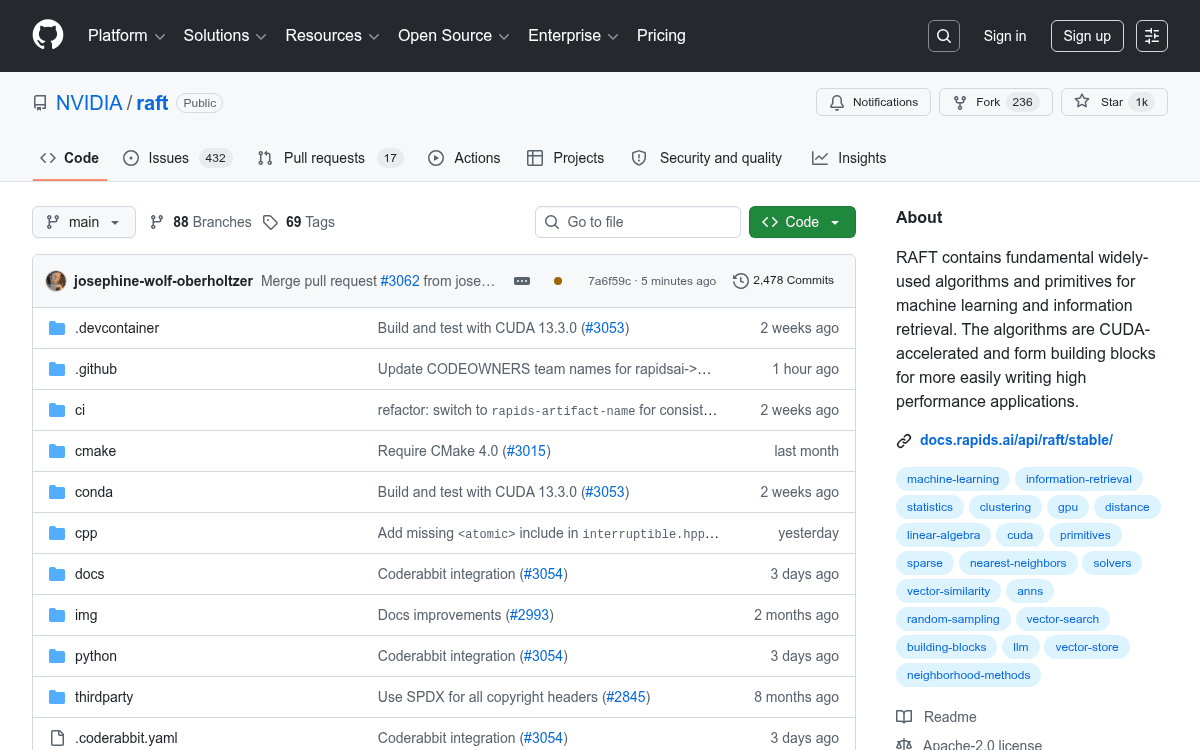
RAFT contains fundamental widely-used algorithms and primitives for machine learning and information retrieval, with CUDA-accelerated implementations that form building blocks for writing high-performance applications. Think of it as the GPU equivalent of NumPy + SciPy internals , not something end users interact with directly, but something that powers the tools they do use.
cuVS, NVIDIA's dedicated vector search library, is built on top of RAFT's high-performance machine learning primitives. cuVS is also integrated into FAISS and several vector databases like Milvus. So when RAFT gets an infrastructure improvement, the effects ripple outward to everything built on top of it.
By centralizing core reusable computations, future optimizations benefit all algorithms that use them , which is exactly the philosophy behind the memory resource changes in this release.
This story is for Pro members
You've reached the end of the free preview. Upgrade to AlphaSignal Pro to read the full article - and everything else behind the paywall.
Comments
