

Midjourney's V8.2 Edit Model Merges Inpainting, References and Instructions Into One
Midjourney is testing a V8.2 edit model that handles instruction-based editing, multi-image composition, inpainting, and outpainting in one system.
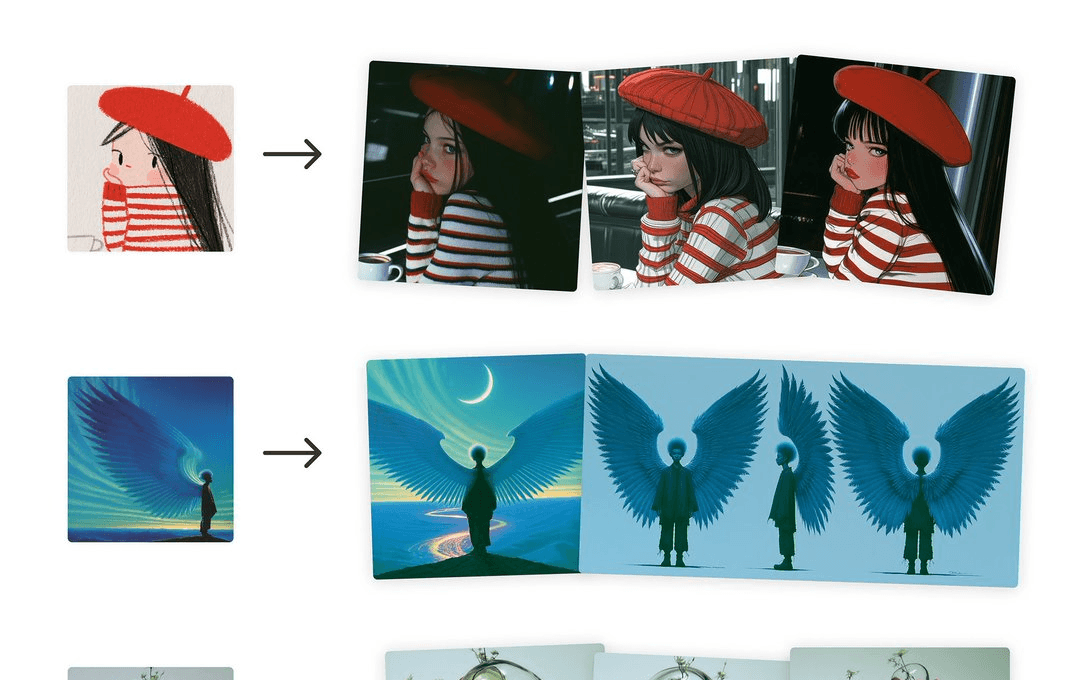
- Midjourney is testing a V8.2 edit model unifying instruction edits, references, inpainting and outpainting.
- Accepts up to 4 reference images, replacing Omni Reference and Character Reference on V8.X.
- Works with personalization, moodboards, style references, image prompts, and the
--hdflag. - In Discord, trigger it by appending
--editto your prompt with image URLs. - Closes long-standing gap where Midjourney's Editor still ran on the older V6.1 backbone.
- Supports instruction-style prompts like "make this girl into a real character" instead of full scene descriptions.
Midjourney is opening testing on a new edit model tied to its V8.2 image generator, and it collapses several previously separate features into a single tool. The company announced on X that this first V8.2 edit model supports editing with written instructions, generating images from up to four reference pictures, brush-based inpainting, and outpainting, and that it plays nicely with personalization, moodboards, and style references.
Until now, editing in Midjourney was a patchwork. The web Editor still ran on the older V6.1 model even though generation had moved to V8, which meant V8.2 images could be opened in the Editor but the actual edit pass was executed by a much older backbone. Advanced reference features like Omni Reference were locked to V7 and were incompatible with inpainting or outpainting. Changing a face, swapping a background, or expanding a canvas meant negotiating with two or three different model versions in the same workflow.
One model, four jobs
According to the official Edit Model documentation, the new system covers four modes of operation:
- Instruction editing. You describe what you want changed in plain language, and the model rewrites the image accordingly. This is closer to how you would talk to a chat model than the classic Midjourney "describe the whole scene" prompt style.
- Multi-image composition. You can attach up to four reference images and ask the model to blend elements from them into a single new scene. This replaces both Omni Reference and Character Reference on V8.X.
- Inpainting and outpainting. The brush-based Editor tools that used to route through V6.1 can now use the V8.2 edit model, so masked regions and canvas extensions are handled by the same generation stack producing your images.
- Retexturing and perspective shifts. The docs show examples of converting an image into a pencil sketch via a style reference and rotating a subject to a new camera angle with a short instruction.
The edit model composes with the rest of the V8 stack, working alongside image prompts, style references (srefs), moodboards, personalization profiles, and the --hd flag. In Discord, you trigger it by appending --edit to your prompt and pasting one or more image URLs.
Closing Midjourney's biggest weak spot
Editing has been Midjourney's structural weakness for a long time. Community writeups have consistently pointed out that while Midjourney produces some of the most striking aesthetics available, its editing behavior has been unpredictable enough that many workflows recommend leaving the platform for precise inpainting with tools like Nano Banana Pro or Photoshop's generative fill. A native, high-quality instruction editor that also handles inpainting and outpainting is the company's attempt to close that gap without asking users to leave.
It also collapses conceptual overhead. Rather than choosing between Omni Reference, Character Reference, image prompts, or the Editor for a given task, you point the edit model at up to four images and describe the outcome. The docs note a pragmatic quirk: character references still exist as a concept, but on V8.X the recommendation is to use the Edit Model instead.
Where it sits in the V8.2 rollout
The base V8.2 image model itself shipped in July. Midjourney's announcement described V8.2 as focused on aesthetics, image quality, and personalization, promising more creative, bold, sophisticated, edgy and fresh images, dramatically reduced low-quality generations, and personalization that understands user taste better, especially on profiles with many ratings. The edit model is the next piece of that roadmap. Prior release notes had flagged that V8 upscalers along with V8 edit, inpainting, and outpainting upgrades were on the way, targeting exactly the HD-downscale-on-edit behavior and V6.1-backed editor that made round-trip workflows painful.
Practical notes for testing
- Prompting style shifts. Instead of describing the full scene, you can now write short imperative instructions like
make this girl into a real characterorlet's see this image from behind. - If characters bleed into each other when using multiple references, the docs recommend combining them into one reference image before uploading.
--rawis available to dial down Midjourney's default stylization when you want the instruction text to dominate.- The founder's replies on the launch thread underline that this is an exploratory test. Even Midjourney says it does not know everything the model can do yet and is asking users to try things and report back.
For anyone building production pipelines on Midjourney, the immediate value is that a single reference-plus-instruction call can now do the work that previously required jumping between V7 for Omni Reference, V6.1 for inpainting, and V8.2 for the base image. That is a smaller mental model and, if quality holds up in testing, a real reason to consolidate editing back inside Midjourney rather than farming it out to a second tool.
Comments
