

Microsoft's MAI-Image-2.5 Climbs to Global Top 3 Beating DALL-E
Microsoft's MAI-Image-2.5 debuts at No. 3 on Arena's text-to-image leaderboard, with a +75-point jump over its predecessor and the biggest gains in text rendering and commercial imagery.
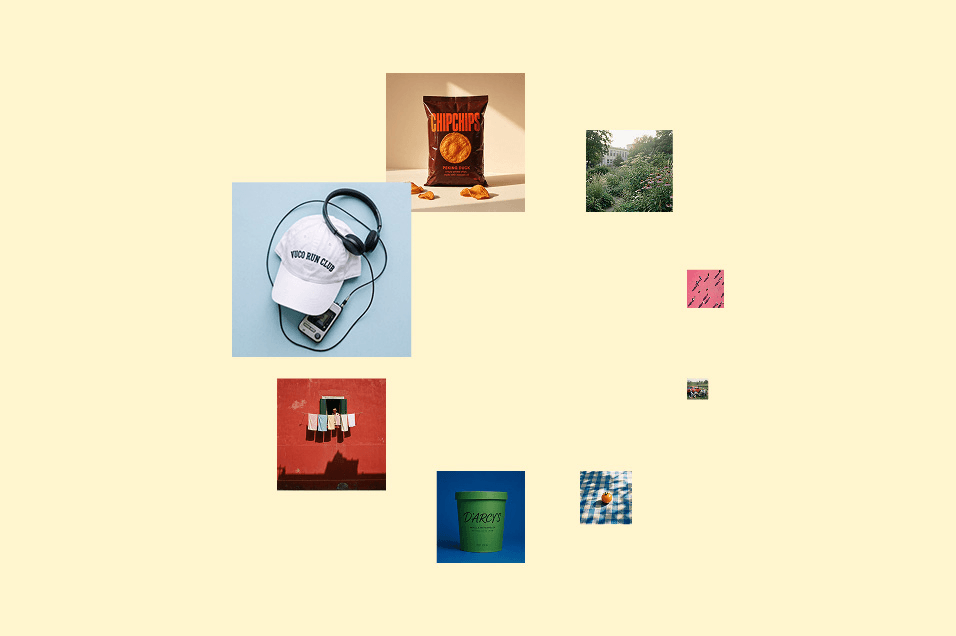
- No. 3 on Arena: MAI-Image-2.5 debuts at third place on Arena's text-to-image leaderboard, behind OpenAI and Google.
- +75 overall score gain: Improves across all 8 Arena style categories vs MAI-Image-2, with Text Rendering up +104 points.
- Also No. 2 for editing: A follow-up post revealed MAI-Image-2.5 ranks No. 2 on Arena's image-editing leaderboard with a score of 1401.
- Two-tier release: Full model ($47/1M image output tokens) and a Flash variant ($19.50/1M) now available in Microsoft Foundry.
- In-house model: Unlike Bing Image Creator, MAI-Image-2.5 is Microsoft's own proprietary model, not built on OpenAI's DALL-E.
- Powering Microsoft products: Already live in PowerPoint for generation and rolling out to OneDrive for photo editing.
Microsoft's in-house image model just cracked the global top three. MAI-Image-2.5, built by the MAI Superintelligence Team, debuted at No. 3 on Arena's text-to-image leaderboard -- the human-preference ranking where real users vote in blind head-to-head comparisons. That puts Microsoft directly behind OpenAI and Google, and well ahead of where the MAI-Image series started.
From ninth to the podium
MAI-Image-2.5 is the third generation of Microsoft's in-house text-to-image model, taking the series from a mid-table position to a spot among the top three on Arena's global leaderboard, behind only OpenAI's gpt-image-2 at rank one and one other model at rank two. That trajectory matters: Microsoft's image generation journey started slowly, with MAI-Image-1 debuting at ninth position on Arena's leaderboard. MAI-Image-2 then debuted at third place, trailing only Google's gemini-3.1-flash-image-preview and OpenAI's gpt-image-1.5-high-fidelity.
MAI-Image-2.5 now holds that same third-place position, but with substantially higher scores across every style category Arena tracks. The overall Arena score climbed from 1182 (MAI-Image-2) to 1254 -- a +75-point improvement. OpenAI's gpt-image-2 currently leads the pack with a score of 1388.
Where the scores actually moved
Arena breaks scores down across eight style categories. Here is how all three generations of the MAI-Image series compare:
| Category | MAI-Image-1 | MAI-Image-2 | MAI-Image-2.5 |
|---|---|---|---|
| Overall | 1093 | 1182 | 1254 |
| Text Rendering | 1070 | 1174 | 1278 |
| Cartoon, Anime & Fantasy | 1100 | 1178 | 1268 |
| Product, Branding & Commercial | 1086 | 1175 | 1263 |
| Portraits | 1094 | 1208 | 1261 |
| Art | 1104 | 1176 | 1256 |
| 3D Imaging & Modeling | 1096 | 1178 | 1254 |
| Photorealistic & Cinematic | 1103 | 1202 | 1247 |
MAI-Image-2.5 improves across every single category. The biggest gains appear in Text Rendering, jumping from 1070 under MAI-Image-1 to 1278 under MAI-Image-2.5, and in Cartoon, Anime and Fantasy, which climbs from 1100.
What actually changed under the hood
Unlike some of Microsoft's other AI releases which built on top of OpenAI's models, MAI-Image-2.5 is developed internally. Unlike Microsoft's DALL-E-based tools like Bing Image Creator and Designer, MAI-Image-2.5 is Microsoft's own proprietary model. The MAI Superintelligence Team describes this as a step-change in quality, not a minor refresh. The four headline improvements are:
- Text rendering: Microsoft highlighted that the new model delivers the biggest improvement in text rendering, stylized illustrations, and commercial imagery, allowing users to generate better posters, packaging mockups, branding concepts, and product shots.
- Visual reasoning: The model has stronger visual reasoning, allowing it to better understand objects, lighting, scale, scene structure, and spatial relationships.
- Prompt adherence: The model performs better across a broad range of image styles, is designed to follow prompts more closely, render text more reliably, and produce more detailed and coherent images.
- Fine-grained editing: MAI-Image-2.5 supports precise, localized edits -- from replacing an object or updating text to removing motion blur -- without changing the rest of the image.
The text rendering improvement is the one that matters most for production work. Packaging mockups, menus, labels, signs, and ad graphics lose value the moment letters blur, shift, or disappear, so readable output is a workflow requirement rather than a cosmetic upgrade.
Beyond text-to-image: the editing leaderboard
The initial launch announcement focused on the text-to-image ranking, but Microsoft subsequently published a fuller technical post revealing the model's editing capabilities. MAI-Image-2.5 achieves Arena scores that surpass GPT-Image-1.5 and Nano Banana Pro 2K, ranking No. 3 for text-to-image and No. 2 on Arena's image-editing leaderboard. On Arena's Image Edit leaderboard for Single-Image Edit, MAI-Image-2.5 is listed at No. 2 with a score of 1401 behind GPT-Image-2 (medium).
A companion Flash variant also launched alongside the full model. Microsoft is launching MAI-Image-2.5 for maximum fidelity, and MAI-Image-2.5-Flash for fast, scalable production workloads. The two-tier approach gives teams a direct tradeoff between output quality and throughput cost.
Pricing and where to access it
MAI-Image-2.5 is now available to developers through Microsoft Foundry and the MAI Playground. Pricing for the full model is:
- Text input: $5 per 1M tokens
- Image input: $8 per 1M tokens
- Image output: $47 per 1M tokens
MAI-Image-2.5-Flash comes in significantly cheaper:
- Text input: $1.75 per 1M tokens
- Image input: $1.75 per 1M tokens
- Image output: $19.50 per 1M tokens
MAI-Image-2.5 is described as the strongest image model yet, now ranking No. 2 on Arena's Image Edit leaderboard, ahead of Nano Banana 2.1, and built for high-quality generation and precise, controllable editing, bringing production-ready image workflows to developers and Microsoft products. The model is also live in PowerPoint for image generation and rolling out to OneDrive for photo editing.
Who should actually test this
The clearest use cases are the ones where previous image models consistently failed:
- Poster and event graphic generation where text legibility is non-negotiable
- Packaging and label mockups for product teams
- Brand-forward campaign visuals and product photography
- Stylized illustration and cartoon work at scale
- Localized photo edits -- removing objects, cleaning backgrounds -- without full regeneration
The model places above DALL-E 3, Ideogram 2.0, and most open-source alternatives, while sitting below the top two ranked models. One important caveat: Arena marks several top entries, including MAI-Image-2.5, as preliminary. Use it to decide what to test, not as a substitute for your own evaluation. Microsoft AI CEO Mustafa Suleyman teased more announcements tied to the Build conference, so this model is likely the first of several image-related releases in this wave.
Comments
