

Krea Reveals Krea 3 and an Agent-Driven Creative Platform for Designers
Krea previews a next-generation foundation model with strong editing plus a dedicated agent platform for creative work with MCP and API hooks.
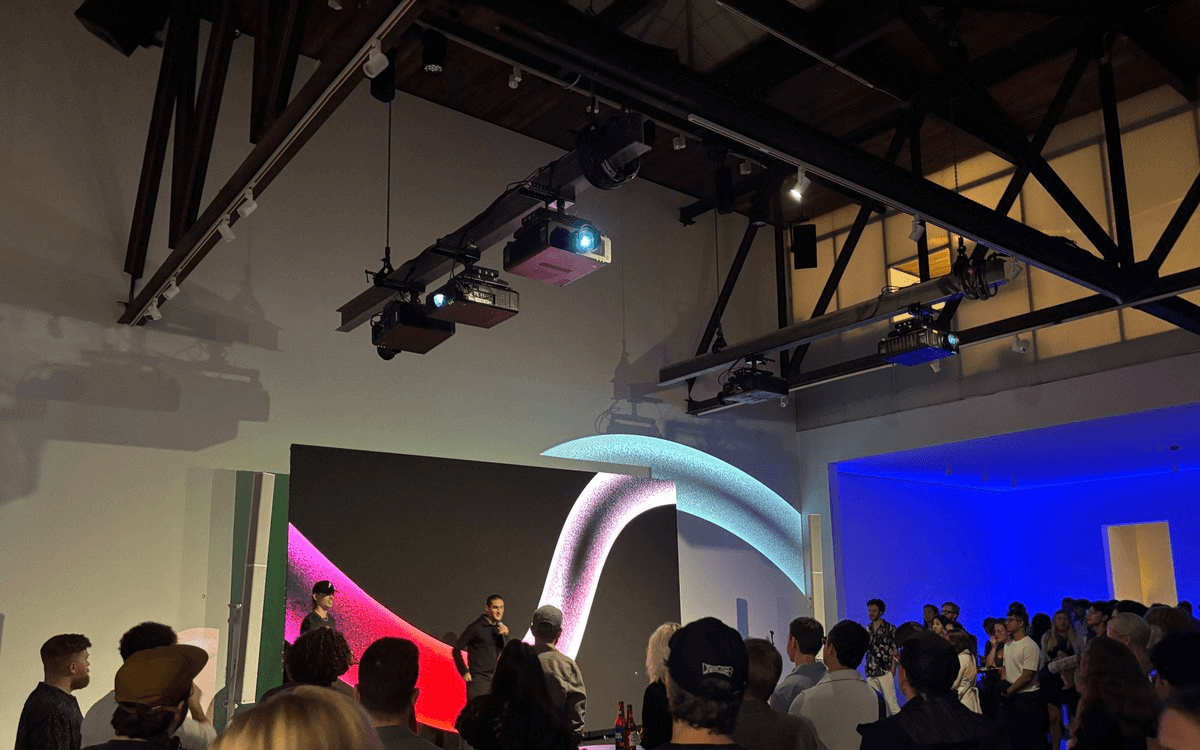
- Krea previewed Krea 3, a new foundation model building on Krea 2's aesthetics with strong editing capabilities.
- Krea Agents is a new platform layered on Krea, with UIs designed for agentic creative workflows.
- The team says they spent three months building agents specifically for creative work, not developer tasks.
- Both integrate with existing agents and workflows through MCP or API from day one.
- Krea MCP already works with Claude, Codex, Cursor, and OpenClaw over 60+ image and video models.
- Neither product is generally available yet; event recordings will be published shortly.
Krea just gave the world a first look at two projects that suggest where the company is heading next: Krea 3, a new in-house foundation model focused on editing, and Krea Agents, a separate platform built specifically for agent-driven creative work. Neither is generally available yet, but the reveal was showcased at a live event, and the team has been signaling both a model upgrade and a deeper bet on agents for months.
Krea 3 is meant to inherit the visual character of its predecessor while adding the fine-grained editing that most creators end up needing after the first generation. Krea Agents is a rebuilt surface where agents drive the canvas instead of a human clicking through nodes.
Where Krea 3 picks up from Krea 2
To understand what Krea 3 is promising, it helps to look at what came before. Krea 2 was the company's first foundation image model, built from scratch and focused on aesthetics, style transfer, and creative control. It uses a single-stream Diffusion Transformer scaled to 12 billion parameters, with Grouped-Query Attention, gated sigmoid attention and QK-Norm, SwiGLU MLPs at 4x expansion, zero-centered RMSNorm, and 3D axial RoPE positional encoding.
The stated design goal has been consistent: move past the homogenous "AI look" toward genuine visual taste spanning grainy film photography, clean studio shots, cinematic stills, illustrations, and digital paintings, and lean on style control rather than ever-longer prompts. Krea 3 extends that same aesthetic direction, with editing added as a first-class capability rather than a bolt-on.
That editing focus matters because the team has been iterating hard on it already. The existing Krea Edit tool lets users relight a scene by placing up to four virtual lights, each with its own color, brightness, and position, and colorize grayscale images with optional color hints on specific areas. Krea 3 appears aimed at rolling those kinds of edits into the base model rather than treating them as a separate pipeline.
What Krea Agents actually is
Krea Agents is described as a whole new platform layered on top of Krea, with interfaces designed around agentic workflows instead of the classic node-graph canvas. It continues the work started with the Node Agent the team released earlier, which turns a sentence into a runnable creative workflow. You type what you want to make, and the agent reads your canvas, plans the pipeline, wires the nodes, and runs the job.
The Node Agent hints at how the new platform will likely behave. When you change something, the agent only reruns what's downstream of the edit, so swapping a prompt at the top of a ten-node chain leaves the first nine cached results in place and only the affected nodes reprocess. Planning and reasoning come from frontier LLMs, including Anthropic's models, while generation runs on Krea's own models and whatever else is on the platform. The agent picks based on what you asked for and what is already on the canvas.
MCP and API from day one
The most concrete piece of the announcement for anyone building on top of this is that Krea Agents will support integration with existing customer workflows or other agents through MCP or API. Krea already runs a hosted MCP server, and its behavior is a good indicator of what the new platform will expose:
- Krea MCP connects your AI agent directly to Krea so it can generate images and video, enhance assets, and run your creative workflows on your behalf.
- It works with Claude, Codex, OpenClaw, Cursor, and other agents that support connecting tools.
- All of Krea's image, video, and enhancement models are available, including Krea 2, Flux, Veo, Kling, Nano Banana Pro, and Topaz.
- Agents can discover available image and video models, inspect live input schemas, submit generation jobs, upload local assets, poll results, and cancel mistakes.
Adding a Krea MCP server to a client is a one-liner. For Claude Code:
claude mcp add --transport http krea https://api.krea.ai/mcpThe bigger play: aggregation plus agents
Krea is doubling down on being the aggregation layer for creative AI. It already aggregates Flux, Veo 3.1, Kling, Runway, Luma, Ideogram, and more alongside its own Krea 2 foundation model. Krea 3 joins that mix as another in-house model, with editing as a differentiator against pure text-to-image competitors.
Krea Agents also pushes the company past the canvas metaphor. Most agentic AI tools so far have been aimed at developers and data teams; the interesting bet here is that the same pattern works when the output is visual and the operator is a designer rather than a coder. With a hosted MCP endpoint on one side and a canvas-aware planner on the other, Krea is trying to become the connective tissue between coding agents and creative tools, so a Claude Code or Cursor session can produce finished visual assets without dropping out to a separate UI.
Recordings from the showcase are expected to land soon. Until Krea publishes benchmarks, model cards, or an access timeline for Krea 3, most of the specifics remain forward-looking. The direction is clear enough: better editing inside the base model, and an agent-native surface that talks to everything else through MCP.
Comments
