

Google DeepMind's Gemini 3.1 Flash Lite Image Generates Photos 2.7x Faster
Google's Gemini 3.1 Flash Lite Image ranks #5 in text-to-image quality at half the price of its predecessor, but stumbles on editing tasks
- Google released Gemini 3.1 Flash Lite Image (Nano Banana 2 Lite), its fastest and cheapest image generation model.
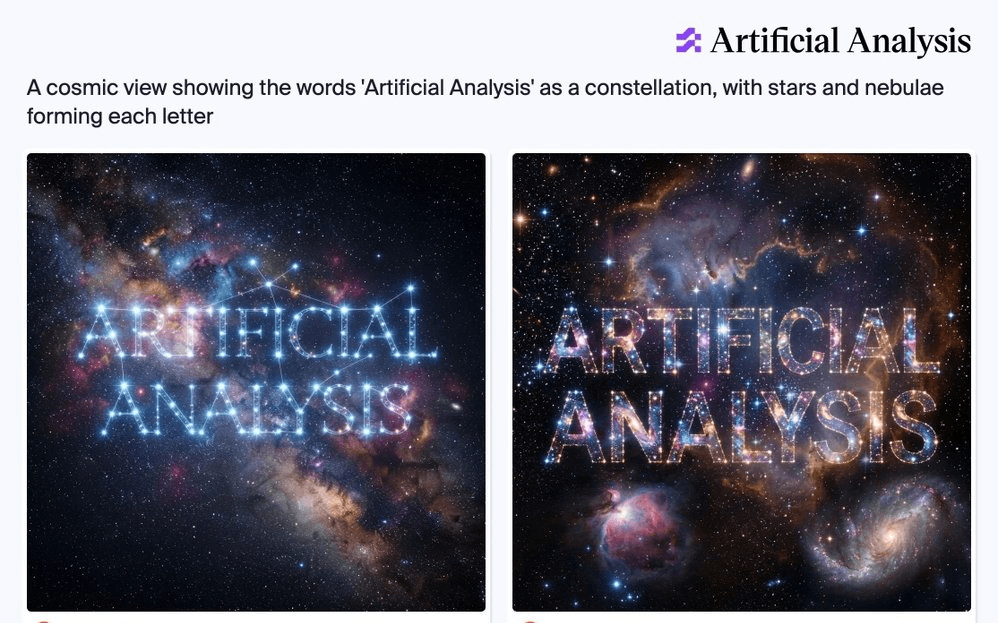
- Ranks #5 on the Artificial Analysis text-to-image leaderboard, ahead of the base Nano Banana 2 at #7, at half the price.
- Generates a 1K image in ~3.4 seconds on average, roughly 2.7x faster than Nano Banana 2 (~20 seconds).
- Priced at $33.60 per 1K images ($16.80 with Batch API), vs $67/1K for Nano Banana 2 and $134/1K for Nano Banana Pro.
- Significant weakness in image editing: ranks #18 on the editing leaderboard vs Nano Banana 2's #3 ranking.
- Available now via the Gemini API, Google AI Studio, NotebookLM, Google Photos, and Gemini app.
Google DeepMind just dropped Gemini 3.1 Flash Lite Image (internally codenamed Nano Banana 2 Lite), the smallest and fastest member of the Nano Banana image generation family. The pitch is simple: near-flagship text-to-image quality at a fraction of the cost, with generation speeds that make real-time image apps actually viable. But there is a catch, and it matters depending on what you are building.
Speed that changes the math on image pipelines
Nano Banana 2 Lite is Google's fastest, most cost-efficient Gemini image model, built for high-velocity developer pipelines. It delivers text-to-image generation in roughly 4 seconds, about 2.7x faster than Gemini 3.1 Flash Image (Nano Banana 2). In Artificial Analysis's end-to-end testing, the model is designed as the efficiency specialist of the image generation family, targeting sub-2 second latency and significantly reduced compute costs to enable high-volume interactive developer use cases and real-time consumer applications.
To put that in perspective: the base Nano Banana 2 takes around 20 seconds per image, and GPT Image 2 on high quality can take several minutes. At 3.4 seconds average in testing, Nano Banana 2 Lite is the fastest model in the top 10 by quality on the leaderboard.
Where it lands on the leaderboards
According to Artificial Analysis's independent benchmarks, the quality story is genuinely strong for text-to-image work:
- Text-to-image: Ranks #5 on the Artificial Analysis Image Arena, ahead of the base Nano Banana 2 at #7. It is an effective drop-in replacement for text-to-image workloads at half the price.
- Image editing: Ranks #18 on the Image Editing Leaderboard, well below Nano Banana 2 (#3) and Nano Banana Pro (#5). For editing-heavy workflows, the larger models remain the better choice.
The gap between text-to-image and editing performance is the most important signal here. The model is optimized for fast multi-turn local edits like swapping colors, sticker creation, and background adjustments, but complex structural edits, character consistency across turns, and spatial operations are where it falls short compared to its bigger siblings.
What it can and cannot do well
Google's own model card is refreshingly candid about the limitations. The model still has room for improvement in text rendering (small text is often blurry at 1K resolution), long paragraphs, and page-length content. Character consistency is not always perfect between input and output images. It is also limited in advanced capabilities involving 3D reasoning and factuality, and its knowledge cutoff is January 2025.
On the positive side, the model uses Gemini's real-world knowledge to deliver precise results across complex infographics and historically accurate scenes, and is well-suited for applications requiring creation and editing of images with professional precision and multiple quick iterations.
A few other technical constraints worth knowing:
- Outputs are optimized for 1K resolution (1024x1024px) and support a discrete set of 14 aspect ratios. 2K and 4K are not supported.
- A single API call handles text-to-image, image editing, and multi-image composition, and the model can return text alongside images.
- All outputs carry an invisible SynthID watermark for AI identification, plus C2PA provenance metadata.
- The model supports function calling and thinking levels (minimal and high), but does not support caching, code execution, or Search grounding.
The pricing breakdown
Image output is priced at $30 per million tokens. At 1K resolution (1024x1024px), each image consumes 1120 output tokens, making the effective cost $0.0336 per image. That works out to $33.60 per 1,000 images via the standard Gemini API, with the Batch API cutting that to $16.80 per 1,000 images.
Here is how it stacks up against the rest of the Nano Banana family:
| Model | Price per 1K images | Avg generation time | Text-to-image rank | Editing rank |
|---|---|---|---|---|
| Nano Banana Pro (Gemini 3 Pro Image) | $134 | ~minutes | Top tier | #5 |
| Nano Banana 2 (Gemini 3.1 Flash Image) | $67 | ~20 seconds | #7 | #3 |
| Nano Banana 2 Lite (Gemini 3.1 Flash Lite Image) | $33.60 ($16.80 batch) | ~3.4 seconds | #5 | #18 |
Where to use it, and where not to
From rapid prototyping to populating real-time apps, Nano Banana 2 Lite is designed to keep ideas flowing without the wait. The use cases where it genuinely shines:
- Real-time consumer apps where latency is a hard constraint, such as image generation in chat interfaces or search
- High-volume pipelines where you are generating thousands of images and cost per image matters
- Rapid prototyping where you want to iterate on visual concepts quickly before committing to a heavier model
- Simple local edits like color swaps, background changes, and sticker creation
Where you should stick with Nano Banana 2 or Pro:
- Complex structural image edits requiring spatial precision
- Multi-turn editing sessions where character consistency across turns is critical
- High-fidelity text rendering within images
- Workflows requiring 2K or 4K output resolution
How to call it
The model is available now under the slug gemini-3.1-flash-lite-image via the Gemini API, Google AI Studio, the Gemini Enterprise Agent Platform, and consumer surfaces including the Gemini app, AI Mode in Search, NotebookLM, and Google Photos. Here is a minimal Python call using the Google GenAI SDK:
from google import genai
from google.genai import types
client = genai.Client()
response = client.models.generate_content(
    model="gemini-3.1-flash-lite-image",
    contents="A tranquil bamboo grove illuminated by lanterns at twilight",
    config=types.GenerateContentConfig(
        response_modalities=["IMAGE", "TEXT"]
    )
)
for part in response.candidates[0].content.parts:
    if part.inline_data:
        # part.inline_data.data contains the base64-encoded PNG
        print(f"Got image: {part.inline_data.mime_type}")
The Batch API is supported for async workloads at half price, making it a strong option for content pipelines that do not need real-time results. The bottom line: if you are building text-to-image features and speed or cost is a bottleneck, Nano Banana 2 Lite is the most compelling option in the Nano Banana family right now. Just do not expect it to replace the base model for serious editing work.
Comments
