


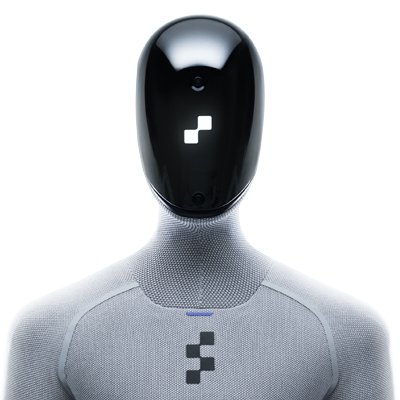
Figure AI just landed one of the most significant commercial deals in the short history of humanoid robotics. The company has signed a commercial agreement with Catalyst Brands to deploy its Figure 03 humanoid robots at a distribution logistics center in Reno, Nevada. Catalyst is the retail holding company behind JCPenney, Aéropostale, Brooks Brothers, Lucky Brand, and Nautica.
This is not a research pilot or a joint development agreement. It is a deployment deal at an operational facility belonging to a company that runs some of America's most recognizable retail brands. The distinction matters enormously in a field where impressive demos rarely survive contact with real-world operations.
What the robots will actually do
The companies aim to automate repetitive, physically demanding sorting and packing tasks, freeing associates to focus on higher-skill functions. Figure's next-generation humanoids will first focus on aiding associates in the facility's Joey Pouch sorting system sequencing, a state-of-the-art, computerized induction, sorting and packing system. Think of it as the conveyor-belt brain of a modern distribution center, where packages are inducted, sorted by destination, and packed, all at high speed.
The humanoid form factor allows these machines to integrate smoothly into existing warehouse spaces without requiring expensive structural redesigns. That is the core pitch for humanoids over traditional fixed automation: you do not have to rebuild the warehouse around the robot.
The benchmark that closed the deal
Figure did not walk into this agreement on promises alone. Before the deal was signed, Figure ran a multi-day autonomous sorting test. The robots sorted 88,000 packages within a 72-hour window, and during that test the machines operated continuously for over 24 hours without interruption. That is a meaningful data point, not a curated five-minute demo.
The livestream that preceded the deal announcement pushed the numbers even further. Figure AI completed a 200-hour livestream in which three Figure 03 robots processed nearly 250,000 packages without experiencing a single mechanical breakdown. The humanoids used onboard cameras and AI reasoning to detect barcodes, pick up packages and place them onto conveyor belts with their barcode facing down. The project was not error-free, with the robots sparingly dropping packages or incorrectly oriented items. Honest, and still impressive.
In May 2026, Figure AI livestreamed a group of their robots processing packages nonstop for almost a week, inspiring a 10-hour competition between their robot and a human, in which the robot performed 98.5% as well as the human.


Don't miss what's next in AI
Join 300,000+ engineers and researchers who get the signal, not the noise.
- Full access to in-depth AI research breakdowns
- Be the first to know what's trending before it hits mainstream
- Daily curated papers, repos, and industry moves