

Figure AI's Figure 03 Robot Starts Real BMW Factory Work With 99% Accuracy
Figure 03 is now performing live logistics sequencing at BMW's Spartanburg plant, marking the next chapter in the most-watched humanoid robot deployment in manufacturing history.
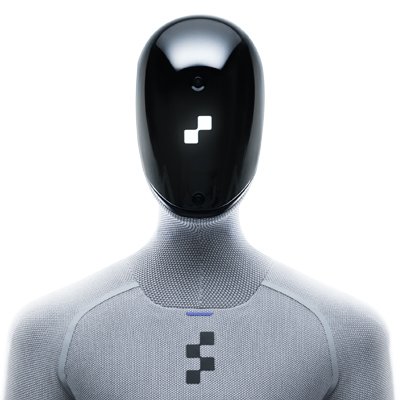
- Figure 03 is live at BMW Spartanburg: Figure AI's third-generation humanoid has begun performing logistics sequencing tasks in Hall 52.
- Harder task than before: Figure 02 did structured pick-and-place; Figure 03 must sort unsorted parts, pull heavy carts, and adapt on the fly -- all simultaneously.
- Helix 02 is the key: A single neural network now controls walking, balance, and manipulation together, replacing 109,000+ lines of hand-coded C++ locomotion logic.
- Figure 02's track record earned this: The predecessor loaded 90,000+ parts, ran 1,250+ hours, and contributed to 30,000 BMW X3 vehicles with 99%+ placement accuracy.
- Expansion is already planned: The contract covers more Spartanburg workstations through 2027 and pilot programs at BMW's German plants in Munich, Regensburg, and Leipzig.
- Race is on: Boston Dynamics Atlas is shipping to Hyundai factories; Tesla Optimus remains internal-only -- Figure now holds the most documented third-party commercial deployment in the industry.
Figure AI's Figure 03 humanoid robot has officially started working on the floor of BMW Group Plant Spartanburg in South Carolina. The task is not a demo. It is not a pilot in a cordoned-off lab. Following a successful deployment with Figure 02, Figure 03 is now working on complex sequencing applications in logistics. This is the second generation of humanoid robots Figure has put to work at the same facility, and the jump in task complexity is significant.
From Body Shop to Logistics Hall
BMW already gained important experience with humanoid robotics at Spartanburg. Figure 02 supported the production of more than 30,000 BMW X3 vehicles over ten months, inserting sheet-metal parts for the welding process -- a task that demands high speed and accuracy and can be physically demanding. The numbers behind that run are striking: Figure 02 ran 10-hour shifts Monday through Friday, loaded more than 90,000 parts, logged more than 1,250 hours of runtime, and achieved more than 99% successful placement per shift with a target of zero human interventions.
That deployment was essentially a structured, repeatable pick-and-place loop. Figure 03's new assignment is a different beast entirely.
What "Sequencing" Actually Means
In automotive manufacturing, sequencing is the process of sorting and ordering components so they arrive at the assembly line in exactly the right configuration at exactly the right time. It sounds administrative, but physically it is chaotic. Instead of lifting heavy sheet-metal panels into welding fixtures, Figure 03 is being tasked with complex sequencing applications. Delivered components initially arrive at the logistics hall unsorted within larger containers.
The challenge is that this task cannot be solved with a fixed script. Carts, bins, and parts do not arrive in exactly the same position every time: parts may have shifted, rotated, partially occluded, or presented differently within a container. Each interaction therefore requires the robot to perceive the scene and make small corrections on the fly. And it gets harder: Figure 03 must grasp parts with both hands while adjusting its foot placement, shifting its body to maintain reach and balance, and precisely placing each part into the correct slot.
The AI Behind the Movement
The system making this possible is Helix 02, Figure's proprietary Vision-Language-Action (VLA) model. A VLA is an AI model that takes raw visual input -- pixels from cameras -- and outputs direct motor commands, skipping the hand-coded rules that traditional robotics relies on. Helix 02 is designed to control locomotion, balance, and manipulation using a single learned system, rather than relying on separate modules for walking and object interaction. It maps multi-modal sensor inputs directly to full-body motor commands, covering tasks that require coordinated movement of the arms, legs, torso, and hands.
This is what Figure calls loco-manipulation -- the ability to move and manipulate objects as one continuous behavior rather than stopping, stabilizing, then acting. Unlike earlier models limited to upper-body tasks, Helix 02 uses a single neural network to control walking, manipulation, and balance together, directly from raw sensor data. The older stop-and-go paradigm is gone.
The architecture has three layers operating at different speeds:
- System 2: handles high-level reasoning and language
- System 1: translates perception into full-body motion at high frequency
- System 0: replaced more than 109,000 lines of hand-engineered C++ locomotion code with a neural controller trained on over 1,000 hours of human motion data
What Figure 03 Brings to the Factory
Figure 03 is not just a software upgrade over its predecessor. The hardware was redesigned with real-world deployment lessons in mind. The robot includes soft components designed to improve safety, wireless charging to support higher availability, audio functions for speech-to-speech communication, and improved hands with tactile sensors and palm cameras to increase precision and dexterity.
The sensor improvements matter specifically for this task. Each fingertip carries a tactile sensor capable of detecting forces as small as three grams of pressure -- enough to register a paperclip resting on a finger, and fine enough to distinguish a secure grip from an incipient slip. The vision system delivers twice the frame rate, one-quarter the latency, and a 60 percent wider field of view per camera compared with Figure 02.
The Strategic Picture
Hall 52, where variants of the BMW X3 and, in the future, the electrified BMW iX5 will be assembled, has been extensively expanded and updated. This is not a side experiment. BMW is weaving humanoid robots into a broader digital manufacturing strategy called iFACTORY, which includes virtual 3D simulation for process planning and AI-powered quality inspection. The use of humanoid robots is part of BMW's broader strategy to expand its automation portfolio with Physical AI. Humanoid robotics is a value-adding complement to existing automation, with potential particularly in monotonous, ergonomically demanding, or safety-critical activities.
Figure AI signed a commercial agreement with BMW Manufacturing in November 2023. With the BMW deployment in commissioning, Figure AI closed a $675M Series C round backed by Microsoft, OpenAI, Nvidia, Amazon, Intel Capital, and Jeff Bezos. The BMW relationship has been central to Figure's commercial story from the start -- and now it is expanding in scope and complexity.
The contract scope includes phased expansion to additional Spartanburg workstations through the rest of 2026 and 2027, plus pilot-deployment programs at BMW's German manufacturing facilities at Munich, Regensburg, and Leipzig under separate contracting frameworks. BMW is also separately testing humanoid robots in Europe: the company is in the process of deploying Physical AI in Europe for the first time with a pilot project at its Leipzig plant in Germany, where it is testing Hexagon's AEON humanoid robot for battery assembly and component manufacturing.
Who Wins, Who Watches Nervously
Figure's position in the humanoid race is now materially stronger. The BMW deployment gives it something competitors cannot easily replicate: a multi-year, high-volume track record in a real production environment. By focusing Figure 03 on a high-frequency, highly variable task like logistics sequencing, BMW and Figure are tackling a workflow that traditional automation cannot easily solve. If the platform can maintain high placement accuracy and match production cadence under real logistics pressure, it will provide a strong defense for commercial humanoid deployment.
The competitive landscape is heating up fast. Both Boston Dynamics Atlas and Tesla Optimus are moving from prototypes to real factory floors in 2026 -- only Atlas has shipped to commercial customers, with Optimus used internally at Tesla factories only. Boston Dynamics has solidified plans to deploy tens of thousands of Atlas units at Hyundai Motor Group manufacturing facilities. Meanwhile, Vision-Language-Action models were adapted to give robots the ability to reason about the physical world, electric actuator technology matured to the point where humanoid robots can be both powerful and precise enough for industrial tasks, and manufacturing costs dropped dramatically -- platforms that cost $500,000 in 2023 are targeting sub-$30,000 price points by 2028.
For BMW's human workforce, the framing from both companies has been consistent: let robots take the monotonous, physically taxing, or safety-critical jobs, and leave the rest to the humans who'd rather not be doing them. Whether that framing holds as fleet sizes grow is the question the industry will be watching closely.
What This Unlocks
The sequencing use case is important beyond this single deployment. It is the kind of task -- variable, physical, requiring whole-body coordination -- that has historically been the hard boundary for automation. Fixed robotic arms cannot do it. Conveyor systems cannot do it. The humanoid form automates dynamic material manipulation that is structurally infeasible to solve with traditional, fixed automation or six-axis robotic arms.
If Figure 03 can run this reliably at production cadence, it opens the door to an entirely new category of factory work that has never been automatable before. Figure 03 will sort unsorted components into sequencing trolleys for delivery to assembly lines -- a logistics task BMW said could be scaled across automotive production. That scaling story, from one hall at one plant to an entire manufacturing network, is what the next phase of this partnership is really about.
Comments
