
ClaudePrism Brings AI Scientific Writing to Your Local Machine
ClaudePrism brings Claude, LaTeX, and Python into a single offline-first desktop app for academic writing — a local alternative to OpenAI's cloud-based Prism
 Pro
Takeaways
- What it is: ClaudePrism is a free, open-source desktop app combining Claude AI, LaTeX editing, and Python in one offline-first workspace.
- Local-first: Documents are stored and compiled on your machine; only AI inference calls go to Anthropic's API.
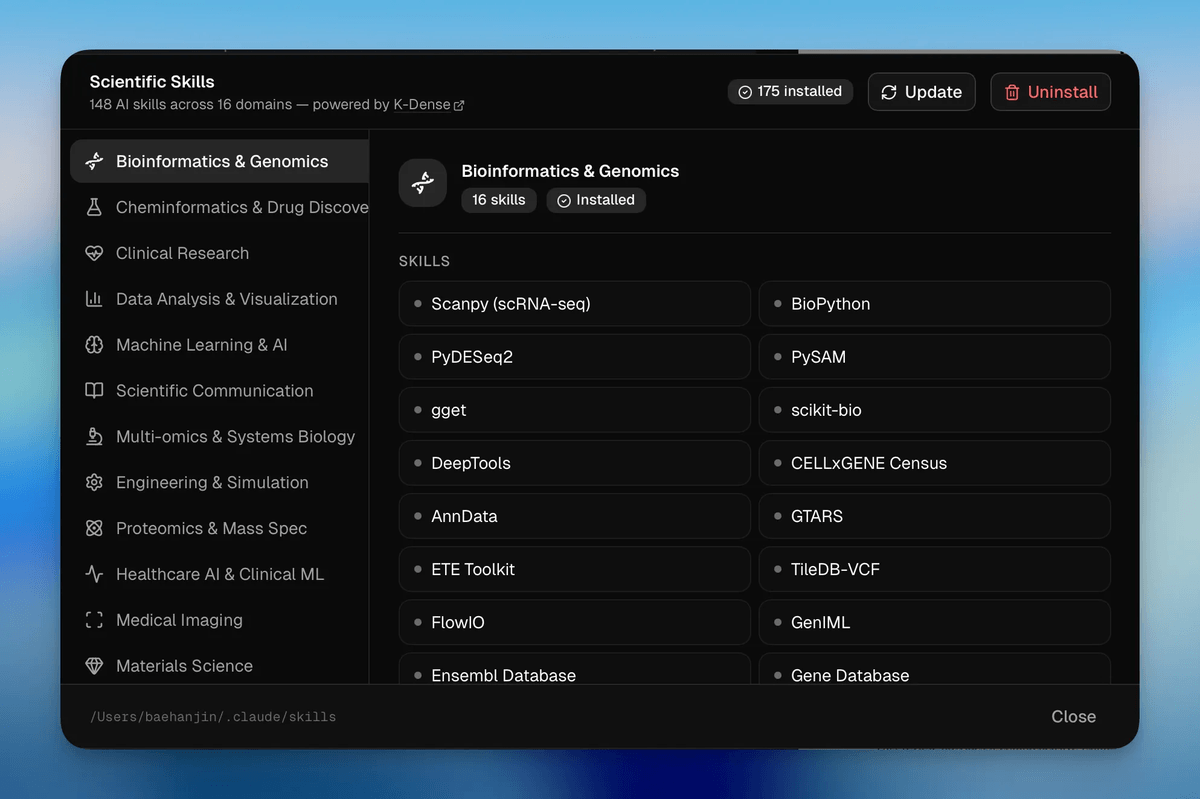
- 100+ scientific skills: Domain-specific tool configs for bioinformatics, cheminformatics, ML, clinical research, and more via K-Dense AI.
- Key features: Embedded Tectonic LaTeX compiler, built-in Python uv environment, Git-based version history, Zotero integration, and PDF capture-to-chat.
- Limitations: No local LLM support yet (Ollama/self-hosted), no real-time collaboration, and some features still in progress.
- Available now: MIT licensed, 1,600+ GitHub stars, binaries for macOS, Windows, and Linux — free to use beyond Anthropic API costs.
ClaudePrism is an open-source desktop application that turns Claude into a full scientific writing assistant , handling LaTeX editing, Python analysis, and PDF compilation without ever uploading your documents to a remote server. It's a direct, local-first response to OpenAI's cloud-based Prism, and it's picking up traction fast with over 1,600 GitHub stars.
The pitch is simple: your files are stored on your disk, compiled offline, and edited locally. When you use AI features, prompts and file contents that Claude reads are sent to Anthropic's API for inference , but that's the only thing leaving your machine. Everything else, from LaTeX compilation to Python execution, runs on your hardware.
The problem it solves
Scientific writing has always been a multi-tool juggling act. You write LaTeX in one window, run Python analysis in another, manage citations in Zotero, and flip between a PDF viewer and your editor constantly. Nearly the entire scientific community relies on LaTeX, but it can make some tasks, such as drawing diagrams through TikZ commands, time-consuming to do. ClaudePrism collapses all of this into a single native app.
OpenAI Prism is a cloud-based LaTeX workspace , all your files and data must be uploaded to OpenAI's servers to use it. For researchers working with sensitive data , clinical trial results, unpublished findings, proprietary datasets , that's a non-starter. ClaudePrism keeps documents local while still giving you a capable AI co-author.
How it's built
ClaudePrism runs Claude Code as a local subprocess. The app itself is built with Tauri 2 and Rust for the native shell, TypeScript and React for the UI, and CodeMirror 6 for the editor. Tectonic is embedded directly in the app , packages are downloaded once on first use and cached locally, so after that, compilation works fully offline with no TeX Live installation required.
ClaudePrism integrates uv , the fast Python package manager , directly into the app. One click to install uv, one click to create a project-level virtual environment. Claude Code automatically uses the .venv when running Python code, so you can generate plots, run analysis scripts, and process data without leaving the editor.

The 100+ scientific skills system
The most distinctive feature is the skills system. Domain-specific knowledge for Claude can be browsed, searched, and installed , powered by K-Dense Scientific Skills, curated prompts and tool configurations by K-Dense AI. These aren't just system prompts; they're structured tool configurations that give Claude deep, actionable knowledge in specific fields.
The skill library spans a wide range of scientific domains:
- Bioinformatics & Genomics , Scanpy, BioPython, PyDESeq2, AnnData, scvi-tools
- Cheminformatics & Drug Discovery , RDKit, DeepChem, DiffDock, PubChem, ChEMBL
- Machine Learning & AI , PyTorch Lightning, Transformers, SHAP, UMAP, PyMC
- Clinical Research , ClinicalTrials.gov, ClinVar, DrugBank, FDA, COSMIC
- Scientific Communication , Literature Review, Grant Writing, Peer Review, Citation Management
- Multi-omics & Systems Biology , COBRApy, Reactome, scVelo
Skills are installed globally at ~/.claude/skills/ or scoped per-project, and Claude loads them automatically when relevant.

The writing workflow
You pick a template , paper, thesis, presentation, poster, letter , give it a name, optionally describe what you're writing, and ClaudePrism sets up the project and generates initial content with AI. Drag and drop reference files (PDF, BIB, images) and start writing immediately.
You chat with Claude directly in the editor, selecting between Sonnet, Opus, and Haiku models with adjustable reasoning effort levels. Sessions are persistent, with tool use for file editing, bash, and search, plus extensible slash commands.
Version control is built in and automatic. Every save creates a snapshot in a local Git repository at .claudeprism/history.git/. You can label important checkpoints, browse diffs between any two snapshots, and restore previous versions. When Claude suggests edits, changes appear in a dedicated panel with visual diffs , accept or reject per chunk, or apply/undo all at once with ⌘Y / ⌘N.
There's also a Capture & Ask feature worth calling out: press ⌘X to enter capture mode, drag to select any region in the PDF , the captured image is pinned to the chat composer so you can immediately ask Claude about it. Great for asking about equations, figures, tables, or reviewer comments.
What's still missing
ClaudePrism is an early-stage open source project , some features work great, others are in progress. The team is transparent about the gaps. Currently in progress or planned:
- Real-time collaboration
- Custom model endpoints (Ollama, local LLMs)
- Integrated literature search
- Automated citation formatting
- Experiment notebook integration
- Plugin ecosystem
- Cloud sync (optional, encrypted)
The local LLM gap is notable. Right now, AI inference always goes through Anthropic's API , there's no Ollama or self-hosted model support yet. For researchers who need fully air-gapped operation, that's a hard blocker.
Getting started
You can download the app or install via Homebrew. Pre-built binaries are available for macOS (Apple Silicon and Intel), Windows, and Linux. The app is free and open-source under the MIT license , you only pay for the Anthropic API calls you make. You choose the Claude model per-session, so you can dial down to Haiku for quick edits and up to Opus for heavy drafting.
The broader context here matters: OpenAI launched Prism as a free scientific research app that aims to do for scientific writing what coding agents did for programming. ClaudePrism is the open-source counter-move , same vision, different model, your disk instead of their cloud. For anyone writing papers, theses, or grant proposals who wants Claude's capabilities without handing their unpublished work to a cloud provider, it's worth a look.