

City University of Macau's Causal Fingerprints Spot AI Image Origins at 98% Accuracy
A new framework treats generative model attribution as a causal inference problem, hitting 98% accuracy across GANs and diffusion models.
 PRO
- New method defines a causal fingerprint for attributing AI-generated images to source models.
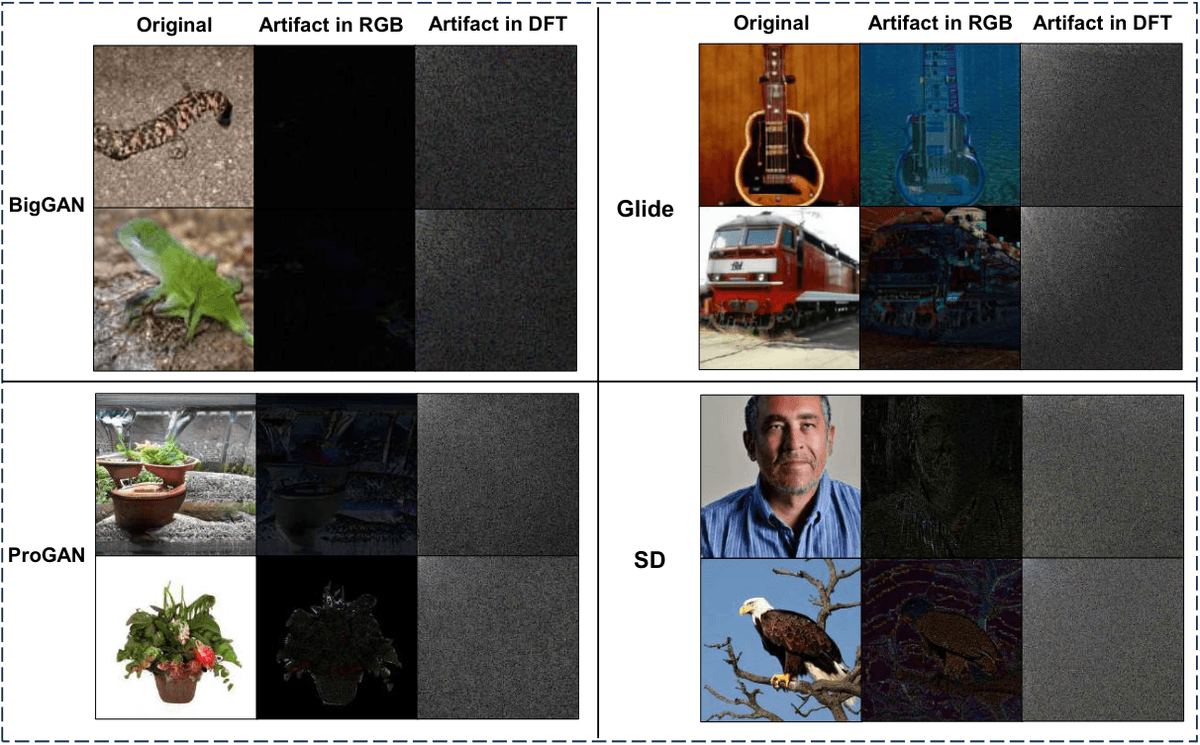
- Framework disentangles model traces from content and style using DIRE diffusion reconstruction residuals.
- Six embedding spaces (RGB, DFT, QFT, SL, VSL, SSL) are fused for fine-grained fingerprints.
- Reaches 98.04% attribution accuracy on GM-GenImage, versus 84% for the best prior baseline.
- Counterfactual PGD perturbations enable source anonymization with over 90% success.
- Tested on BigGAN, ProGAN, Glide, and Stable Diffusion; no code release announced.
Every image produced by a GAN or diffusion model carries subtle traces of the network that made it. Researchers have exploited these traces for years to answer a forensic question: which model produced this picture? A new paper argues that almost every prior attempt has been looking at the wrong signal, and proposes a causally grounded alternative that pushes attribution accuracy from the mid 80s into the high 90s.
The work, titled Causal Fingerprints of AI Generative Models, comes from a team at City University of Macau and Qilu University of Technology. Their pitch is straightforward: generative models leave implicit traces in their outputs, commonly called model fingerprints, but prior attribution methods rely on model-specific cues or synthesis artifacts that generalize poorly across different generator families.
Why old fingerprints break
Model attribution has three main camps: forgery detection, watermarking, and fingerprinting. Watermarking requires modifying the generator up front. Forgery detection is a coarse real-vs-fake binary. Fingerprinting is the appealing middle ground because it works passively on any image, but existing detectors have a nasty flaw: they latch onto features that only some model families exhibit. Checkerboard artifacts, for example, show up in certain GANs and have been used as GAN fingerprints, yet diffusion models simply do not produce them, so the detector collapses when the domain shifts.
The authors argue this is a symptom of a deeper problem. A generated image mixes together three things: content (what the picture shows), style (how it looks), and artifacts (traces of the generator itself). A useful fingerprint should depend only on the artifacts, ignoring semantics. Prior feature-extraction methods conflate all three, which is why they overfit to one model family.
This story is for Pro members
You've reached the end of the free preview. Upgrade to AlphaSignal Pro to read the full article - and everything else behind the paywall.
Comments
