

Block Ships Berd, an Open-Source Desktop Hub for Managing AI Agents
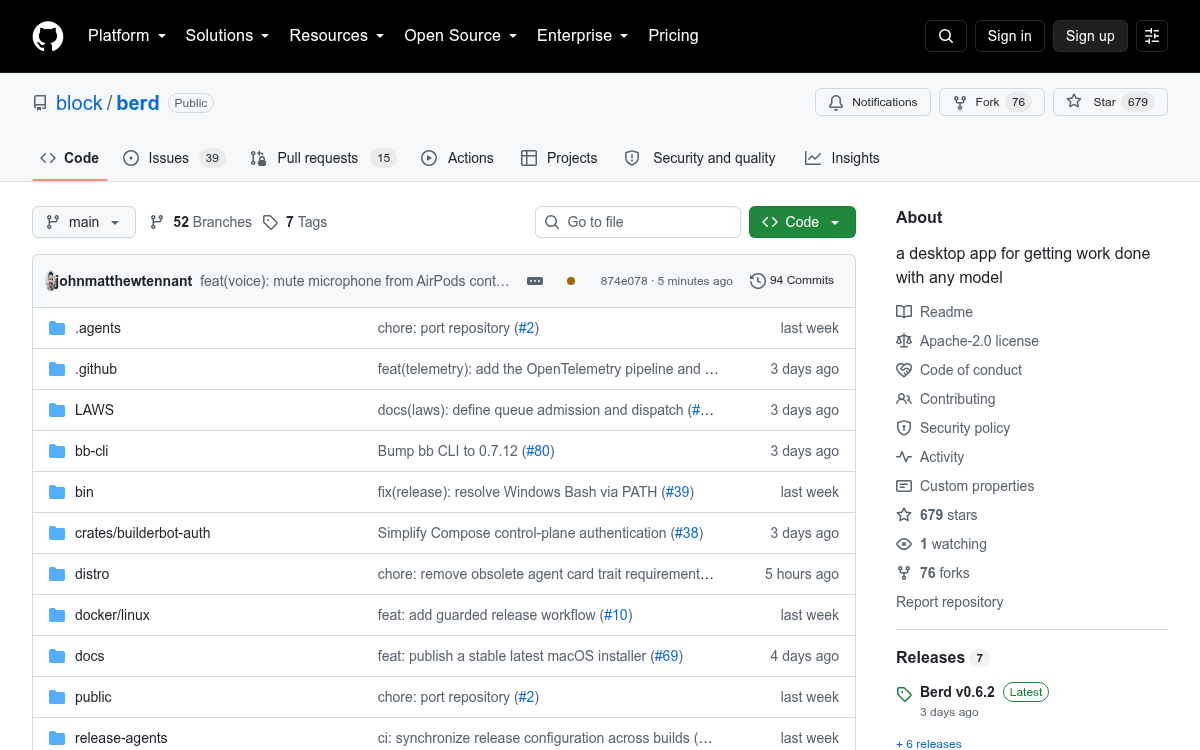
Block open-sourced Berd, a Tauri-based desktop shell that unifies AI agents, projects, and files across any model provider under Apache 2.0.

 PRO
PRO- Block open-sourced Berd, a desktop app for working with AI agents across any model under Apache 2.0.
- Built with Tauri 2 and React 19, running natively on macOS, Windows, and Linux with a Goose backend sidecar.
- Provides persistent projects, file attachments, skills, and session management in one native shell.
- Telemetry is off by default and excludes prompts, files, credentials, and identifying information when enabled.
- External pull requests are automatically closed; participation is limited to issues and forks.
- Ships enterprise distribution seams for private agents, providers, and update channels without touching public source.
Block has released Berd, an open-source desktop application that acts as a single home for AI agents across projects, files, skills, and sessions. It's built with Tauri 2 and React 19, and communicates with the upstream Goose backend through an ACP WebSocket served by a goose serve sidecar. The pitch on the tin: less chatting, more building, with any model you want to plug in.
Block built the app internally for employees working with AI agents across multiple models, tools, and projects, and has now published the code on GitHub under Apache 2.0 with prebuilt installers for macOS, Windows, and Linux. The repository reached version 0.6.2 on Aug. 18, its seventh public release, and lists 91 contributors.
One shell, many agents
Block describes Berd as a single desktop workspace where users can start chats, attach files or folders, choose agents and models, work inside persistent projects, configure AI providers, and manage workflow context in one place. The design goal is a native app that sits next to your code rather than a browser tab that forgets what you were doing yesterday.
Brad Axen, Block's head of AI capabilities, framed the choice bluntly: Berd is desktop-first because much of its value comes from working directly with projects, local files, tools, repositories, and agents running on or connected to the user's computer.
This story is for Pro members
You've reached the end of the free preview. Upgrade to AlphaSignal Pro to read the full article - and everything else behind the paywall.
Comments
