

Arcee AI Lands Open-Source AI's Most Vocal Advocate to Back Trinity
Nathan Lambert, the researcher behind Ai2's OLMo and Tulu and author of the RLHF Book, joins Arcee as Research Advisor as the open-source AI movement faces its most critical inflection point yet.

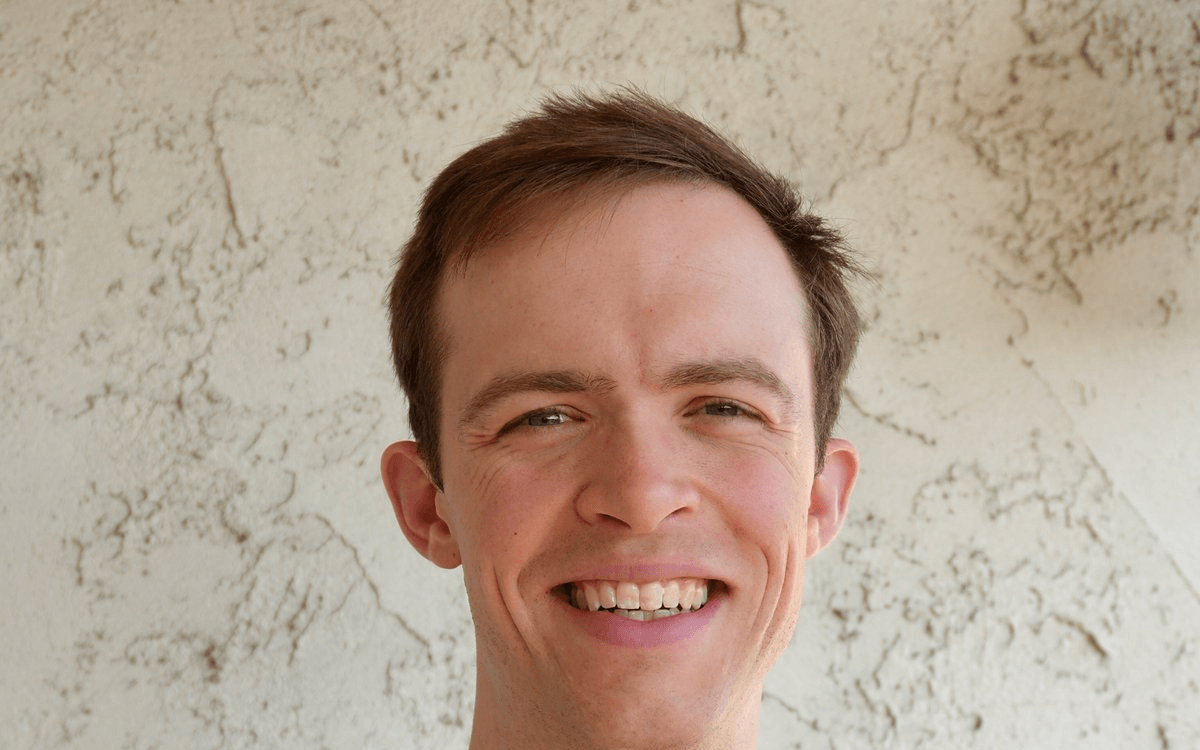
- Nathan Lambert joins Arcee AI as Research Advisor, bringing deep post-training expertise from his time leading OLMo and Tulu at the Allen Institute for AI.
- Lambert is also becoming Global CTO of AI at The Linux Foundation, making this an advisory role he says helps him "serve his community role in the ecosystem."
- Arcee is a 26-person startup that built a 399B-parameter open-weight model (Trinity Large Thinking) on a $20M budget, priced at $0.90/M tokens vs. $25 for Claude Opus 4.6.
- The open-source AI vacuum is real: Chinese labs like Alibaba's Qwen have pivoted to proprietary APIs, and Meta's Llama 4 faced benchmark credibility issues, leaving a gap Arcee is filling.
- Lambert had already publicly endorsed Arcee, calling their approach "valiant" and saying he "can't help but root" for their open-model mission before formally joining as advisor.
- Lambert brings 8,000+ Google Scholar citations, 87K+ Twitter followers, and authorship of the RLHF Book — the definitive reference on model alignment training — to Arcee's research direction.
Arcee AI, the scrappy San Francisco startup that bet half its lifetime funding on a single open-weight model, just added one of the most credible voices in open-source AI to its roster. Nathan Lambert is joining Arcee as a Research Advisor, a move that pairs a researcher with deep post-training expertise with a company that has staked its entire identity on building truly open American AI.
Who Is Nathan Lambert?
Lambert was a Senior Research Scientist and post-training lead at the Allen Institute for AI (Ai2), where he led work on TULU, one of the few fully open post-training pipelines for language models. Post-training is the phase that happens after a model is pre-trained on raw text: it is where models are fine-tuned, aligned to human preferences, and taught to follow instructions using techniques like RLHF (reinforcement learning from human feedback) and RLVR (reinforcement learning from verifiable rewards, where the model is rewarded for producing answers that can be checked for correctness, like math or code).
The last 2.5+ years building OLMo, Tulu, and other projects will be one of the peaks of his entire career, Lambert wrote upon departing Ai2. Before that, he built the RLHF research team at Hugging Face and contributed reinforcement learning integrations to the widely-used Diffusers library. He holds a Ph.D. from UC Berkeley, where he worked at the intersection of robotics, model-based reinforcement learning, and control, with internships at Facebook AI and DeepMind.
Lambert is not just a researcher. He is also the author of The RLHF Book, the definitive reference on reinforcement learning from human feedback, and the founder of the Interconnects AI newsletter. He has 8,000 citations on Google Scholar and writes articles on AI research that are viewed millions of times annually. He appeared on the Lex Fridman podcast twice, and his work has won awards including the Best Theme Paper Award at ACL.
Why Arcee, and Why Now?
Arcee.ai was founded in 2023 by Jacob Solawetz, Brian Benedict, and Mark McQuade. McQuade was previously an early employee at open-source model marketplace Hugging Face. The company started as an enterprise model customization shop, but it has since pivoted into something more ambitious: building frontier open-weight models from scratch, in the US, under fully permissive licenses.
Arcee is a 26-person U.S. startup that built a massive, 400B-parameter open-source LLM on a $20 million shoestring budget. That model, Trinity Large Thinking, is built on a Mixture-of-Experts architecture that activates only 13B of its 399B parameters per token, running 2-3x faster than dense models of comparable capability. A Mixture-of-Experts (MoE) model routes each input to a small subset of specialized sub-networks rather than running the entire model, which cuts inference cost dramatically.
On open AI model inference website OpenRouter, Trinity-Large-Preview established itself as the #1 most used open model in the U.S., serving over 80.6 billion tokens on peak days. Arcee prices access at $0.90 per million output tokens versus $25 for Claude Opus 4.6, a cost difference that reshapes the economics of enterprise AI reasoning at scale.
Lambert had already been paying attention. In a conversation with the Arcee team, Lambert said he had "become a bit of a fan of Arcee" because of what they are doing in trying to build a company around open models, calling it "a valiant and very reasonable way to do this." Now, he has become friends with Arcee's leadership and says he "can't help but root for their humble approach to building the open ecosystem" and their focus on "enabling broad access to efficient intelligence."
The Bigger Picture: Open Source Under Pressure
The timing of this hire is not coincidental. The open-weight AI landscape has shifted dramatically in the past year, and not in a direction that benefits American builders.
- Throughout 2025, Chinese research labs like Alibaba's Qwen set the pace for high-efficiency MoE architectures, but as 2026 arrived, those labs began shifting toward proprietary enterprise platforms and specialized subscriptions.
- Meta's Llama division notably retreated from the frontier landscape following the mixed reception of Llama 4 in April 2025, which faced reports of quality issues and benchmark manipulation.
- For organizations in finance, defense, or healthcare that need to audit the model's foundational state before deploying it, closed API models offer no equivalent starting point at any price.
Lambert is one of the most vocal advocates for open-source AI development in the US, regularly writing about the competitive dynamics between closed and open models, and the strategic implications of Chinese open-weight releases. He even launched what he called "The American DeepSeek Project", a plan to counter open-weight AI models from China's DeepSeek with support for an American fully open-source model at the scale and performance of current frontier models.
What This Means in Practice
Lambert's role is advisory, not full-time. He noted he is still starting a new full-time job, with more news on that front to come. His LinkedIn indicates he has stepped into the position of Global CTO of AI at The Linux Foundation. The Arcee advisory role runs alongside that, which Lambert framed as a way to serve his community role in the ecosystem.
What Lambert brings to Arcee is hard to replicate with a hire:
- Post-training depth: Lambert was a core contributor to Tulu 3 across SFT model development, preference-tuned model development, and reinforcement learning model development. This is exactly the pipeline Arcee needs to sharpen as it moves from pre-training Trinity to making it genuinely useful.
- Ecosystem credibility: With 87,500 followers on X and a newsletter read by tens of thousands, Lambert's endorsement signals to the open-source community that Arcee is doing serious work.
- Policy and advocacy: Lambert has indicated he intends to remain active in AI research and advocacy, with a continued focus on open science, model transparency, and coordination across the open-source ecosystem.
Arcee's strategy is now focused on bringing pretraining and post-training lessons back down the stack, with much of the work that went into Trinity Large flowing into Mini and Nano models, refreshing the company's compact line with the distillation of frontier-level reasoning. Lambert's expertise in exactly this kind of post-training distillation makes the fit obvious.
A Signal, Not Just a Hire
For a 26-person startup, landing an advisor of Lambert's stature is a meaningful signal. Lambert's departure from Ai2 highlights growing tensions between open AI research and the increasingly dominant influence of well-funded commercial AI laboratories. His choice to back Arcee rather than a larger lab suggests he sees the company as a genuine vehicle for the kind of open, American-built AI he has been advocating for.
Back-to-back launches from American organizations signal growing industry confidence that open licensing and frontier-class capability are no longer in tension. With Lambert now advising on the research side, Arcee has the technical credibility to match that ambition. The open-source movement has always needed both great models and great communicators. Arcee now has a shot at both.
Comments
