

AMAP-ML's LongHorizon-Harness Keeps AI Agents on Task 3x Longer
AMAP-ML released an open-source orchestration layer that lets Claude Code, Codex, and OpenClaw agents complete multi-hour computer tasks without state drift.

 PRO
PRO- AMAP-ML open-sourced LongHorizon-Harness, an orchestration layer for long-running computer-use agents.
- Splits work into Manager, Executor, and Auditor roles so verified progress survives context resets.
- Wraps Claude Code, Codex CLI, and OpenClaw without changing their native execution loops.
- Boosts WeaveBench pass rate from 51.8 to 80.7 and triples OSWorld 2.0 binary completion.
- Supports local, ssh, and docker execution with per-role model choice for cost tuning.
- MIT licensed, installable via
uv tool install lh-harness, paper on arXiv.
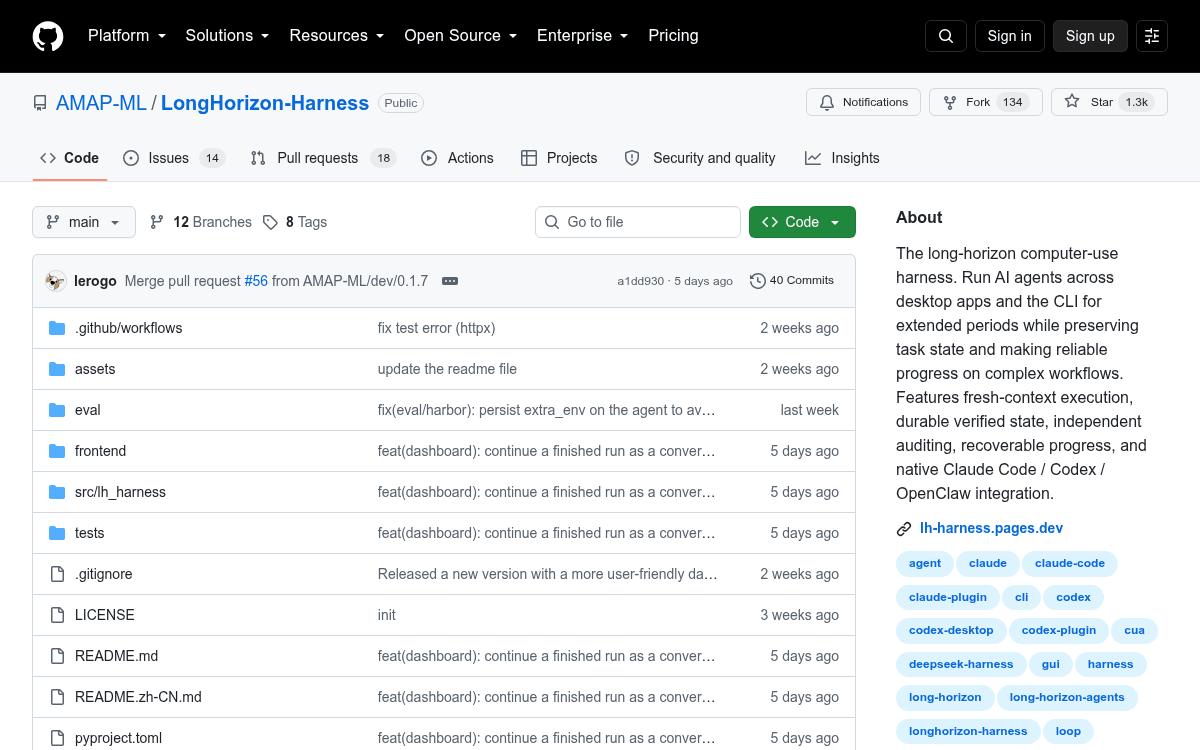
Running an AI agent for five minutes is easy. Running one for five hours across a browser, a terminal, and a design app while it actually finishes the job is a different problem. AMAP-ML just open-sourced LongHorizon-Harness, a scaffolding layer that sits on top of existing agents like Claude Code, Codex CLI, and OpenClaw to keep them on task through long, messy workflows.
The harness does not train a new model or replace an existing agent. It wraps around systems such as Codex and Claude Code, helping them operate autonomously in real computer environments for extended periods and continuously push complex tasks forward. Think of it as the scaffolding around your agent rather than another agent competing with it.
Three roles, one clean context
The core idea is to stop asking one ballooning context window to plan, act, and check its own work. LongHorizon-Harness splits the job three ways. A Manager holds the original goal and verified progress. An Executor starts each round with a fresh context and focuses on one clearly defined task. An Auditor independently inspects files, interfaces, logs, and tests in the real environment.
One constraint makes the whole design work: only results that pass independent verification enter persistent task state. When the context refreshes, an action fails, or a deliverable does not pass inspection, the system retains previously verified progress and continues from what remains. A hallucinated "I finished the report" never gets promoted into the record of truth.
This story is for Pro members
You've reached the end of the free preview. Upgrade to AlphaSignal Pro to read the full article - and everything else behind the paywall.
Comments
