

Alibaba's Qwen-Image-3.0-Pro Jumps 83 Elo Points but Drops Open Weights
Alibaba's third-generation image model debuts at #6 in editing and #9 in text-to-image, with big Elo jumps and a productivity-first pitch.
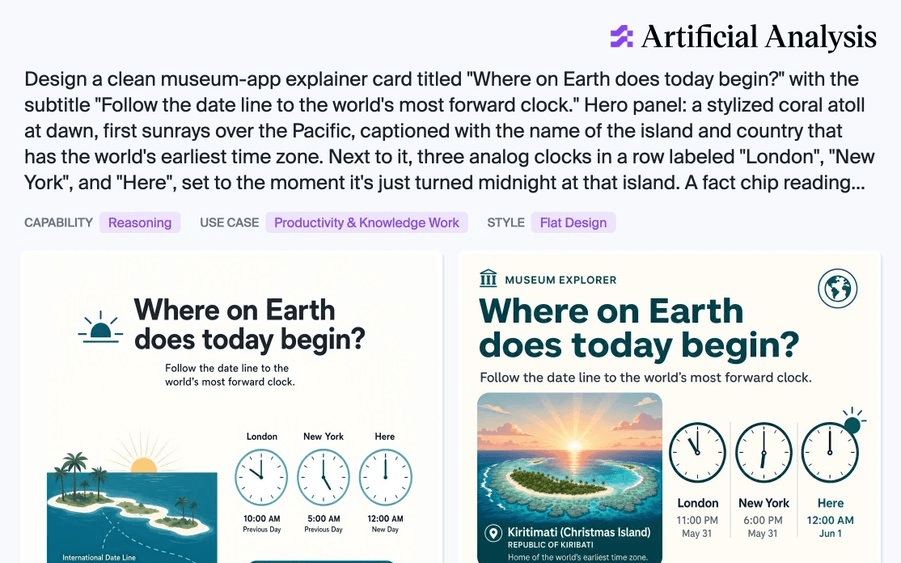
- Qwen-Image-3.0-Pro debuts at #6 on Artificial Analysis image editing, #9 on text-to-image.
- Elo jumps of 83 (editing) and 48 (text-to-image) points over the previous Qwen Pro.
- Faster Qwen-Image-3.0 variant climbs 135 and nearly 100 Elo points versus 2.0.
- Accepts 4.5k-token prompts, renders text at 10px, supports 12 languages natively.
- Pro costs $0.04 per 1K image, $0.075 at 2K; standard tier is a flat $0.03.
- Closed release: no open weights, no technical report, breaking with Qwen-Image 1.0 and 2.0.
Alibaba's image generation team just posted its biggest leaderboard jump yet. Qwen-Image-3.0-Pro lands at #6 on the Artificial Analysis Image Editing Leaderboard and #9 on the Text to Image Leaderboard, a gain of 83 and 48 Elo points over the previous Qwen Pro generation. The lighter Qwen-Image-3.0 variant lands at #11 in text-to-image and #15 in editing, moving over 135 and nearly 100 Elo points above Qwen-Image-2.0.
These are blind-preference rankings. Models are ranked using an Elo rating system derived from user votes in blind comparisons, where users compare edited outputs from the same input image and editing instruction and choose the result they prefer, so higher Elo scores mean a model is preferred more often. A jump of 80+ Elo points at the top of a saturated leaderboard is a meaningful shift, not a rounding error.
Where it sits on the board
On editing, Qwen-Image-3.0-Pro slots in behind a wall of proprietary heavyweights. MAI-Image-2.5-Pro currently leads the Artificial Analysis Image Editing Arena with an Elo score of 1271, followed by Reve 2.1 at 1263, GPT Image 2 (high) at 1257, MAI-Image-2.5 at 1256, and GPT Image 1.5 (high) at 1250. On text-to-image, Qwen sits just behind Google's Nano Banana 2 Lite and ahead of ByteDance's Seedream 5.0 Pro.
The Qwen family now spans two hosted SKUs:
- Qwen-Image-3.0-Pro: the flagship, with agent-based prompt rewriting
- Qwen-Image-3.0: same capability envelope, tuned for faster generation and high-volume use
The pitch: usefulness over prettiness
Alibaba is framing this generation as a working tool rather than an art toy. The Pro model accepts inputs up to 4.5k tokens with dense information layout, supports precise rendering of text as small as 10px, reproduces fine details such as micro-expressions, pores, and individual strands of hair, and natively renders 12 languages and 20+ fonts alongside realistic simulation of web pages, games, and live streams.
The 4,500-token limit is about 4.5 times the prior generation and allows users to request multi-panel outputs such as nine-panel infographics, dense grids, storyboards or full article mockups in a single pass. That is the axis Alibaba is betting on: layouts that are usually stitched together in a design tool getting produced in one call. The prompts in the launch thread lean hard into this, asking for four-panel photo memes with consistent framing, top-down landscape plans with counted objects along a path, and museum explainer cards with labeled analog clocks.
Pricing and access
Via Alibaba Cloud Model Studio, Pro is $0.04 per image at 1K resolution and $0.075 at 2K. The standard Qwen-Image-3.0 is a flat $0.03 per image at both resolutions. Both are free to try in Qwen Studio.
| Model | 1K price | 2K price | T2I rank | Editing rank |
|---|---|---|---|---|
| Qwen-Image-3.0-Pro | $0.04 | $0.075 | #9 | #6 |
| Qwen-Image-3.0 | $0.03 | $0.03 | #11 | #15 |
The catch: no weights this time
The awkward part of this release is what is missing. Qwen-Image-3.0 is a closed model with no weights, no license, no technical report, and no official benchmark release, a deliberate reversal from Qwen-Image 1.0 and 2.0 which shipped as open, Apache-2.0 weights on Hugging Face with technical reports the same day, and Alibaba has not published a model card or parameter count.
For anyone who built on the earlier Qwen-Image releases, that is the story to watch. The prior 2.0 generation documented an 8-billion-parameter Qwen3-VL encoder paired with a 7-billion-parameter diffusion decoder generating natively at 2048×2048, backed by a published DPG-Bench score of 88.32 (ahead of FLUX.1's 12B-parameter 83.84). Version 3.0 arrives with none of that paperwork and a hosted-only distribution model, which puts Qwen closer to how OpenAI and Google ship image models than to how the open-weights community has come to expect Alibaba to operate.
What it means in practice
If you were already routing text-to-image traffic through GPT Image or Nano Banana, Qwen-Image-3.0 is now a credible cheaper alternative for high-volume workloads where long prompts, small legible text, or non-English rendering matter. If you were self-hosting Qwen-Image-2.0 for privacy or cost control, 3.0 does not currently give you that option, and the older open weights remain the only path. The leaderboard verdict is clear on quality; the deployment question is now whether hosted-only Qwen fits the same slots the open version used to.
Comments
