
KAIST's IDM-VTON Finally Fixes Virtual Try-On's Blurry Logo Problem
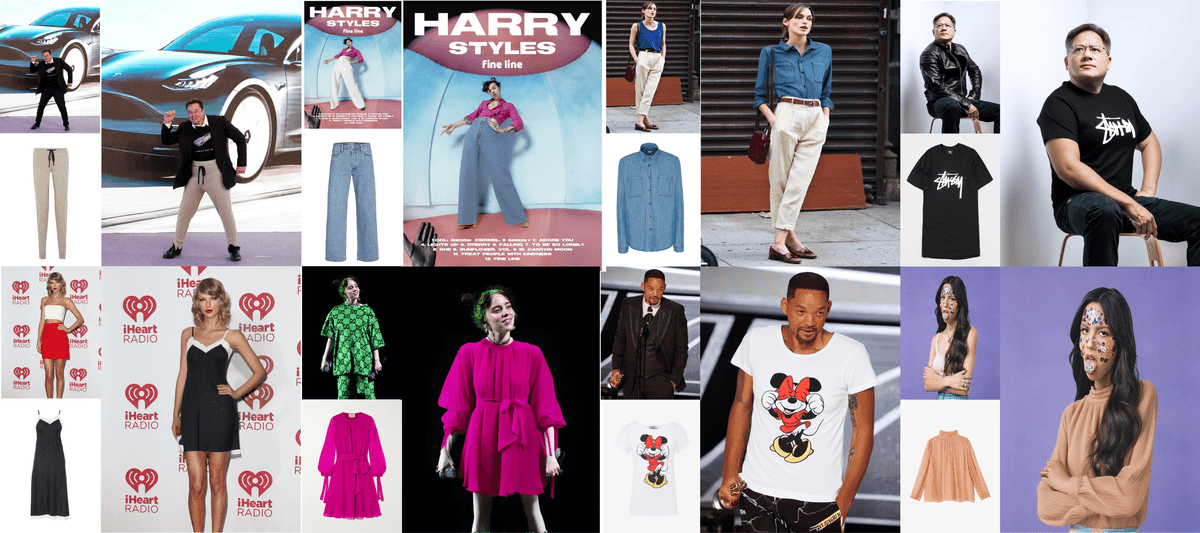
A KAIST and OMNIOUS.AI team released IDM-VTON, an open diffusion model that puts a target garment on any person while preserving fine texture and logos.
 Pro
Takeaways
- KAIST and OMNIOUS.AI released IDM-VTON, an SDXL-based virtual try-on model preserving garment identity.
- Uses two garment encoders: an IP-Adapter for semantics and a frozen SDXL UNet (GarmentNet) for low-level detail.
- Beats GAN and diffusion baselines on VITON-HD, DressCode, and an in-the-wild set across FID, LPIPS, and CLIP-I.
- Optional 2-minute per-pair fine-tuning of decoder layers boosts fidelity for logos and complex prints.
- Weights, training and inference code, and a Hugging Face demo are all public.
- Released under CC BY-NC-SA 4.0, so commercial use is not permitted directly. Paper.
Virtual try-on has always looked almost right but never quite good enough to ship. Sleeves warp, logos smear, and the model on screen ends up wearing something that only vaguely resembles the shirt you clicked. A team from KAIST and OMNIOUS.AI released IDM-VTON on Hugging Face: an SDXL-based inpainting model built specifically to fix garment fidelity, with weights, inference code, and a public demo under a non-commercial license.
What it does and why previous methods fell short
Given a person image and a garment image, IDM-VTON renders the person wearing that garment. Earlier diffusion-based try-on systems produced natural-looking people but degraded the clothing itself: textures blurred, prints shifted, logos disappeared. GAN-based approaches preserved some fidelity but looked synthetic. IDM-VTON targets the gap directly, keeping textures, patterns, and prints intact even across unusual poses and cluttered backgrounds.
How the architecture fits together
Three components wrap around a Stable Diffusion XL inpainting backbone. The main UNet, called TryonNet, receives a noised latent of the person concatenated with a segmentation mask, the masked-out person image, and a DensePose map. The first conv layer is expanded to 13 channels, initialized to zero. The garment travels two parallel paths before being fused in:
- IP-Adapter branch: a frozen OpenCLIP ViT-H/14 image encoder captures high-level garment semantics, fused into TryonNet's cross-attention layers.
- GarmentNet branch: a second frozen SDXL UNet encoder extracts low-level texture features, fused via self-attention by concatenating intermediate features from both UNets, running self-attention, then keeping only the TryonNet half of the output.
During training, only TryonNet and the IP-Adapter modules are updated. GarmentNet stays frozen, which makes training cheaper than approaches like OOTDiffusion that fine-tune the full garment UNet.
Garment-specific captions and personalization
Rather than feeding a generic prompt like "upper garment," a fashion attribute tagger generates detailed descriptions such as "short sleeve round neck t-shirts." These feed both branches in different forms: "a photo of..." to GarmentNet and "model is wearing..." to TryonNet. The ablation shows measurable improvements around necklines and sleeves.
For cases where zero-shot quality falls short, the authors propose a lightweight personalization step: given a single person-garment pair, fine-tune only the decoder attention layers (up-blocks) of TryonNet for roughly two minutes on a single A800. In their tests, this beats both LoRA and full-UNet fine-tuning for preserving logos and text prints on in-the-wild garments.
Benchmark results
Training used VITON-HD's 11,647 person-garment pairs at 1024x768, with Adam at 1e-5 for 130 epochs across four A800 GPUs (roughly 40 hours). On public benchmarks, IDM-VTON beats GAN baselines (HR-VITON, GP-VTON) and prior diffusion methods (LaDI-VTON, DCI-VTON, StableVITON) on FID and CLIP image similarity, and leads on LPIPS on DressCode. On a scraped in-the-wild evaluation set, the margin grows further. Adding the per-pair fine-tuning step pushes CLIP-I from 0.901 to 0.909 and drops LPIPS to 0.150.
Current limitations
The authors are candid about what breaks. Because IDM-VTON uses inpainting, human attributes inside the masked region, including tattoos, moles, and other skin details, are not reconstructed. Complex graphics on unfamiliar garments still benefit heavily from per-pair fine-tuning rather than working zero-shot. Controlling garment generation from text prompts is left as future work.
Running it yourself
Weights are on Hugging Face as a StableDiffusionXLInpaintPipeline with diffusers, ONNX, and safetensors variants. The full training and inference stack is on GitHub, with a hosted Gradio demo backed by ZeroGPU. Reproducing the pipeline end-to-end requires three preprocessing tools: SCHP for human parsing, DensePose (via detectron2) for the pose map, and the OOTDiffusion/DCI-VTON masking utilities to build the agnostic mask.
git clone https://github.com/yisol/IDM-VTON.git
cd IDM-VTON
conda env create -f environment.yaml
conda activate idm
The checkpoints and code are released under CC BY-NC-SA 4.0, which rules out direct commercial deployment. For research, prototyping, and internal e-commerce experiments requiring SDXL-quality try-on with reliable logo preservation, IDM-VTON is one of the strongest open options available. The paper was accepted to ECCV 2024.