
Flux2-Klein-9B-Consistency V2 Fixes Color Drift in AI Image Editing
A community LoRA for FLUX.2 Klein 9B fixes the model's color drift and over-saturation problems, keeping edits visually consistent with source images.
 Pro
Takeaways
- Community LoRA Flux2-Klein-9B-Consistency V2 fixes color drift on FLUX.2 Klein 9B image editing.
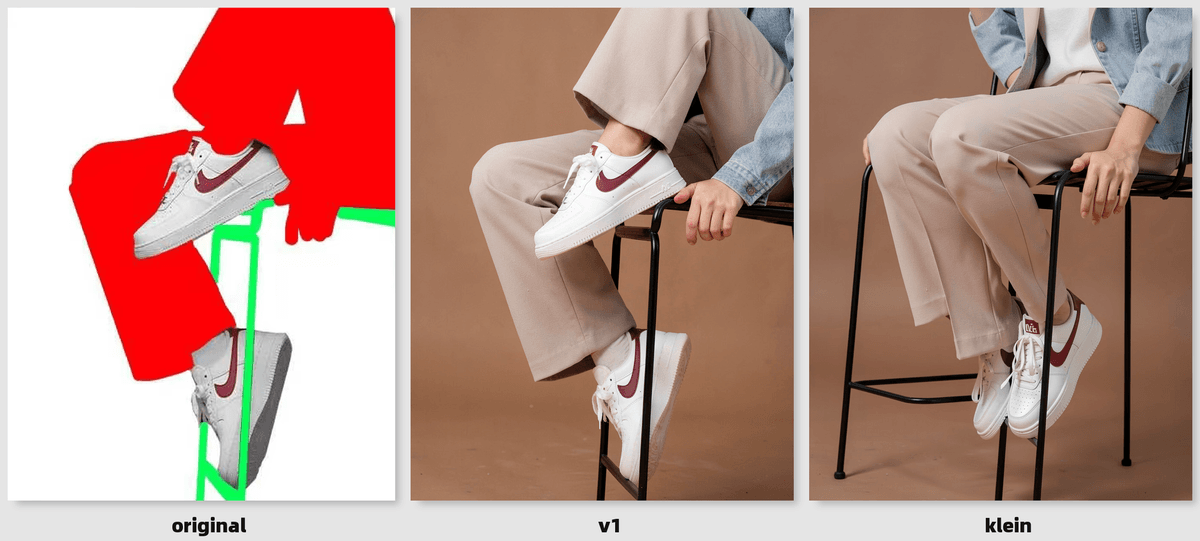
- V2 resolves color cast, dirty-looking excess detail, and over-saturation issues from V1.
- Apache 2.0 licensed, works without trigger words, drops into standard diffusers pipeline.
- Built on Black Forest Labs' 9B rectified flow transformer with 8B Qwen3 text encoder.
- Requires ~29GB VRAM on RTX 4090 or above; FP8 variants available for lower VRAM.
- Author released full training tutorial covering dataset creation for custom Klein LoRAs.
Reference image editing has a persistent problem: even when a diffusion model preserves subject identity, the output often drifts in color, saturation, and fine detail compared to the input. A community LoRA called Flux2-Klein-9B-Consistency just shipped a V2 update targeting exactly that failure on top of Black Forest Labs' new small model, and it has already crossed 47,000 downloads.
Why edited images drift
The base model is FLUX.2 klein 9B, released earlier this year. It's a compact rectified flow transformer that handles text-to-image, single-image editing, and multi-reference generation in one unified architecture, with the distilled variant using 4 sampling steps for sub-second inference on a single modern GPU. Klein 9B pairs the flow model with an 8B Qwen3 embedder, a text encoder in the large-language-model class that brings substantially better prompt understanding than smaller CLIP-based encoders. That is the main reason it handles complex, multi-clause prompts more accurately than competing small models.
Step distillation and heavy guidance come with a cost. Image-to-image edits tend to shift colors, boost saturation, and hallucinate extra texture. The Consistency LoRA is a lightweight adapter that steers the model back toward the reference image's actual look.
What V2 actually fixes
The updated release targets three specific failure modes that plagued the first version:
- Color cast: outputs no longer drift toward a warm or cool tint relative to the input.
- Dirty-looking detail: V1 tended to pile on micro-texture that made edited regions look noisy or grimy. V2 pulls that back.
- Over-saturation: Klein's default output pushes saturation harder than the source, and the adapter compresses it back to reference levels.
One practical note from the model card: the LoRA works without any trigger words, so you can drop it into an existing pipeline without rewriting prompts.
Dropping it into a diffusers pipeline
The adapter is Apache 2.0 licensed and loads through the standard diffusers LoRA hook. Integration is three lines on top of the base pipeline:
from diffusers import DiffusionPipeline
from diffusers.utils import load_image
import torch
pipe = DiffusionPipeline.from_pretrained(
    "black-forest-labs/FLUX.2-klein-9B",
    dtype=torch.bfloat16, device_map="cuda")
pipe.load_lora_weights("dx8152/Flux2-Klein-9B-Consistency")
img = load_image("input.png")
out = pipe(image=img, prompt="Turn this cat into a dog").images[0]
Hardware requirements are inherited from the base model. FLUX.2 klein 9B fits in roughly 29GB VRAM and runs on NVIDIA RTX 4090 and above. If you don't have that locally, the FP8 checkpoint from Black Forest Labs cuts VRAM significantly, and there are hosted Spaces on Hugging Face running the LoRA directly.
Where it earns its keep
This is a targeted tool rather than a general-purpose upgrade. The clearest wins are workflows where the output has to match the input's palette:
- Product photo edits: swapping backgrounds or restyling without shifting the product's actual color.
- Character consistency across shots: keeping skin tone, hair color, and clothing stable when varying pose or scene.
- Style transfer with locked palette: applying a stylistic edit while preserving the source's tonal range.
- Batch editing: pipelines that run many edits on the same subject and can't tolerate drift between frames.
For pure text-to-image work where there's no reference to stay faithful to, this adapter offers less. The value sits entirely in image-to-image and multi-reference editing scenarios.
Small models are the interesting front
Much of the practical progress in open image models is now happening at the LoRA layer rather than in new foundation weights. Klein 9B is optimized for latency, and the community is patching around the visual quirks that latency optimization introduces. FLUX.2 klein 4B and 9B are step-distilled and guidance-distilled models that use 4 inference steps and are positioned as the fastest options for production and interactive workloads, which is exactly the setting where color drift becomes visible across many outputs.
The author also published a full training tutorial covering dataset construction for training your own Klein LoRAs. If you're building anything that runs FLUX.2 Klein in production and needs edits to look like edits rather than reinterpretations, this is worth pulling into your stack.
