
EleutherAI's Pythia Gives Researchers a Time-Lapse of How AI Actually Learns
EleutherAI's Pythia-160M keeps trending because it ships 154 training checkpoints plus 15 sibling models, turning LLM behavior into a controlled experiment.
 Pro
Takeaways
- Pythia-160M is part of a 16-model suite built for controlled LLM science, not chat.
- Every size (70M to 12B) saw the exact same tokens in the exact same order.
- 154 training checkpoints per model are exposed as Hugging Face branches for step-by-step analysis.
- Two variants per size: trained on the Pile, and on a globally deduplicated Pile.
- Apache 2.0 licensed, GPT-NeoX architecture, reproducible via the EleutherAI/pythia repo.
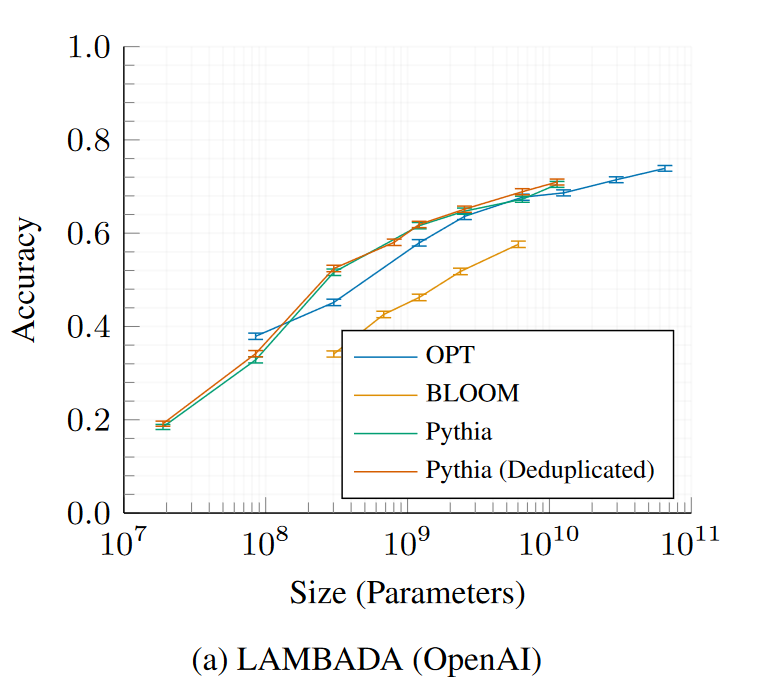
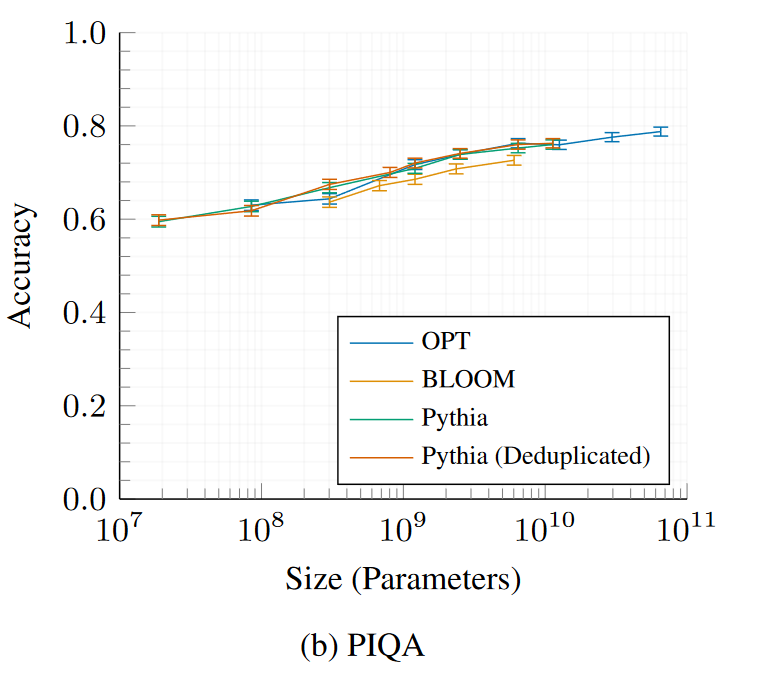
- Matches OPT and GPT-Neo at equivalent sizes on LAMBADA, PIQA, WinoGrande, ARC-Easy, and SciQ.
A tiny 160M parameter language model from EleutherAI keeps racking up downloads on Hugging Face, and it has nothing to do with chatbot performance. Pythia-160M is one entry in a carefully engineered suite that has quietly become the standard rig for studying how large language models actually learn.
One suite, sixteen models, same data order
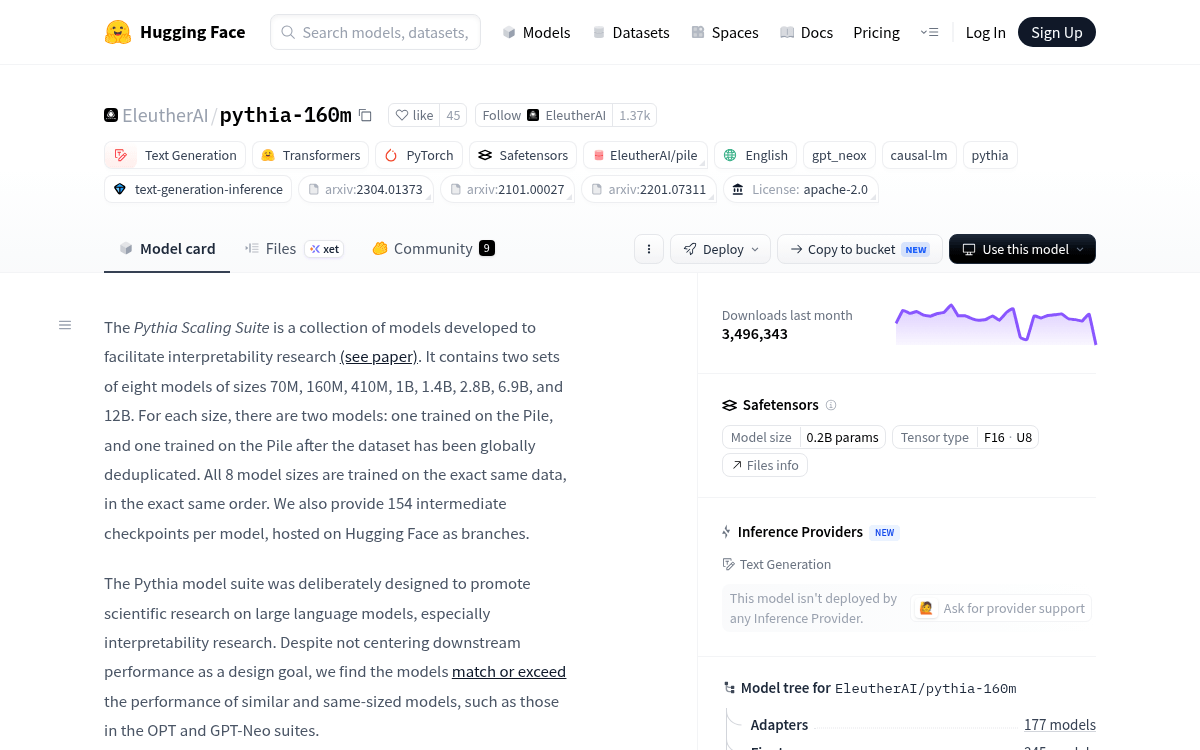
The Pythia Scaling Suite contains two sets of eight models at sizes 70M, 160M, 410M, 1B, 1.4B, 2.8B, 6.9B, and 12B. For each size, one model was trained on the Pile and one was trained on the Pile after global deduplication. All eight sizes saw the exact same data in the exact same order, and each model ships with 154 intermediate checkpoints hosted on Hugging Face as branches.
That last detail is the real point. Most open model releases give you a single set of final weights. Pythia gives you a time-lapse: public access to 154 checkpoints for each of the 16 models, alongside tools to download and reconstruct their exact training dataloaders. Researchers use it to study memorization, term-frequency effects on few-shot performance, and gender bias.
What Pythia-160M actually is
The 160M variant is a GPT-NeoX style decoder transformer with 12 layers, a 768-dimensional residual stream, 12 attention heads, and a 2M-token batch size trained at a peak learning rate of 6e-4. Training used the Pile, an English general-purpose dataset with a datasheet documenting its component sources. Each model in the suite saw roughly 300 billion tokens across 143,000 steps, with checkpoints saved every 1000 steps plus log-spaced early snapshots at steps 0, 1, 2, 4, 8, up to 512.
Loading a specific point in training is a one-liner thanks to Hugging Face branches:
from transformers import GPTNeoXForCausalLM, AutoTokenizer
model = GPTNeoXForCausalLM.from_pretrained(
    "EleutherAI/pythia-160m",
    revision="step3000",
)
tokenizer = AutoTokenizer.from_pretrained("EleutherAI/pythia-160m")
Where it stands on benchmarks
Despite being tuned for controlled science rather than leaderboard scores, the suite holds its own. EleutherAI reports that the models match or exceed similar and same-sized peers such as those in the OPT and GPT-Neo suites, and published evaluation curves against OPT and BLOOM across LAMBADA, PIQA, WinoGrande, ARC-Easy, and SciQ.
At 160M parameters specifically, do not expect coherent essays or instruction following. EleutherAI is blunt about the limits: the model has not been fine-tuned for downstream contexts such as genre prose or commercial chatbots, so it will not respond to prompts the way ChatGPT does. It is a research substrate, not a product.
What it is genuinely useful for
The suite answers questions the closed frontier labs cannot. Because every model in the family saw identical tokens in identical order, you can isolate the effect of scale from the effect of data. With 154 checkpoints public, you can trace when a specific capability, circuit, or memorized string first appears.
- Training dynamics. Watch loss, attention patterns, or feature emergence evolve step by step.
- Memorization studies. Ask when a training string became reproducible, and whether deduplication changes that.
- Mechanistic interpretability. Probe the same circuit across 8 model sizes to test scaling hypotheses.
- Data attribution. The GitHub repo ships tools to reconstruct the exact dataloader batch a model saw at any step.
- Cheap fine-tuning baselines. At 160M parameters, you can fine-tune on a single consumer GPU under Apache 2.0.
What the retrained release fixed
The current weights are not the first attempt. EleutherAI retrained the entire suite to remove a few hyperparameter inconsistencies from the original run. All sizes now use a uniform 2M-token batch, where the 160M, 410M, and 1.4B models previously trained at 4M. Flash Attention was added, extra early checkpoints appeared at steps 0 through 512, and the learning rate schedule was normalized so every model decays to 10% of its peak LR rather than mixing 10% and 0% floors across scales. Benchmark performance was unchanged, which is itself a useful data point about how much these knobs matter.
Why it still trends
The Pythia paper was framed around a simple pitch: a highly controlled setup can yield novel insights into LLMs and their training dynamics. That framing has aged well. As mechanistic interpretability and training-data attribution have become mainstream research agendas, Pythia is often the only fully open target that supports them end to end. For anyone building interpretability tooling, distillation experiments, or scaling-law probes, the 160M checkpoint is the cheapest entry point into a family that goes all the way up to 12B on identical data.