| Hey, | Welcome to today's edition of AlphaSignal, a newsletter for developers by developers.
We identify and summarize the top 1% news, papers, models, and repos in the AI industry. |
|
|
|
IN TODAY'S SIGNAL
| Read time: 5 min 31 sec | 🎖️ Top News
📌 AssemblyAI
⚡️ Trending Signals
📌 SuperAnnotate
🛠️ Top of Github
Crawl4AI: Open-source LLM Friendly Web Crawler & Scraper.
Llama Stack: Model components of the Llama Stack APIs
exo: Run your own AI cluster at home with everyday devices
🧠 Pytorch Tip
|
|
|
|
If you're enjoying AlphaSignal please forward this email to a colleague.
It helps us keep this content free. |
|
|
|
TOP NEWS
| Google | Google NotebookLM now summarizes YouTube videos and provides insights directly from the video transcript |
⇧ 4,163 Likes |
 |
What's New |
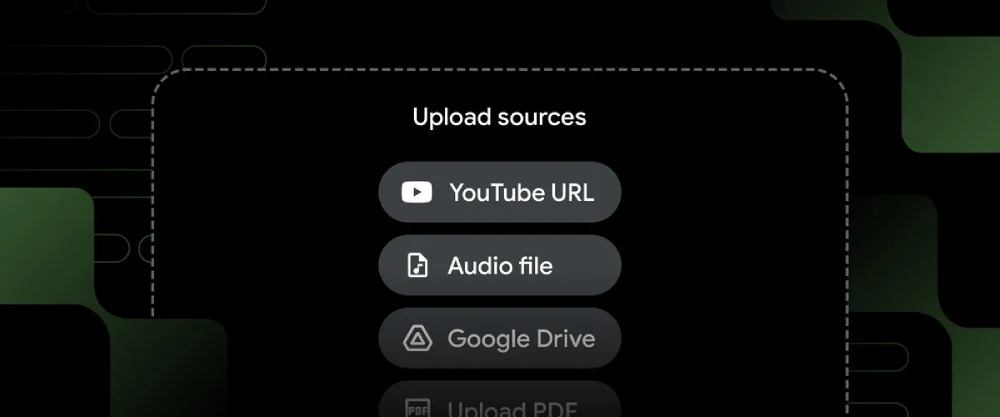
NotebookLM, Google's document analysis and podcast creation tool, now supports YouTube URLs and audio files as input sources. This expansion builds on its existing capabilities for PDFs, Google Docs, Slides, and websites, leveraging Gemini 1.5's multimodal processing abilities.
Key highlights
Supports YouTube and audio inputs alongside text documents Generates two-person podcast episodes from various content types Offers shareable Audio Overviews via public links Maintains user privacy by not using personal data for training Available for enterprise and EDU domains through Google Workspace NotebookLM processes multimodal inputs by transcribing audio and analyzing video content. It generates inline citations linked directly to video transcripts, allowing users to explore key concepts across multiple sources. The embedded YouTube player enables direct video viewing within the platform.
Features of NotebookLM
The main application is the generation of two-person podcast episodes from uploaded content. This feature can transform various text sources, including technical documents and code, into conversational audio formats. It addresses challenges in LLM interaction by delegating question-asking to AI and providing an audio-based consumption option. NotebookLM's audio processing capabilities include transcription and searchability of audio recordings. This feature eliminates the need to listen to entire files, streamlining information retrieval from lengthy audio content. The Audio Overview feature consolidates information from various sources into a digestible format. Users can now share these overviews via public links, though this function is currently unavailable for Workspace users. The system maintains context relevance across different source types, ensuring coherent summaries and analyses.
The platform represents a shift in LLM interaction paradigms, moving beyond traditional chat interfaces. It aims to simplify complex information processing and presentation, catering to diverse user needs in research, study, and professional contexts. | |
|
Read more
|
|
|
|
| Try AssemblyAI's Multilingual Speech AI Models | AssemblyAI just released new Speech-to-Text models for developers building voice-driven AI products. Their API delivers high accuracy and low-latency performance, enabling fast deployment and easy scaling.
Key features
The straightforward API helps developers integrate speech recognition quickly. AssemblyAI's models handle complex audio environments and diverse accents. Regular improvements ensure the models stay current with the latest advancements in speech recognition technology.
AseemblyAI is offering a $50 credit to AlphaSignal readers. |
|
Try now
| partner with us |
|
|
|
TRENDING SIGNALS
| PyTorch |
|
⇧ 631 Likes | |
LLM |
|
⇧280 Likes | |
Llama 3.2 |
|
⇧ 1,500 Likes | |
LLM |
|
⇧ 1,600 Likes | |
Vision Model |
|
⇧ 483 Likes | | |
|
|
|
|
|
Fine-tuning foundation models on your data with SuperAnnotate and AWS
| Join the webinar to see how SuperAnnotate and AWS help enterprises:
| Register for free |
|
|
|
|
TRENDING REPOS
| Web Crawlers | |
☆ 5,200 Stars |
Helps you build fast, LLM-friendly web crawlers. It's 4x faster than paid alternatives, crawls multiple URLs, extracts media and links, and generates structured output. Supports custom JavaScript, CSS selectors, and advanced extraction strategies including LLM-based parsing. |
| LLM Deployment |
|
| ☆ 2,400 Stars |
Helps you build and deploy LLM-powered applications using standardized APIs. It covers model training, fine-tuning, evaluation, and production deployment. You can mix local and cloud providers for inference, memory, and safety. It supports PyTorch, vLLM, TensorRT, and cloud services. |
| AI cluster at home |
|
☆ 7,500 Stars |
Helps you run LLMs across multiple everyday devices, creating a unified GPU cluster. It supports models like LLaMA, Mistral, and LlaVA. exo automatically discovers devices, partitions models optimally, and provides a ChatGPT-compatible API. It works on iPhones, iPads, Android, Mac, and Linux systems. |
| |
| |
|
|
PYTHON TIP
| Optimizing Data Loading with PyTorch's DataPipe API |
PyTorch's DataPipe API helps you build efficient, flexible data loading pipelines. You can easily chain operations like filtering, mapping, and grouping. This is particularly useful for large datasets or complex preprocessing tasks.
Here's a simple example. This pipeline squares each number and keeps only even results. |
!pip install torchdata

from torchdata.datapipes.iter import IterableWrapper, Mapper, Filter

# Create a simple dataset
data = IterableWrapper(range(10))

# Define preprocessing steps
def square(x): return x ** 2
def is_even(x): return x % 2 == 0

# Chain operations
processed_data = data.map(square).filter(is_even)

# Use the processed data
for item in processed_data:
    print(item)
| In this example, DataPipe is helpful in several ways
Modularity: It separates data creation (`IterableWrapper`), transformation (`map`), and filtering (`filter`) into distinct steps. Lazy evaluation: Operations are applied only when data is iterated, saving memory for large datasets. Chainability: You can easily combine operations (`map` and `filter`) in a readable, sequential manner. Efficiency: DataPipe optimizes the execution of these operations, which is particularly beneficial for larger datasets.
DataPipe shines when handling large-scale data, streaming from disk or network, or applying complex transformations. It's modular, allowing you to reuse and combine pipeline components. This leads to cleaner, more maintainable code for data preprocessing in machine learning projects. |
|
Get the google colab
|
|
|
|
Looking to promote your company, product, service, or event to 200,000+ AI developers? Let's work together.
|
|
Advertise
|
|
|
|
|
