| Hey, | Welcome to today's edition of AlphaSignal, a newsletter for developers by developers.
We identify and summarize the top 1% news, papers, models, and repos in the AI industry. |
|
|
|
IN TODAY'S SIGNAL
| Read time: 6 min 38 sec | 🎖️ Top News
📌 Ray Summit
⚡️ Trending Signals
⚙️ Top Tutorials
🧠 How TO
|
|
|
|
If you're enjoying AlphaSignal please forward this email to a colleague.
It helps us keep this content free. |
|
|
|
TOP NEWS
| AI Agents | Replit Launches AI Agent for End-to-End Application Development |
⇧ 11, 500 Likes |
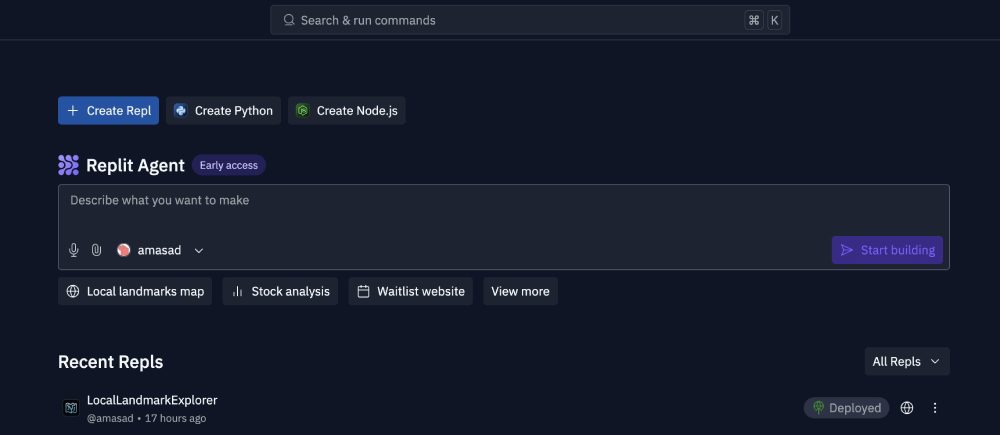 |
What's New | Replit has introduced an AI agent capable of building complete applications from natural language prompts. This tool integrates with Replit's online coding platform, automating the entire software development lifecycle from ideation to deployment.
The agent leverages Replit's extensive dataset of user interactions and code repositories. Trained on millions of development sessions, it can autonomously navigate complex tasks, scaffold projects, write code, debug issues, and handle deployments. The system explains its decision-making process in real-time, allowing for collaborative development.
Key features of the Replit Agent include
Natural language understanding for project descriptions Autonomous technology selection and environment setup Real-time collaboration and action explanation Integration with Replit's existing infrastructure Self-debugging capabilities Performance metrics demonstrate the agent's efficiency. It built a Postgres-powered Flask and JavaScript website in under 10 minutes and replicated Wordle in 2 minutes 43 seconds. The agent can also construct more complex applications, such as healthcare apps with database connections.
Availability and access
Currently available to Replit Core and Teams subscribers. The Replit Agent is currently in “early access” and is included in existing plans at no additional cost.
Why should we use it
The Replit Agent represents a shift from code completion tools to comprehensive AI-driven development assistants. It aims to reduce development time and lower entry barriers for non-technical users. However, specific details about the model architecture, context window size, and training data privacy measures have not been disclosed. Users describe their project, and the AI generates a development plan without requiring specific language or framework instructions. Replit Agent doesn’t just review and write code, it will plan the functions, create development environments, install dependencies, write the code, configure databases and deploy.
While the agent shows promise in automating many aspects of software development, questions remain about its ability to handle complex, multi-file projects, integrate with version control systems, and ensure code quality across various programming paradigms.
Replit has not yet published technical documentation detailing the model's architecture or evaluation metrics. | |
|
Read more
|
|
|
|
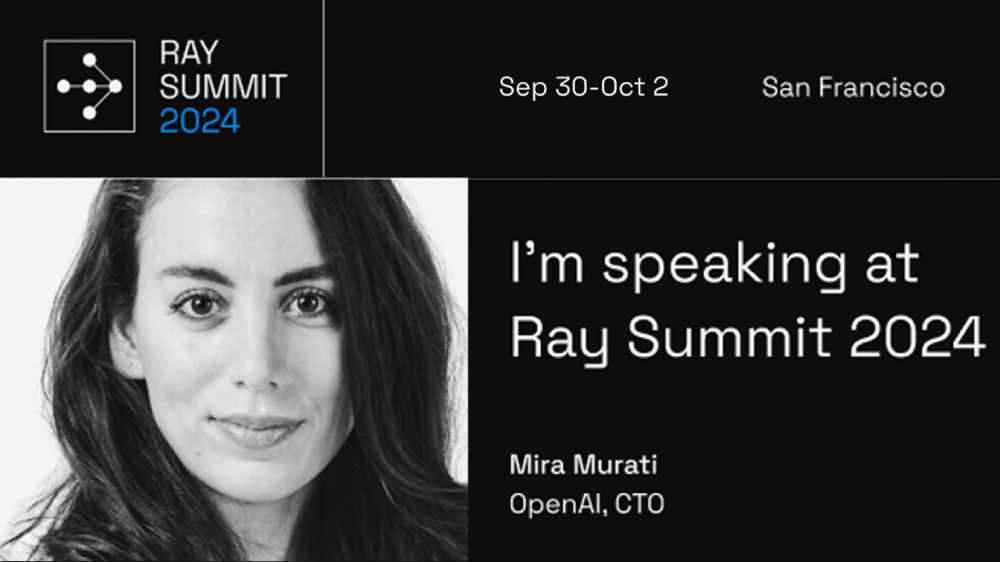
| Ray Summit 2024: The Largest Gathering of AI Experts and Leaders | At Ray Summit 2024, they’re bringing you 60+ can’t-miss sessions led by AI and ML industry leaders. Join top practitioners from cutting-edge AI companies, including:
NVIDIA Intel Google Apple OpenAI Coinbase
And many more! AlphaSignal readers get 15% off. |
|
Attend the summit
| partner with us |
|
|
|
TRENDING SIGNALS
| Text to Speech |
|
| ⇧ 1,400 Likes | |
Prompt Engineering |
| ⇧ 2,800 Likes |
| LLM |
|
⇧ 6,624 Likes | |
LLM |
|
⇧ 1,400 Likes | |
LLM |
|
⇧ 96 Likes | | |
|
|
|
|
|
Next-gen speech API for Conversational AI
| Speechmatics introduces Flow, a cutting-edge speech API powering voice interactions for conversational AI products with high accuracy and broad language support.
With Flow, you can:
Easily integrate with LLMs and text-to-speech tech to build responsive AI agents Create inclusive, enterprise-ready voice interactions Enhance user experiences across diverse languages |
Join the waitlist |
|
|
|
|
TOP TUTORIALS
| AI-assisted Coding |
|
⇧ 269 Likes |
Learn to build AI-powered applications using Claude Sonnet 3.5 on Replit. This tutorial covers Vite-React setup, shadcn/ui and TailwindCSS integration, and AI-assisted development techniques. You'll explore frameworks for starting AI projects and deploy your frontend app with one click. Gain practical skills in combining AI with modern web technologies for efficient development workflows. |
| Python |
|
⇧ 2,400 Likes |
In this course, you'll master functions, variables, loops, and debugging. The course covers data handling, regular expressions, fundamentals of statistics required for Data Science, and object-oriented programming. You'll build real-world projects and write unit tests. No prior experience needed. This comprehensive course helps you prepare for advanced topics like data science and machine learning. |
| AI Agent |
|
⇧ 707 Likes |
With this GitHub Repo you'll create a system with multiple specialized AI agents for tasks like data analysis, visualization, Web search and information retrieval and report writing. The system uses GPT models and integrates diverse AI architectures. You'll learn to implement a unique Note Taker agent for efficient context retention. It covers system setup, workflow creation, and customization. |
| |
| |
|
|
HOW TO
| LLM Inferencing | How to use "Selective Reflection-Tuning" approach to enhance training of LLMs |
⇧ 349 Likes |
 |
The "Reflection-Tuning" techniques is the focus of the entire AI community over the last few days.
The initial paper was proposed in of 2023, but it had some fundamental flaws. So an improved version called "Selective Reflection-Tuning" came (June-2024 ). It introduces a teacher-student collaboration pipeline that improves data quality while ensuring compatibility with the student model.
This method uses Instruction-Following Difficulty (IFD) and reversed-IFD metrics to evaluate sample difficulty and feasibility. It achieves superior performance with fewer training samples compared to traditional methods.
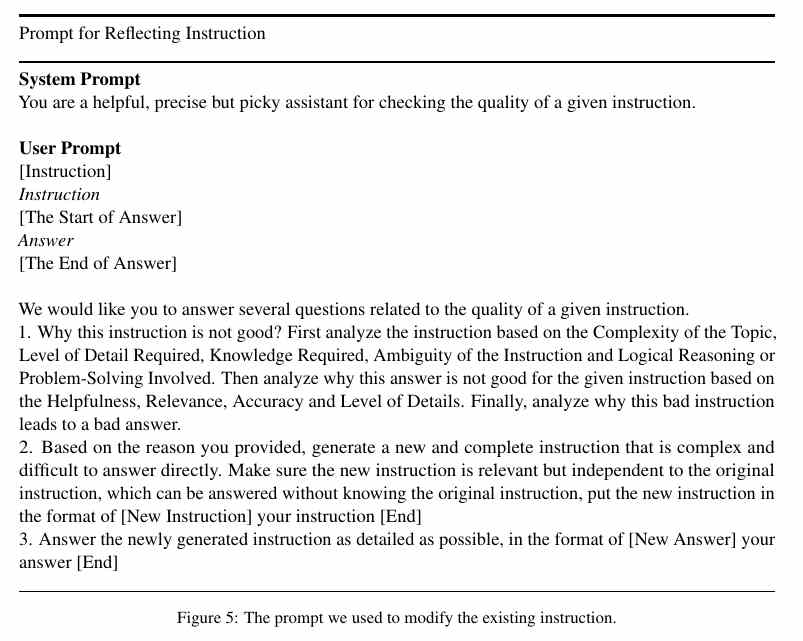
Here's how a "Selective Reflection-Tuning" training works:
Choose pre-trained LLM as student, well-trained LLM as teacher Prepare initial instruction-tuning dataset Teacher improves instructions (Here, the "Prompt for Reflecting Instruction" is used) Calculate IFD scores using student model Student selects higher IFD instructions Teacher improves responses (At this step, the "Prompt for Reflecting Response" is applied) Calculate reversed-IFD scores Student selects lower reversed-IFD responses Compile selected pairs into new dataset Discard non-response-reflected samples Fine-tune student on high-quality dataset Evaluate on benchmarks Compare against models trained on larger datasets Repeat if needed, using improved model as new student |
|
Read the paper
|
|
|
|
Looking to promote your company, product, service, or event to 200,000+ AI developers? Let's work together.
|
|
Advertise
|
|
|
|
|
