Hey, | Welcome to today's edition of AlphaSignal.
Whether you are a researcher, engineer, developer, or data scientist, our summaries are there to keep you up-to-date with the latest breakthroughs in AI.
Let's get into it!
Lior |
|
|
|
IN TODAY'S SIGNAL
|
| Read Time: 5 min 27 sec |
|
|
|
Enjoying this newsletter?
Please forward it to a friend or colleague. It helps us keep this content free.
|
|
|
|
TOP ANNOUNCEMENTS
| Industry |
| ⇧ 8478 |
OpenAI will make a significant announcement on Monday, May 13. A live stream will be available on at 10 AM PT.
The announcement will not introduce GPT-5 or a new search engine. However, OpenAI has developed new features that are expected to be well-received. The demo will highlight these new developments.
The announcement could be open-source related due to the pressure OpenAI is receiving. It could also involve the release of Sora or be related to LLM agents, as Sam Altman strongly believes the future of AI will be built by agents. Additionally, the update will likely be based on feedback from users. | |
| Prompt Engineering |
|
⇧ 819 |
Anthropic released metaprompt, a tool that boosts performance in Claude-powered apps by turning brief task descriptions into optimized prompt templates. It uses a few-shot prompt with examples and supports variables like subject, length, and tone.
Accessible via a Google Colab notebook requiring an Anthropic API key, it generates high-quality prompts for specific tasks, aiding prompt engineering. Additional resources include prompt engineering techniques, a cookbook with Jupyter notebooks, and a prompt library. | |
Open Source LLM |
|
⇧ 1325 |
IBM just open-sourced a family of 8 code models ranging from 3 to 34B parameters and trained on 116 programming languages. They come in base or instruct mode and can be used for code generation, bug fixes, and code documentation.
These new models outperform models in their size category like CodeGemma or Mistral, and are particularly good at fixing and explaining code. They even support COBOL and can translate it to a more modern language.
The only negative point is that they come with small context lengths (2k to 8k tokens) which is usually incompatible with bug fixing or explanation for a dense and long codebase. The models are already available on the Hugging Face. | | |
| |
|
|
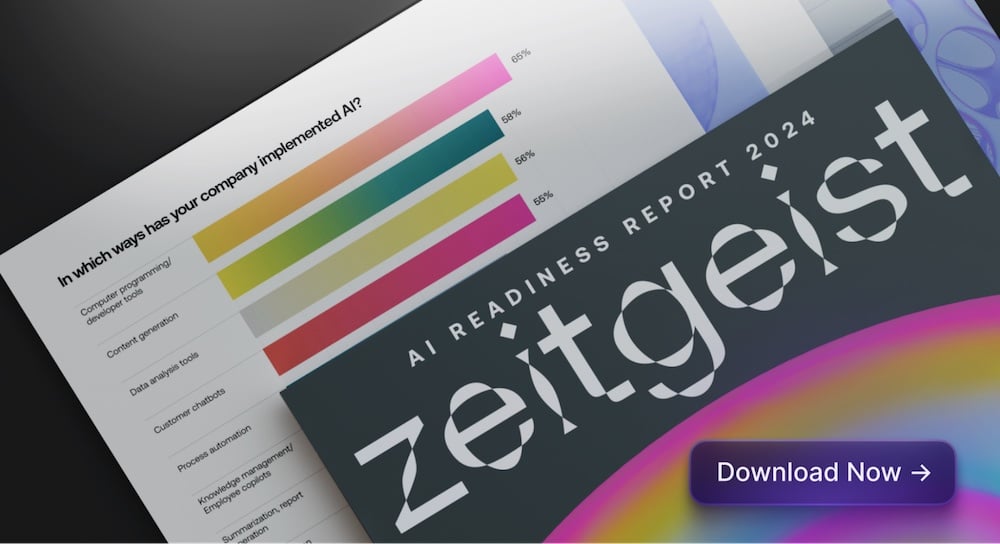
| Get Your Copy Now: The 2024 AI Readiness Report by Scale AI
|
Learn the insights from over 1,800 AI/ML executives and practitioners on the latest trends, challenges, and best practices in building, applying, and evaluating generative AI in the newly released AI Readiness Report.
Download the 47-page report today! |
|
Download the report
| partner with us → |
|
|
|
BREAKTHROUGH
| AI Safety | OpenAI’s Sets New Guidelines for AI Models |
⇧ 7023 Likes |
 |
What's New | OpenAI unveiled its Model Spec in a recent blog post to share its view on how AI models should behave.
The goal is to be transparent regarding how they shape models' behavior and allow us to distinguish between intentional engineering decisions and genuine bugs on the model's end.
This first draft defines objectives, rules and default behaviors models should follow.
Objectives: From OpenAI's perspective, models should obviously help their users, but they need to do so while considering the broad impact of their actions on humanity and society, from a legal, social and ethical standpoint.
Rules: The set of rules model should follow come as a direct consequence of the objectives outlined above. Complying with the law, respecting people's privacy and following the chain of command are a few examples.
Default behaviors: OpenAI proposes to use behaviors that could help the models prioritize and balance objectives. Some interesting behaviors include the assumption of best intentions from user, the rule against changing anyone's mind or the expression of uncertainty.
New changes on the API can also be inferred from the document, including: Customized generation based on "settings": Depending on settings like "max_token" or "interactive" mode, the models won't generate the same output.
Structured text (JSON, YAML, XML) treated differently: This is done to avoid prompt injection, but using structured formats could actually improve the quality of the generation.
Multi layer prompt architecture: To ensure the specs are respected, there might be multiple layers of prompting that we won't get access to. |
Why it Matters |
Shaping model behavior must take into account a wide range of questions, considerations, and nuances, often weighing differences of opinions. Even if a model is intended to be broadly beneficial and helpful to users, these intentions may conflict in practice.
For OpenAI, the best way to ensure models are aligned with our desired behavior is to collaborate on shaping that behavior. |
Community Feedback |
Yi Ding -- prod/acc
I think this is a good indication that GPT-5 is going to be a significant step up in reasoning capabilities. It's also an indication that OpenAI continues to take safety seriously, although the track record has been that every level of filtering and safety they've put in so far has been able to be worked around up until now. Will be interesting to see whether the new prompt hierarchy puts that problem to rest once and for all. |
|
Read more
|
|
|
|
Share 2 Days with the Brightest Minds in AI
| The AI Conference brings together OpenAI, Anthropic, Meta, DeepMind and many more. Last chance to register for Early Bird pricing!
- Engage with 60+ speakers leading the AI revolution
- Network, collaborate, and co-create with industry pioneers
- Explore topics including AGI, AI in enterprise, building with AI, and more!
AlphaSignal readers get 100$ off with discount code: alpha24
|
Register Now ↗️ |
|
|
|
TRENDING SIGNALS
| Robotics |
|
⇧ 738 Likes | |
Education |
| ⇧ 1241 Likes |
| Theory |
| ⇧ 283 Likes |
| Image Generation |
|
⇧ 658 Likes | |
Music Generation |
| ⇧ 4942 Likes |
| |
| |
|
|
PYTHON TIP
| Optimization | Using pandas efficiently with Vectorized Operations |
Vectorized operations in pandas allow you to perform computations on entire columns or rows simultaneously, rather than iterating through them one by one. This leverages pandas' internal optimizations, resulting in much faster execution times.
For example, consider a DataFrame with two columns 'A' and 'B'. Instead of using apply to multiply each row, you can directly multiply the columns: |
import pandas as pd
import numpy as np
import time

# Sample DataFrame
data = pd.DataFrame()

# Non-vectorized approach
def non_vectorized(df):
    start_time = time.time()
    df['C'] = df.apply(lambda row: row['A'] * row['B'], axis=1)
    print(f"Non-vectorized:  sec")

# Vectorized approach
def vectorized(df):
    start_time = time.time()
    df['C'] = df['A'] * df['B']
    print(f"Vectorized:  secs")

# Usage example
non_vectorized(data.copy())
vectorized(data.copy())

#Non-vectorized: 7.0205 sec
#Vectorized: 0.0045 secs
|
|
|
|
Ghita is an editor at AlphaSignal and AI Engineer at Clear Ventures. Experienced in Computer Vision and Language models, she holds 2 masters in Applied Mathematics.
| | | |
Want to promote your company, product, job, or event to 180,000+ AI researchers and engineers?
|
|
Sponsor
|
|
|
|
|