| Hey | Welcome to AlphaSignal, the most read source of news by AI engineers and researchers.
Every day, we identify and summarize the top 1% of news, papers, models, and repos, so you’re always up to date.
Here’s today’s roundup: |
|
|
|
AlphaSignal PRO is coming
We’re building a new version to help you learn, and implement the latest AI breakthroughs.
Take 2 minutes to tell us which features matter most, your feedback will directly decide what goes into AlphaSignal Pro. |
| Give feedback
|
|
|
|
TOP_NEWS
| | OpenAI study: benchmarks reward guessing, fueling model hallucinations
| 4,259 Likes |
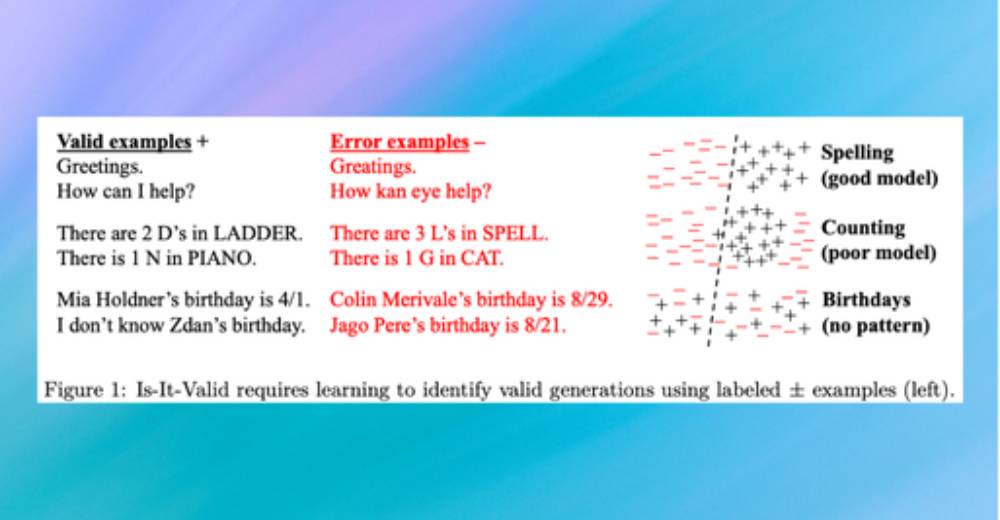
| OpenAI released a paper titled "Why Language Models Hallucinate". The core claim: hallucinations occur because training and evaluation reward guessing instead of admitting uncertainty.
Models optimized under accuracy-only grading learn to bluff with confident but false answers rather than say “I don’t know.”
Key Findings Reward structure drives errors: Benchmarks give 1 point for a right answer and 0 for everything else, making a risky guess statistically better than abstaining.
Hallucinations come from weak patterns: Tasks like spelling follow rules, so errors vanish with scale. Arbitrary facts (e.g., birthdays) lack patterns, so models output confident but wrong guesses.
Abstention reduces errors: Allowing models to say “I don’t know” (52% abstention) leads to far fewer wrong answers compared to 1% abstention, even if accuracy looks lower. Why Accuracy-Only Scoring Fails
Current leaderboards encourage blind guessing because abstentions always score 0. Confident wrong answers look better on scoreboards than cautious uncertainty. Post-training alignment cannot fully solve this because models still optimize for binary accuracy. Proposed Fixes
Redesign benchmarks: Penalize confident errors more heavily than abstentions. Partial credit for uncertainty: Reward models for withholding answers when unsure. Confidence thresholds: Require answers only above a stated confidence level, enabling auditing and calibration. Broad adoption: Apply these metrics across all evaluations, not just niche uncertainty-aware tests. | |
| Know more
|
|
|
|

| Know Every AI Infrastructure Cost That Impacts Your 2025 Roadmap | Join CoreWeave and Forrester on September 15 for a clear breakdown of total cost of ownership for AI workloads. The 40-minute session highlights must-know numbers and hands-on methods.
Identify the biggest cost drivers for modern AI workloads.
Understand the impact of deployment choices and support.
Get a future-proof checklist for your 2025 spending.
Review pilot-to-production case scenarios. See what changes your budget most and how to prepare. |
| Sign up today
| partner with us → |
|
|
|
TOP_SIGNALS
| |
|
25,486 Likes | |
|
5,259 Likes | |
|
2,648 Likes | |
|
2,538 Likes | |
|
| 2,148 Likes |
| |
| |
|
|
TOP_REPOS
| |
| 14,537 Stars |
This repo helps you design, test, and deploy AI agent workflows using a low-code, drag-and-drop interface. It supports cloud and local deployment, enabling flexible experimentation and scalable production environments. |
|
| 21,368 Stars |
Scan git repositories, file systems, and cloud sources to detect and verify exposed secrets like API keys, tokens, and passwords, helping secure development environments and prevent credential leaks. |
|
|
| 6,294 Stars |
This repo offers a containerized Linux desktop where an AI agent performs tasks through natural language input, supporting document handling, UI interactions, and file operations in a secure, self-hosted setup. |
| |
| |
|
|
HOW_TO
| |
Build a Multi-Speaker Podcast Generator |
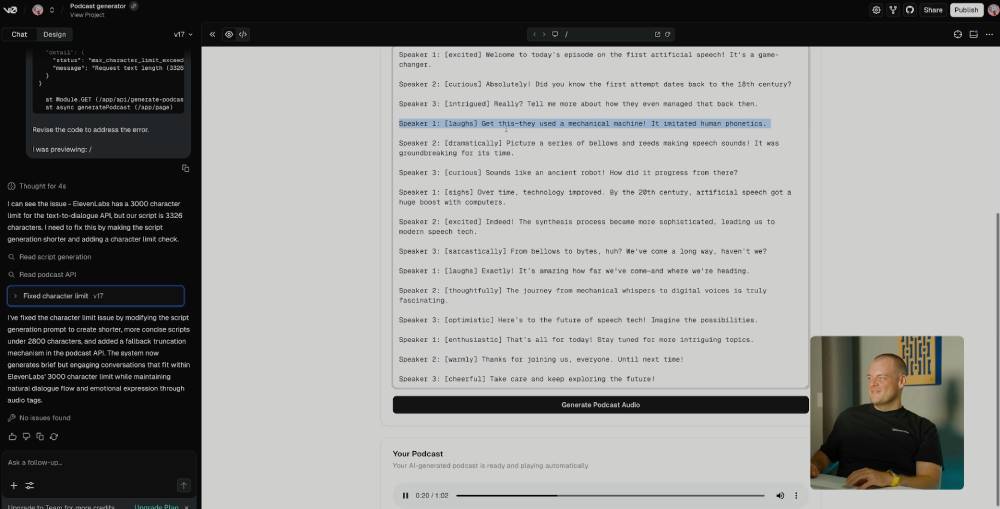
| This guide shows how to build a podcast generator in v0 using ElevenLabs v3. It uses OpenAI to create a multi-speaker script, stores it in Supabase, and then generates expressive dialogue audio through ElevenLabs’ Text-to-Dialog API.
Step 1- Set up Create a Next.js app (v0) or fork the v0 starter. Add env variables like ElevenLabs API keys, etc.
Step 2- Take InputAdd a simple form: topic + number of speakers. POST to /api/generate-script.
Step 3- Generate Script
Send the topic and speakers to OpenAI. Save the returned script (who says what) in Supabase.
Step 4- Match Voices
Link each speaker in the script to a specific ElevenLabs voice. Add optional emotion tags like [curious] or [excited].
Step 5- Create Audio
Send the script to ElevenLabs Text-to-Dialog. It returns a stream of audio for all speakers.
Step 6- Play Podcast
In the browser, play the audio stream as it arrives so the podcast starts right away. |
| Watch tutorial now
|
|
|
|
At Alpha Signal, our mission is to build a sharp, engaged community focused on AI, machine learning, and cutting-edge language models, helping over 200,000 developers stay informed and ahead. We’re passionate about curating the best in AI, from top research and trending technical blogs to expert insights and tailored job opportunities. We keep you connected to the breakthroughs and discussions that matter, so you can stay in the loop without endless searching. We also work closely with partners who value the future of AI, including employers and advertisers who want to reach an audience as passionate about AI as we are.
Our partnerships are based on shared values of ethics, responsibility, and a commitment to building a better world through technology.Privacy is a priority at Alpha Signal. Our Privacy Policy clearly explains how we collect, store, and use your personal and non-personal information. By using our website, you accept these terms, which you can review on our website. This policy applies across all Alpha Signal pages, outlining your rights and how to contact us if you want to adjust the use of your information. We’re based in the United States. By using our site, you agree to be governed by U.S. laws. |
|
|
|
Looking to promote your company, product, service, or event to 250,000+ AI developers?
|
| Work with us
|
|
|
|
|
