| Hey | Welcome to AlphaSignal, the most read source of news by AI engineers and researchers. Every day, we identity and summarize the top 1% of news, papers, models, and repos, so you’re always up to date.
Here’s today’s roundup: |
|
|
|
If you're enjoying AlphaSignal please forward this email to a colleague.
It helps us keep this content free. |
|
|
|
./TOP_NEWS
| | Google Releases LangExtract: A Python Library for Structured Data Extraction from Unstructured Text
| 15,738 Likes |
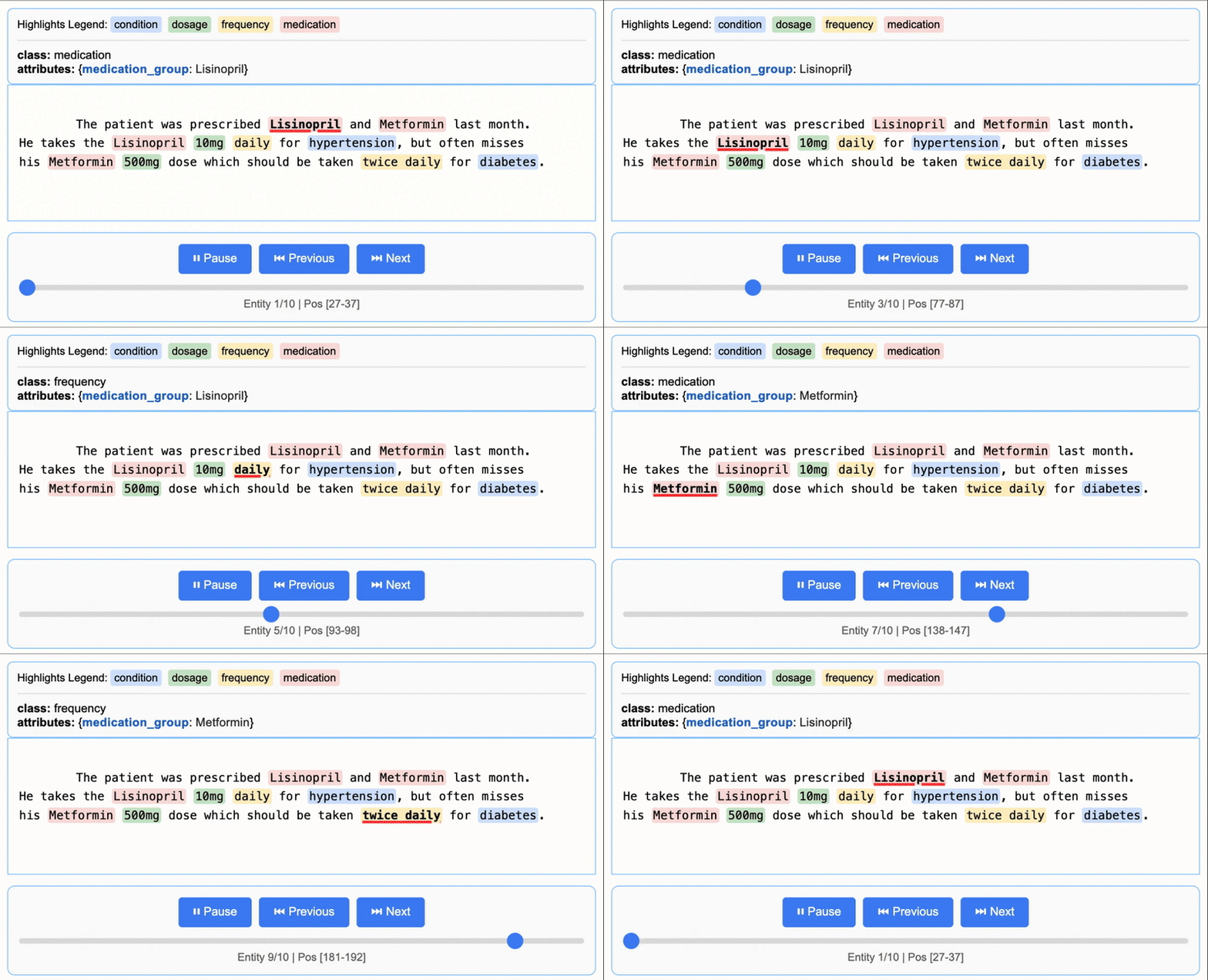
| Google releases LangExtract, an open-source Python library that solves the problem of converting large volumes of unstructured text into consistent, structured data. It works with Gemini, OpenAI, and local models via Ollama.
When and how to use it LangExtract fits structured extraction tasks without fine-tuning.
Use for literary analysis, clinical notes, financial reports, or technical documentation. Define a prompt and few-shot examples to enforce the desired schema. Select gemini-2.5-flash for general tasks, gemini-2.5-pro for complex extractions. Run locally for offline workflows or connect to cloud APIs for scale. Key features
LangExtract adds extraction control and transparency beyond generic LLM wrappers.
Precise source grounding with exact start and end character offsets in the text. Schema enforcement from few-shot examples, supporting nested attributes and complex data structures. Long-document optimization using chunking, parallel processing, and multiple passes. Interactive HTML visualization to highlight and review extracted entities in context. Model support
The library integrates with cloud and local inference options.
Works with Gemini models, OpenAI APIs, and Ollama local models. Allows custom provider plugins without modifying core code. Free to run locally except for compute costs. API use priced per provider’s rates. Performance on large inputs
LangExtract targets high recall in multi-pass extractions.
Processes documents up to full books (e.g., Romeo and Juliet, 147,843 characters). Uses max_workers to control concurrency and max_char_buffer for chunk size. Extracts hundreds of entities with consistent schema adherence. Performance varies by model choice, prompt clarity, and example quality. | |
| Github repo
|
|
|
|
| Launch Secure, Pre-Configured NVIDIA GPU Clusters with Lambda 1-Click Clusters™ | Lambda lets you put AI workloads in production in minutes. The independent ESG report shows how 1-Click Clusters™ deliver better time-to-value and built-in security.
Provision clusters faster than standard cloud, backed by real data
Avoid hidden networking fees, transparent billing from day one
Use Lambda Stack: all deep learning software pre-installed
Control hardware, networking, and storage with a single interface
Hardware-level isolation protects workloads without manual steps
Download ESG’s report to see the full technical analysis. |
| View the validation
| partner with us |
|
|
|
./TOP_SIGNALS
| |
|
40,762 Likes | |
|
13,583 Likes | |
|
15,485 Likes | |
|
8,385 Likes | |
|
| 6,837 Likes |
|
|
583 Likes | | |
|
|
|
|
Cut time diagnosing AI agent failures by up to 50% with Fiddler AI
| Join Fiddler AI and Fitch Ratings for a live webinar sharing real-world enterprise agent use cases, observability workflows, and logic-chain tracing strategies.
Register by August 24th to get the full event recording. |
Reserve your spot now ↗️ |
|
|
|
./TOP_READS
| |
| 1,048 Likes |
This guide explains techniques to improve response quality, handle complex tasks, and refine agentic workflows. It covers structured prompting, step-by-step reasoning, and output control methods to help you get more accurate and reliable results. |
|
|
| 1,465 Likes |
Sebastian Raschka traces architectural changes from GPT‑2 to OpenAI’s new open‑weight GPT‑oss models. He covers changes in embeddings, normalization, activation, attention, MoE design, quantization, reasoning controls, and deployment efficiency. |
|
|
| 1,394 Likes |
In this blog, Simon Willison writes about testing Qwen3-4B-Thinking on an M2 MacBook Pro, finding it fast and efficient for local use. The model gives witty refusals to absurd prompts, differs from the Instruct variant, and supports a 262k-token context for local summarization. |
| |
| |
|
|
./TOP_LECTURE
| |
DeepLearning.AI’s course on Claude Code for agentic AI development |
6,734 Likes |
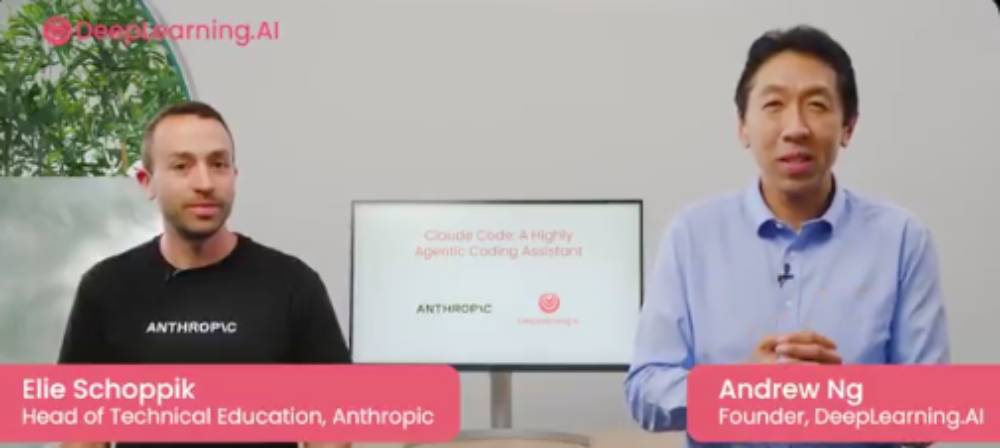
| The "Claude Code: A Highly Agentic Coding Assistant" short course teaches agentic AI coding via Claude Code. Elie Schoppik, Anthropic’s Head of Technical Education shows how Claude Code explores, tests, refactors, and debugs codebases.
Topics you will learn: Use Claude Code to explore, develop, test, refactor, debug codebases
Extend Claude Code with MCP servers such as Playwright and Figma MCP
Apply best practices to a RAG chatbot codebase (frontend and backend integration, planning, thinking mode, tests, refactoring, multi-session Git worktrees, GitHub integration, hooks)
Refactor an e-commerce Jupyter notebook, turn it into a dashboard
Build a web app from a Figma mockup using Figma MCP and Playwright integrations |
| Start now
|
|
|
|
At Alpha Signal, our mission is to build a sharp, engaged community focused on AI, machine learning, and cutting-edge language models, helping over 200,000 developers stay informed and ahead. We’re passionate about curating the best in AI, from top research and trending technical blogs to expert insights and tailored job opportunities. We keep you connected to the breakthroughs and discussions that matter, so you can stay in the loop without endless searching. We also work closely with partners who value the future of AI, including employers and advertisers who want to reach an audience as passionate about AI as we are.
Our partnerships are based on shared values of ethics, responsibility, and a commitment to building a better world through technology.Privacy is a priority at Alpha Signal. Our Privacy Policy clearly explains how we collect, store, and use your personal and non-personal information. By using our website, you accept these terms, which you can review on our website. This policy applies across all Alpha Signal pages, outlining your rights and how to contact us if you want to adjust the use of your information. We’re based in the United States. By using our site, you agree to be governed by U.S. laws. |
|
|
|
Looking to promote your company, product, service, or event to 200,000+ AI developers? Let's work together.
|
| Work with us
|
|
|
|
|
