
Pro
GeoCoupling Fixes the Hidden Flaw Sabotaging AI Drug and Protein Design
GeoCoupling treats the timing of how sequence and structure are generated together as a learnable variable, beating fixed-schedule baselines in drug and protein design.
20 stories
GeoCoupling treats the timing of how sequence and structure are generated together as a learnable variable, beating fixed-schedule baselines in drug and protein design.
MobEvolve uses an LLM agent to iteratively rewrite its own heuristic rules, beating deep generative models at synthetic trip-chain generation while staying fast and interpretable
FedMTFI combines multi-teacher knowledge distillation with SHAP feature importance to tackle the hardest problem in federated learning: heterogeneous devices with skewed data
A new framework called JNO jointly handles the two competing pressures of knowledge editing in LLMs, improving propagation and preservation metrics by at least 7%
EvoPool uses Darwinian evolution to breed Python annotation functions that label 100K examples 31,000x faster than GPT-4o while beating LLM annotation on 7 of 8 specialized tasks
A Goodyear engineer built a 13-step agentic RAG system over 2,100 technical papers, with self-correcting citation checks and a Neo4j knowledge graph — showing how domain experts can build research-grade AI tools for niche fields.
Researchers introduce ReSkill, an open-source RL framework that keeps skill libraries in sync with a learning policy, beating baselines by up to 12.7% on unseen tasks.
A new bandit algorithm skips full Bayesian modeling, placing a prior only on which arm is best — and still hits theoretical optimality bounds while adapting to structure automatically.
GJDNet tackles adversarial attacks on graph neural networks by disentangling node representations and reshaping decision boundaries to work across both homophilic and heterophilic graphs
A new study finds LLMs are far easier to mislead with wrong peer answers than to correct with right ones — and chain-of-thought prompting doesn't fix it.

S-SPPO fixes a hidden instability in self-play LLM alignment by calibrating training signals when the model generates near-identical responses, reaching 52.19% win rate on AlpacaEval 2.0
TRON introduces 520 procedurally generated visual RL environments that produce infinite fresh training data with exact rewards, boosting three VLMs across ten benchmarks.
RoleCDE exposes a systematic flaw in LLM role-playing agents: they default to their alignment training instead of staying in character when values conflict.
Researchers propose guardian LLM agents that cut skill injection attack success rates by more than half, even under adversarial rephrasing attacks that push baseline ASR to 81.4%
JAMEL trains GUI agents to explore and remember simultaneously, using JavaScript code coverage as a free training signal — no human labels needed.
ProbMoE replaces top-k's broken gradients with probabilistic subset sampling, delivering better expert diversity and adaptive compute per token
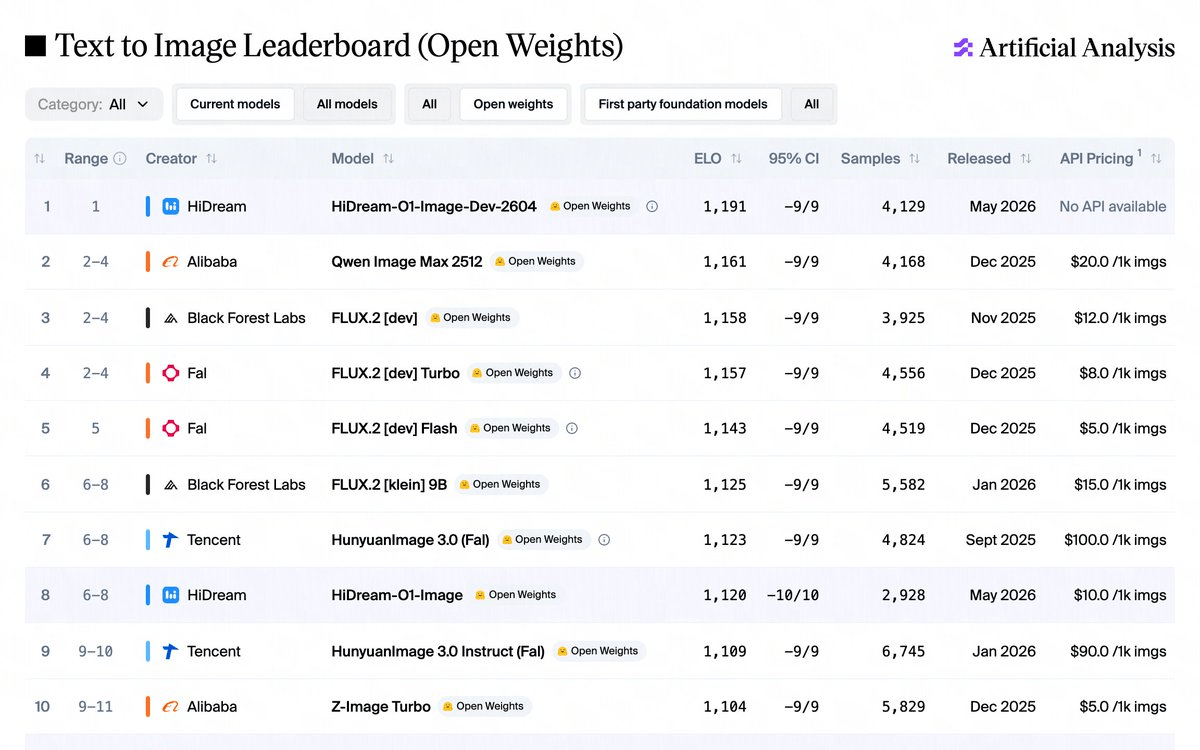
HiDream-O1-Image is an 8B open-weights model that ditches the VAE entirely, beating models 7x its size on key benchmarks while running three tasks from one checkpoint under MIT license.

GitHub Copilot's shift from flat-rate to token-based billing is live, and heavy users of agentic coding in Zed and other editors are already reporting 10x to 50x cost spikes.

Nous Research's self-improving AI agent ships a native desktop app, hitting 114K GitHub stars and #1 on OpenRouter in under four months

A framework-free, local-first tutorial repo teaching AI agent fundamentals from scratch — 4,300 stars and growing