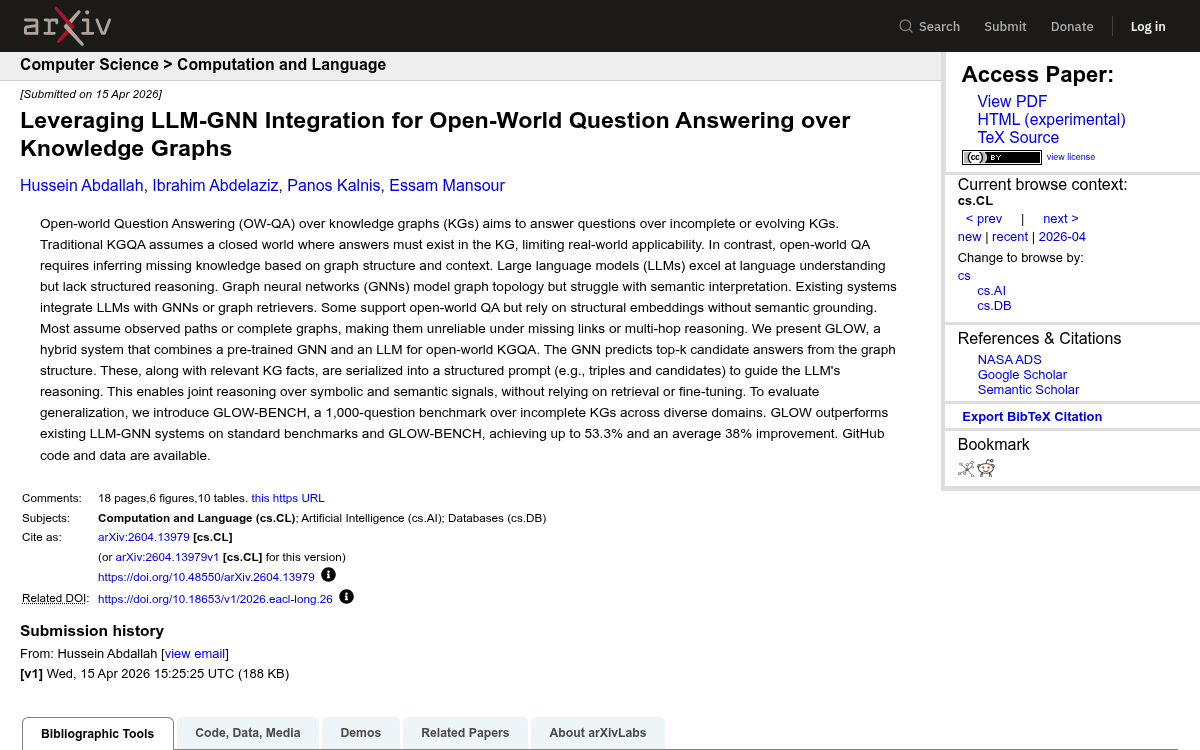
Concordia's GLOW Beats Knowledge Graph AI by 38% Without LLM Fine-Tuning
GLOW pairs a lightweight graph neural network with an off-the-shelf LLM to answer questions when the knowledge graph is missing facts, beating prior hybrids by up to 53 points.
20 stories

GLOW pairs a lightweight graph neural network with an off-the-shelf LLM to answer questions when the knowledge graph is missing facts, beating prior hybrids by up to 53 points.

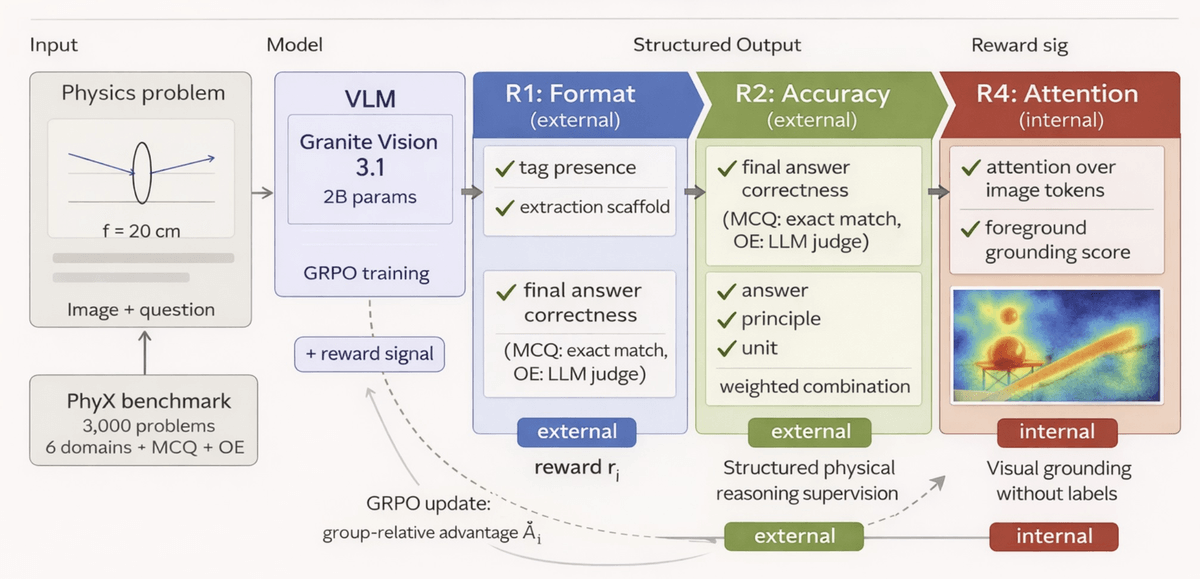
A systematic reward ablation on physics problems shows attention-based supervision doubles spatial reasoning accuracy but breaks symbolic math domains.

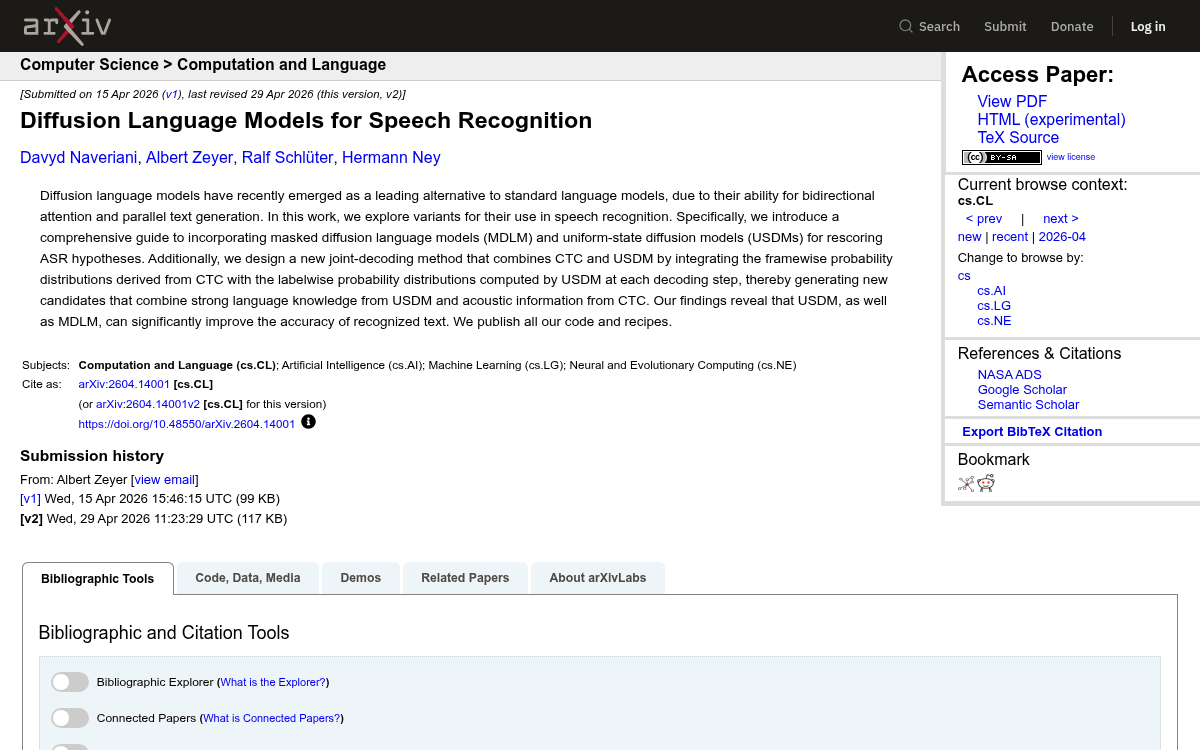
RWTH Aachen researchers show masked and uniform-state diffusion models can rescore ASR hypotheses and even join CTC decoding, cutting word error rates.

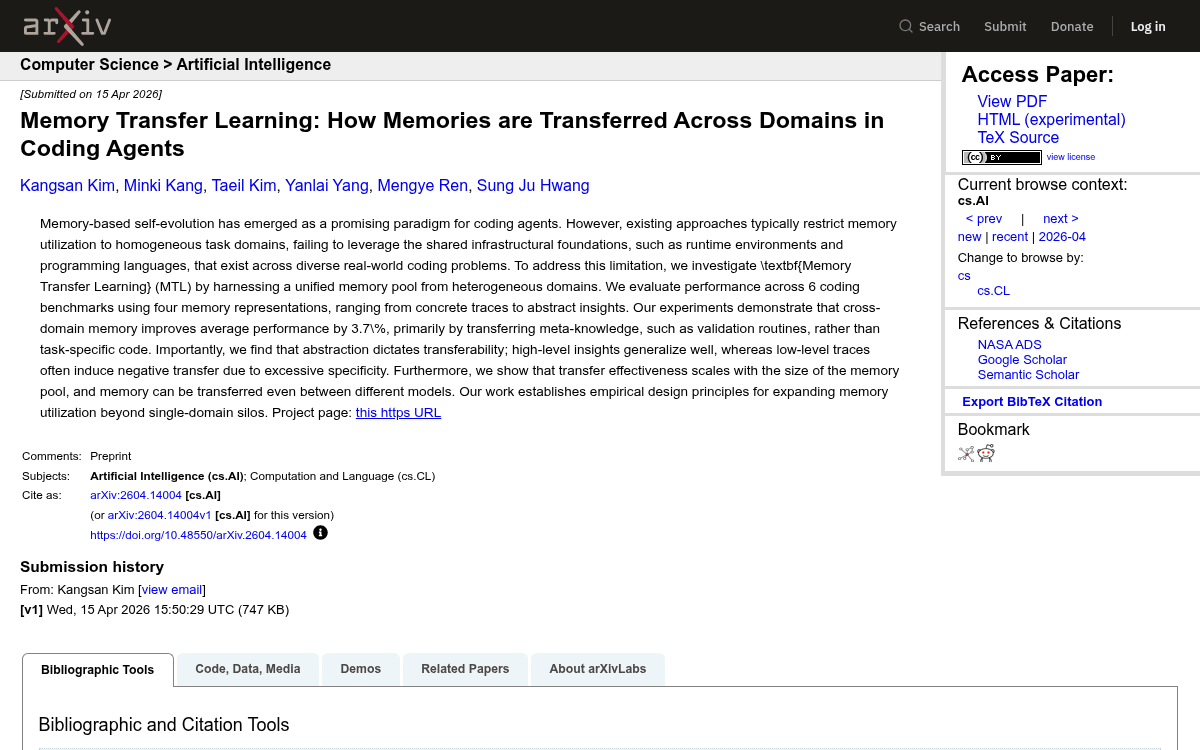
A new study shows sharing agent memories across unrelated coding benchmarks lifts average performance 3.7%, but only when memories stay abstract.

A radar processing method that works in the frequency domain promises robust odometry and simultaneous multi-object tracking for high-speed autonomous driving.

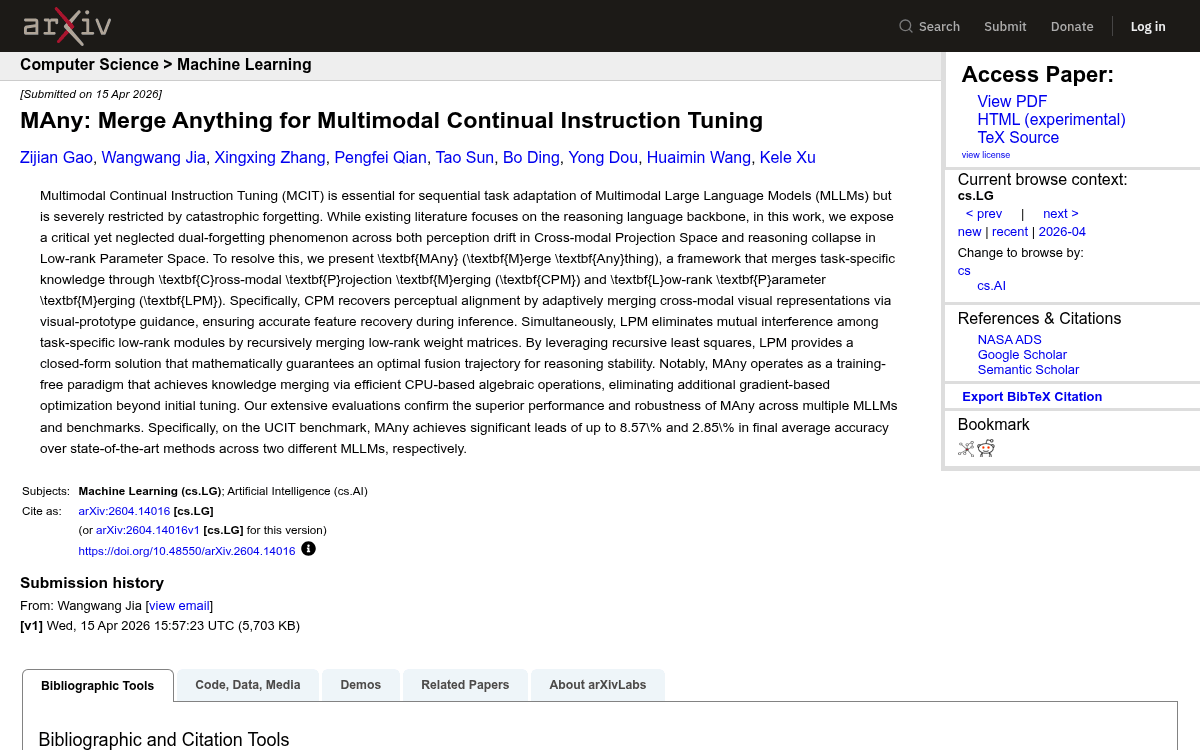
A new training-free framework fixes a blind spot in multimodal continual learning by merging both vision projectors and LoRA weights.

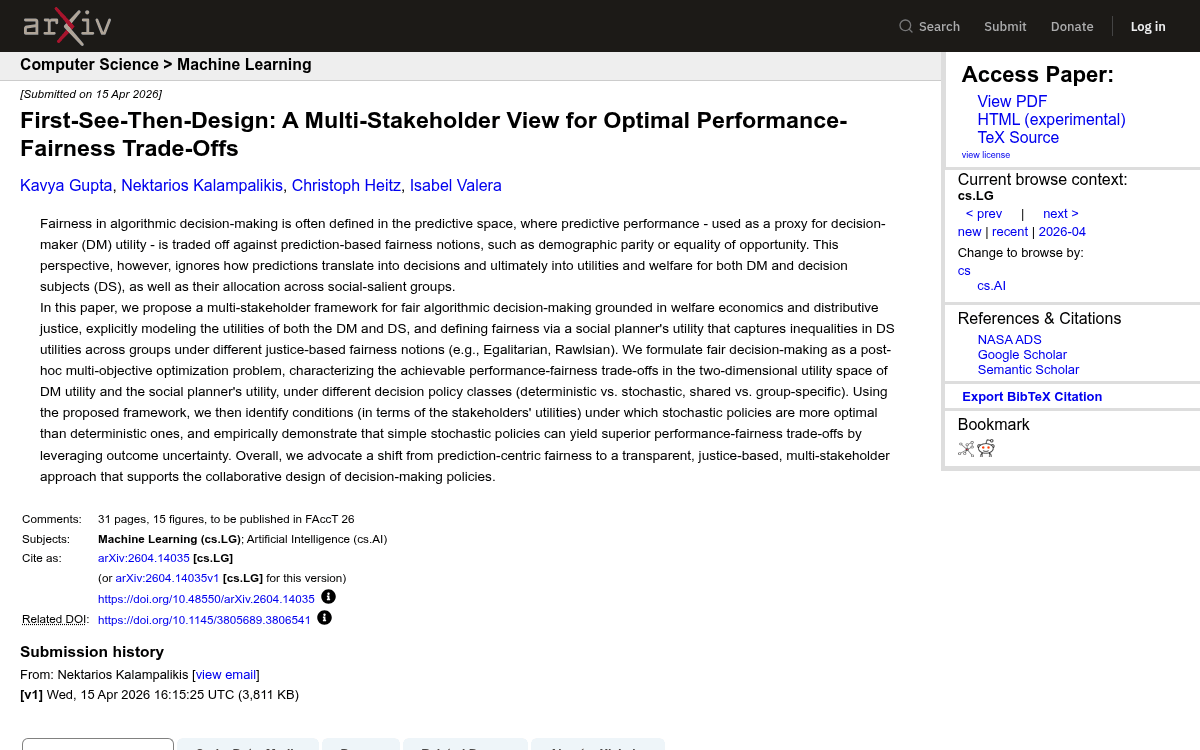
A new fairness framework rejects prediction-based parity metrics in favor of stakeholder utilities, showing stochastic policies expand Pareto trade-offs.

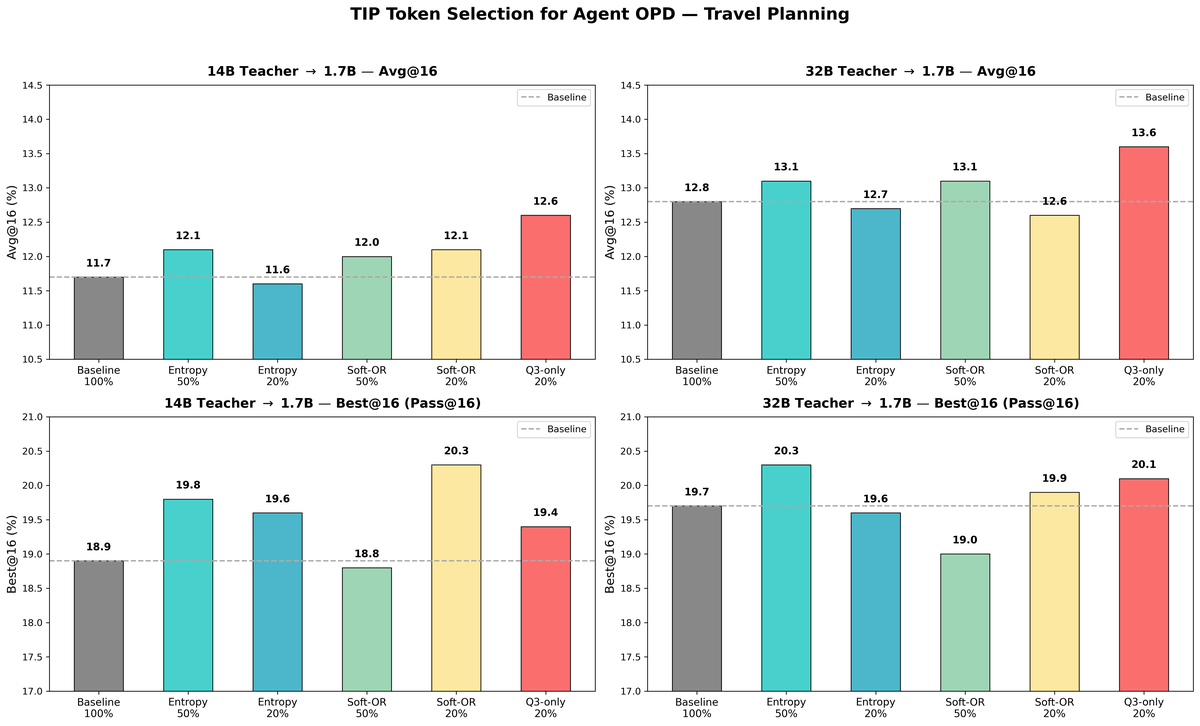
A new taxonomy shows fewer than 10% of tokens carry most of the corrective signal in on-policy distillation, cutting memory up to 47%.

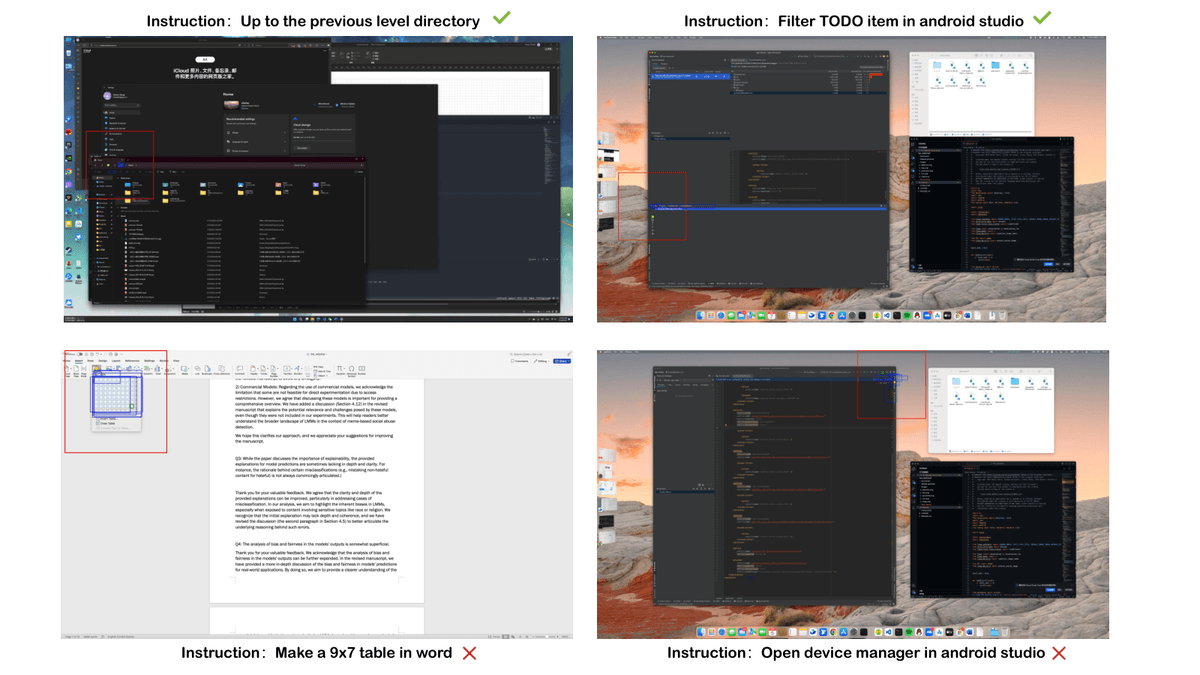
A training-free framework that only zooms into UI screenshots when the model is uncertain, boosting grounding accuracy by up to 13.4 percent.

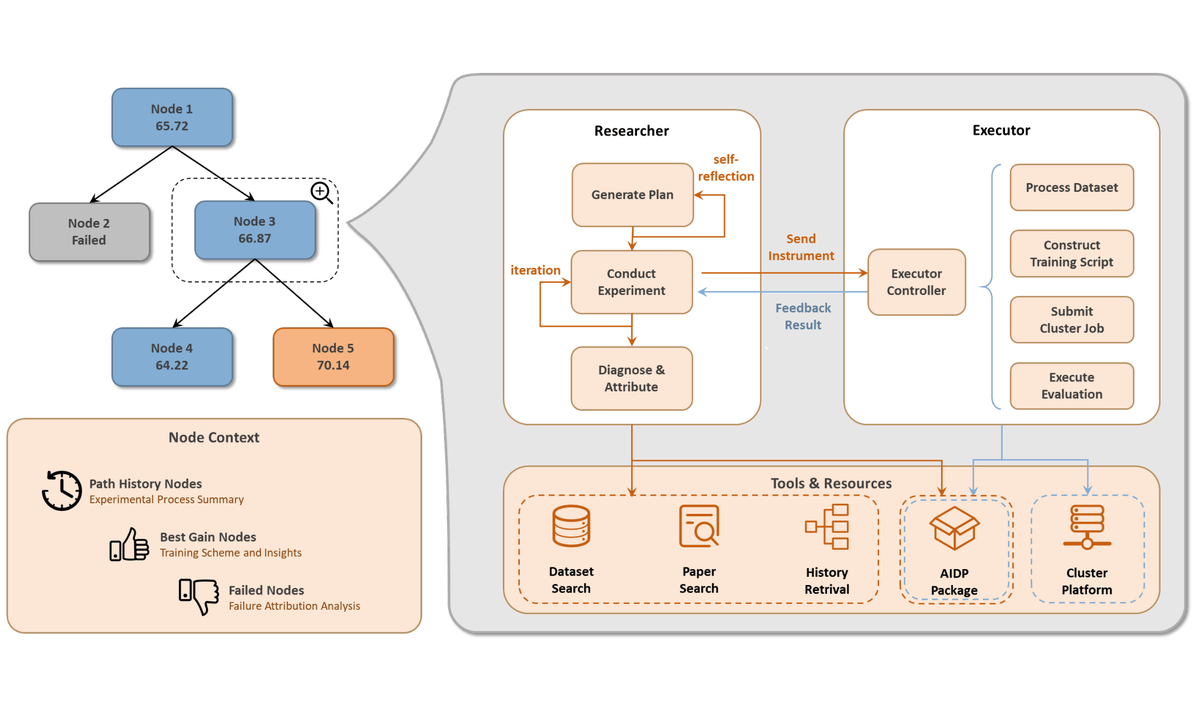
A multi-agent system from Shanghai AI Lab uses tree search to automate LLM fine-tuning, beating expert-designed recipes on multiple tasks.

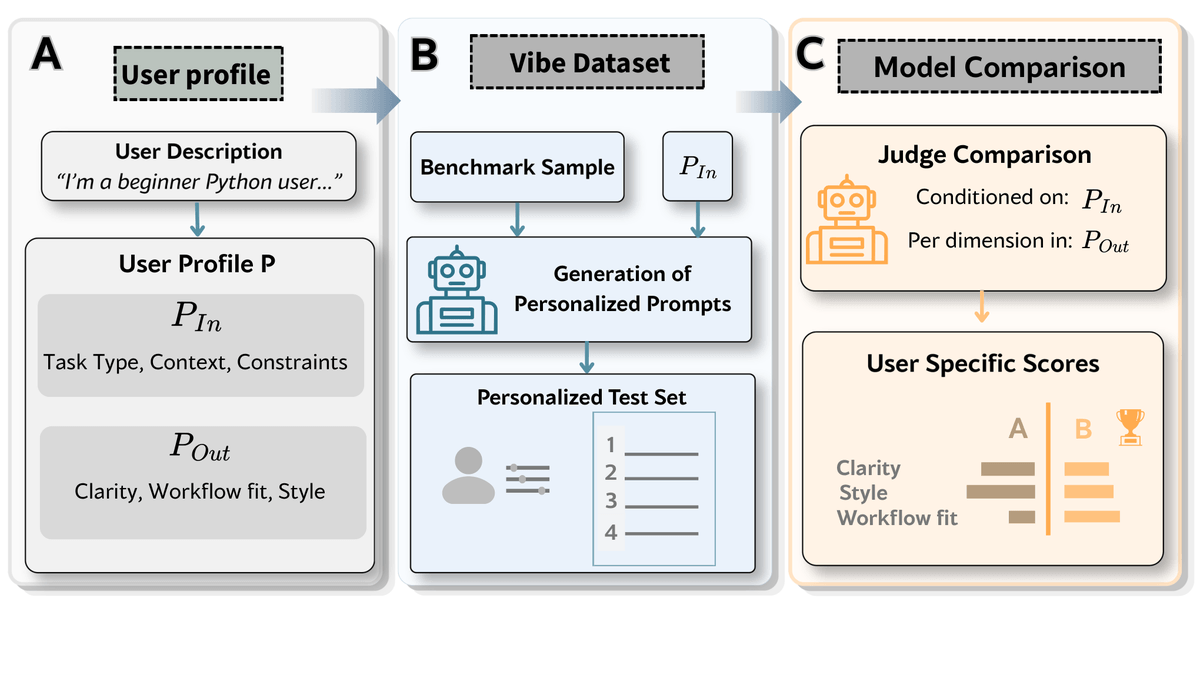
Researchers turn the informal practice of vibe-testing into a structured evaluation pipeline, and show that personalized prompts can flip which model wins.

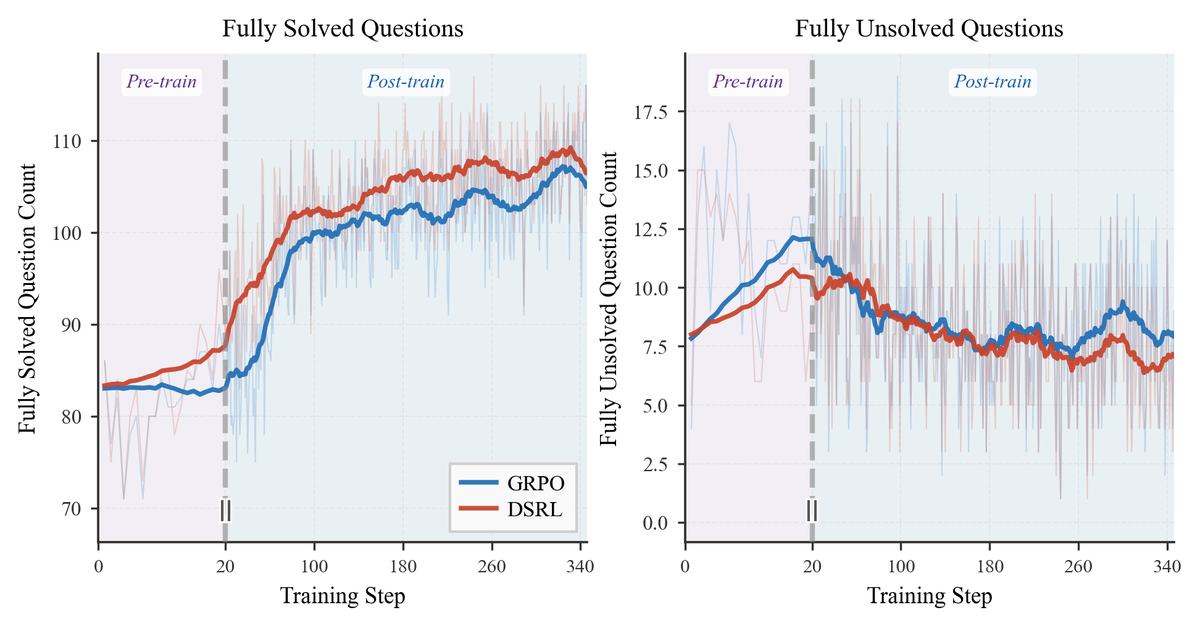
Researchers propose reinforcement learning on the marginal distribution P(y) instead of P(y|x), then combine both stages to expand reasoning exploration beyond GRPO limits.

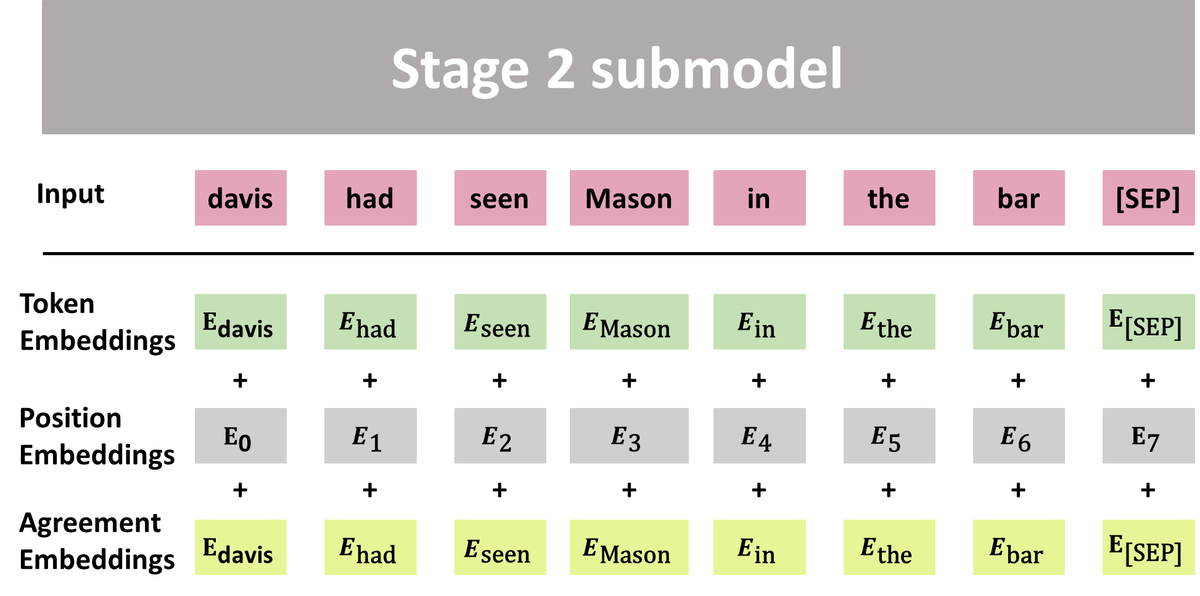
A dual-stage framework injects syntactic dependency information directly into single-GPU BERT pretraining, adding 0.83 GLUE points at no extra compute cost.

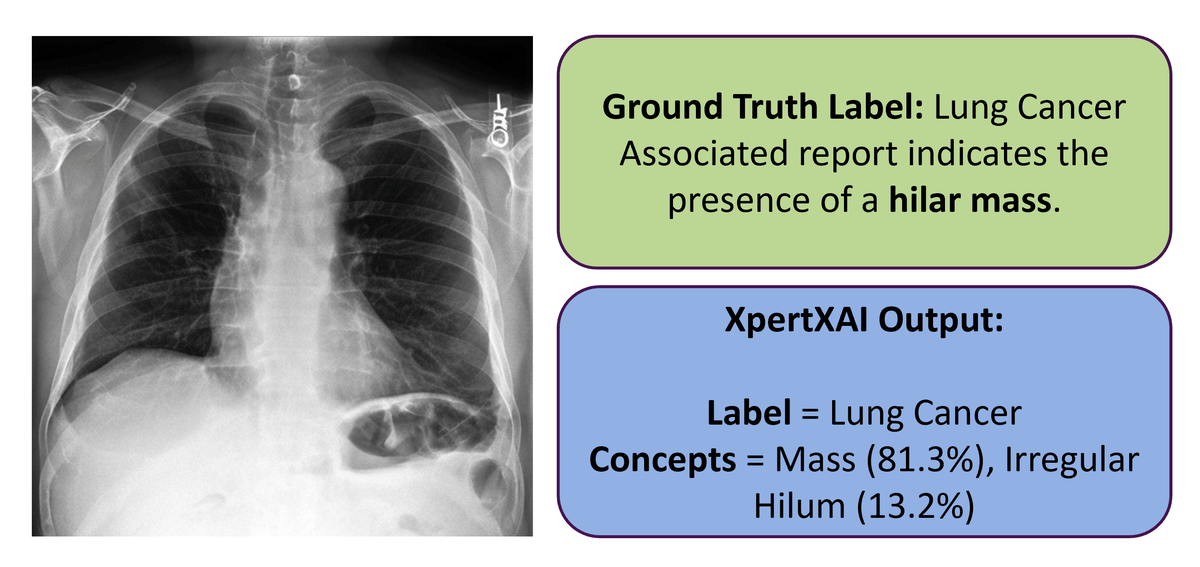
A concept bottleneck model built with radiologist input beats LIME, SHAP, Grad-CAM, and CXR-LLaVA on both accuracy and clinical relevance.

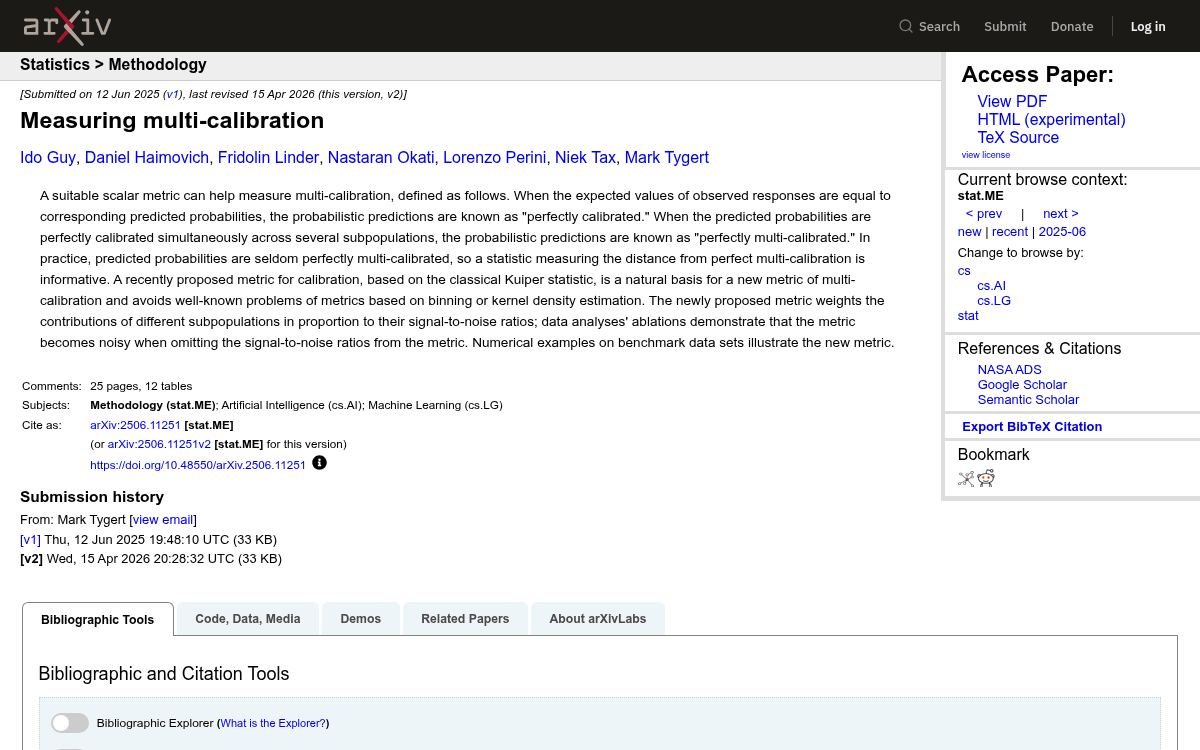
Researchers at Meta propose a Kuiper-statistic metric weighted by signal-to-noise ratios, arguing that unweighted multi-calibration scores are mostly noise.

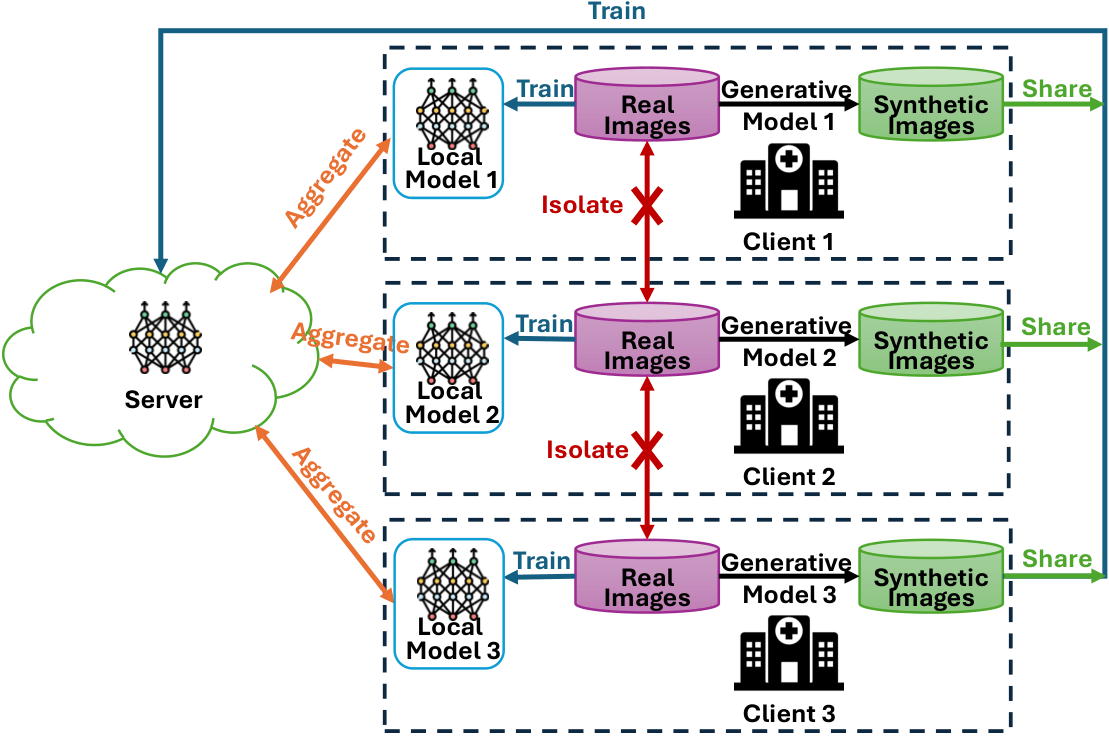
A new study shows synthetic ultrasound images from diffusion models can lift federated breast cancer classifiers past centralized training baselines.

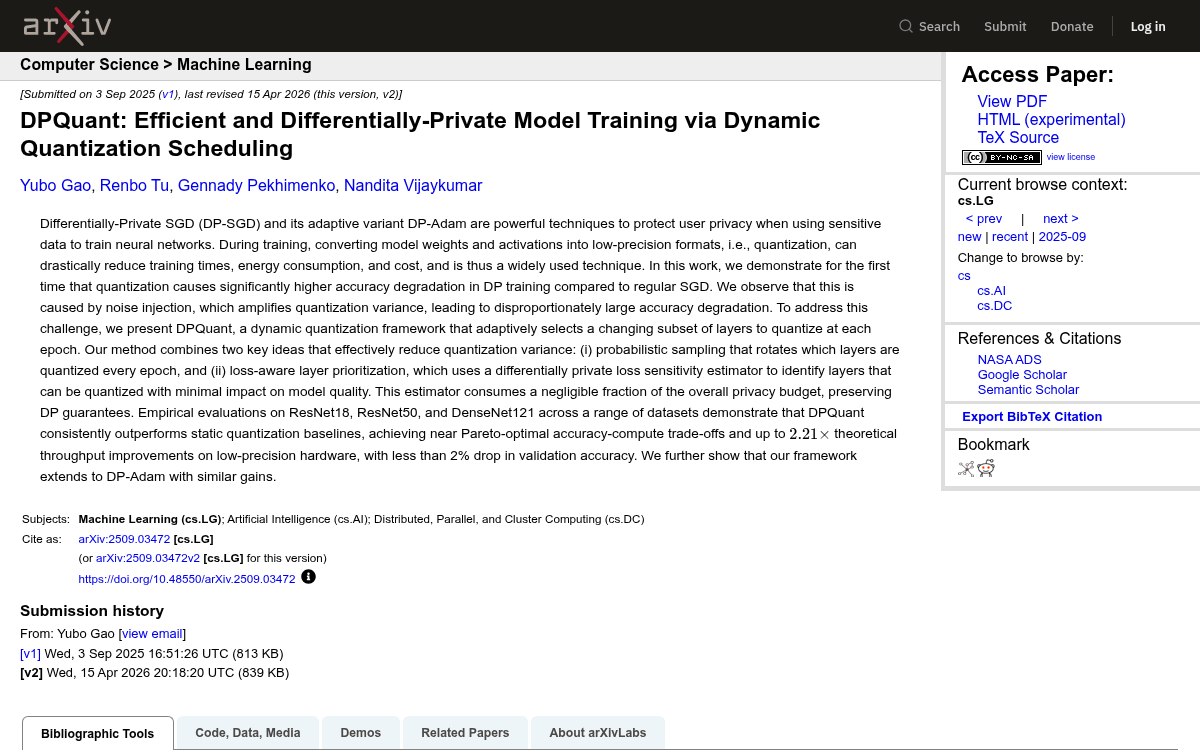
Researchers show 4-bit quantization silently wrecks differentially private training, and offer a dynamic layer-rotation fix that keeps accuracy within 2 percent.

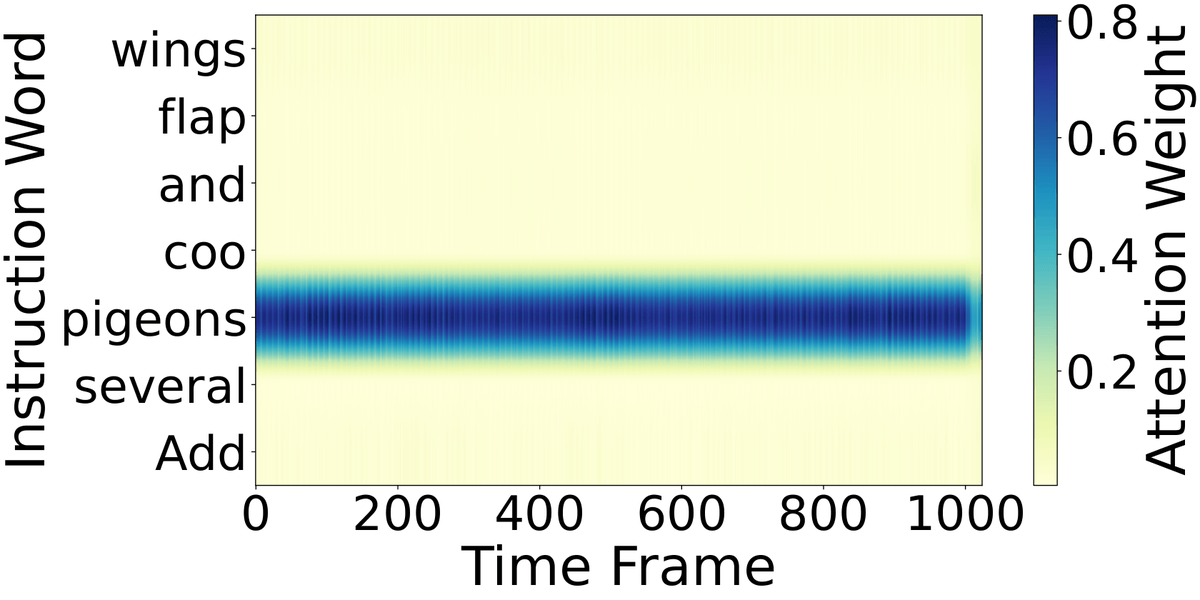
A new diffusion framework edits sounds inside an audio clip from a short natural-language instruction, without full captions or masks.

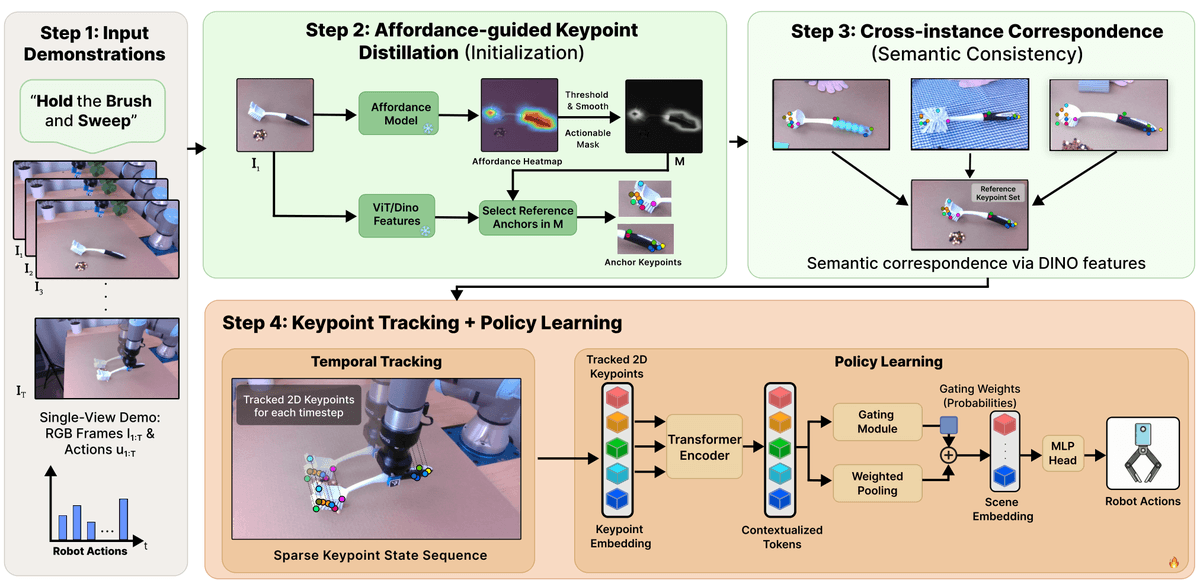
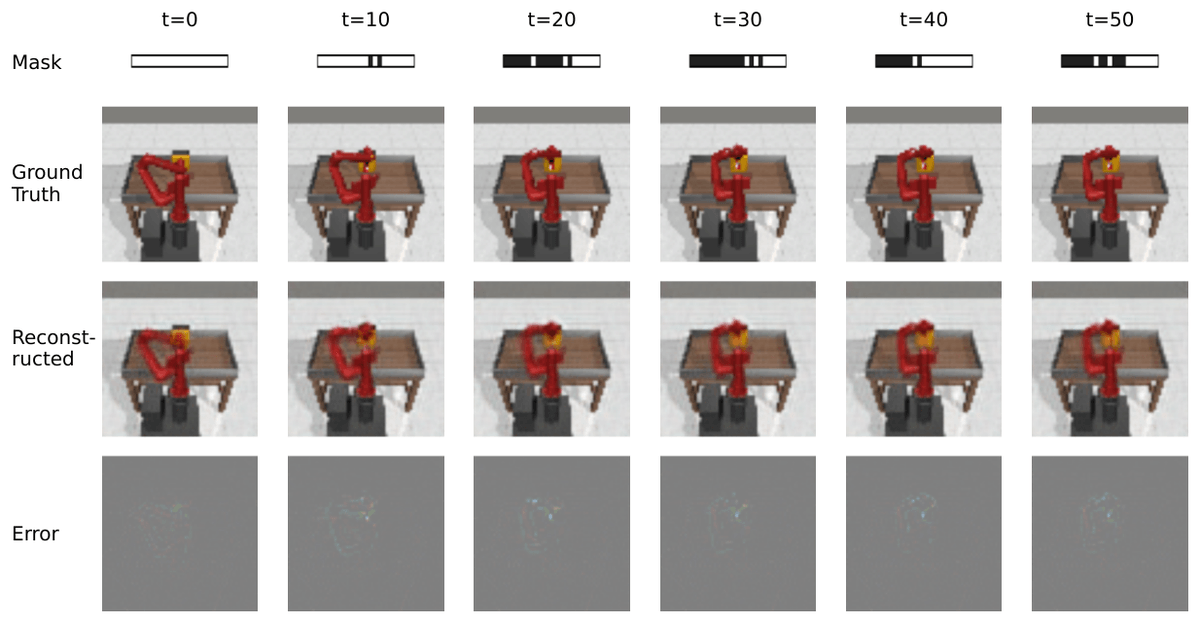
A University of Maryland team turns robot manipulation into a 38-number game, hitting 82% success on unseen objects with just 15 minutes of training.

A new delay-aware framework built on top of Dreamer-v3 teaches reinforcement learning agents to reason correctly when sensor observations arrive late and out of order.