



In a single week, Anthropic, OpenAI, and Google shipped three separate science-related announcements.
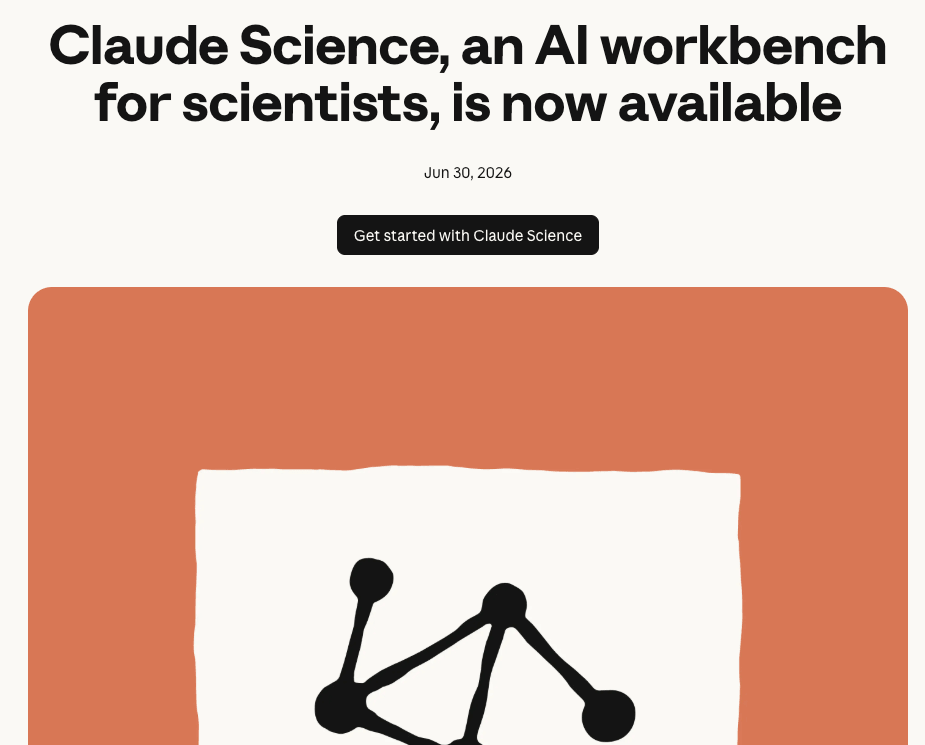
Anthropic released Claude Science, an AI workbench for researchers.
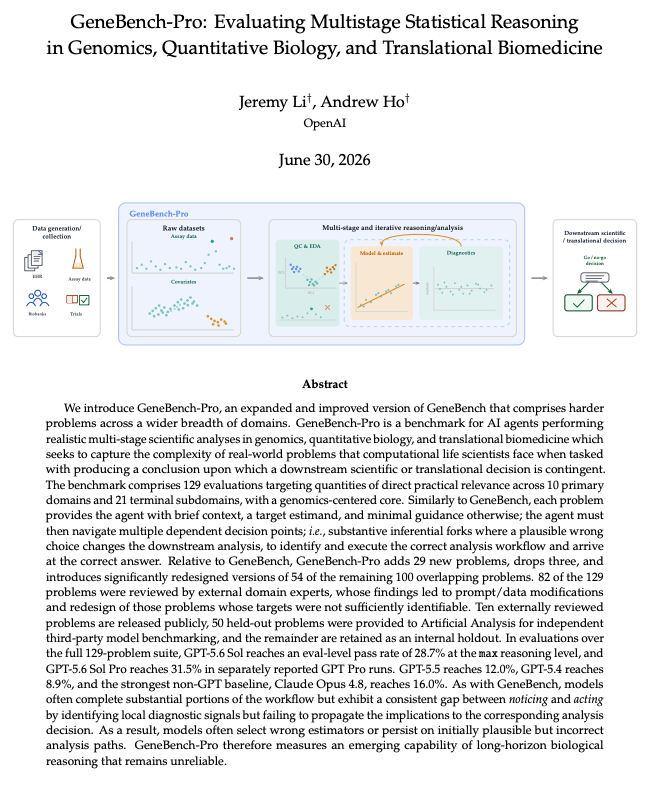
OpenAI released GeneBench-Pro, a benchmark for measuring scientific judgment in AI models.
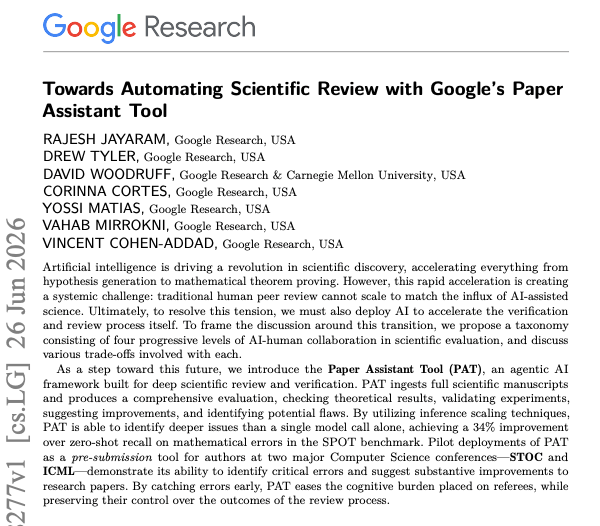
Google Research published PAT, an agentic system for reviewing scientific manuscripts before submission.
None of these labs coordinated. None of these products depend on each other. But the convergence points to something real: generating scientific work is no longer the hard part.
The harder problems are making AI-generated science measurable, reproducible, and verifiable.
The pressure building underneath
AI has demonstrably accelerated scientific research production. Models can analyze genomic datasets, generate protein structure predictions, and draft manuscripts. Researchers are using these tools on real problems right now.
But production acceleration creates downstream pressure. When AI can run a full analysis pipeline and produce publication-ready outputs, the questions that follow are harder than the generation itself.
Can the analysis be reproduced? Are the intermediate steps correct? Does the model make sound scientific judgments when data is ambiguous? Who catches errors before they enter the literature?
PAT's paper makes the scale of this pressure concrete: submissions to flagship AI conferences grew from 17,051 in 2020 to an estimated 73,883 in 2026.
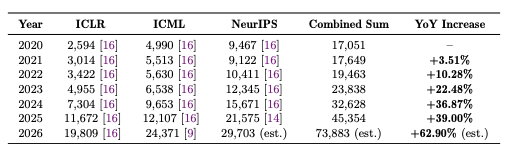
Human peer review, which in theoretical computer science requires line-by-line verification of dense proofs over multiple days per paper, cannot scale to match this volume.
Each of the three launches addresses a different piece of this downstream pressure.
Claude Science
Claude Science integrates the fragmented tools of scientific research into a single environment.
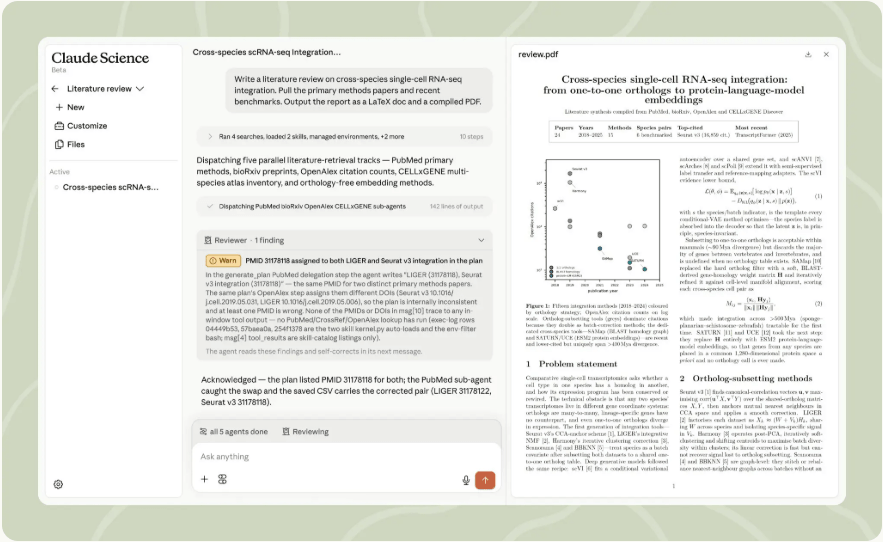
Specialist agents query across sources including UniProt, PDB, Ensembl, and ChEMBL. The system manages compute, scales analyses across HPC clusters, and connects to life sciences models through NVIDIA's BioNeMo toolkit.


Don't miss what's next in AI
Join 300,000+ engineers and researchers who get the signal, not the noise.
- Full access to in-depth AI research breakdowns
- Be the first to know what's trending before it hits mainstream
- Daily curated papers, repos, and industry moves