



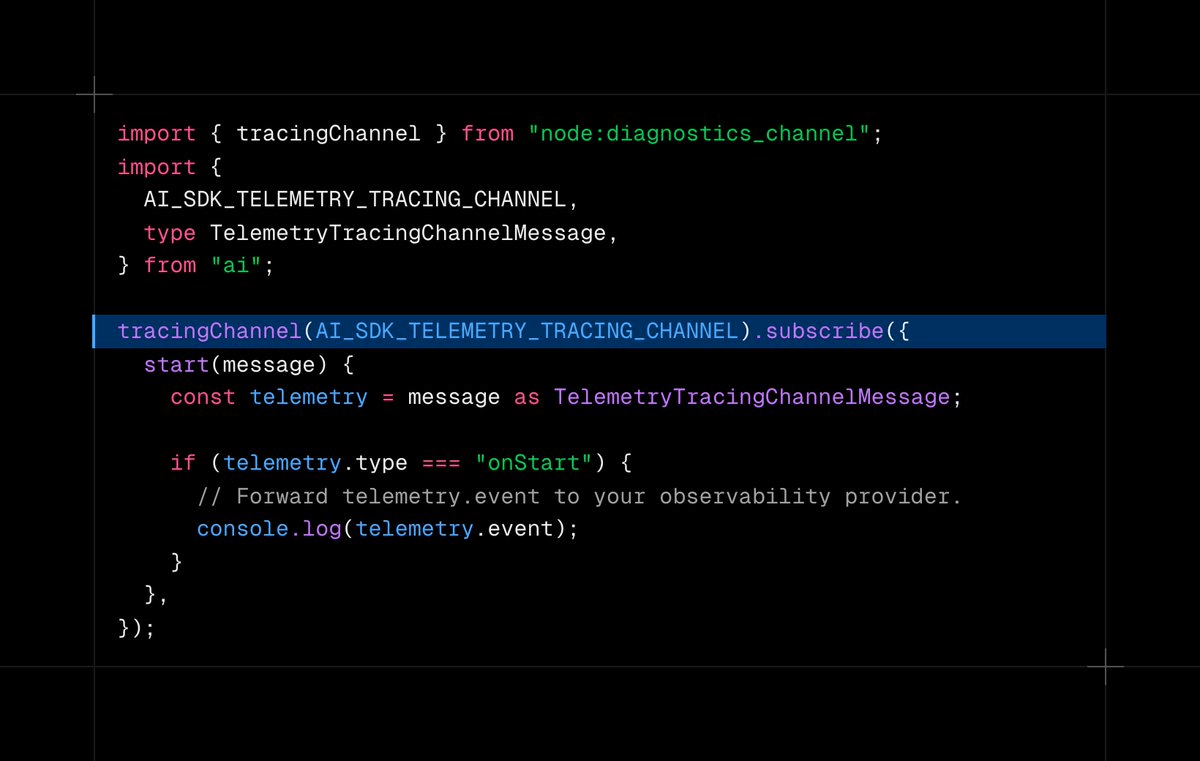
Observability for LLM apps has always been a bit of a mess. You either wired up callbacks on every single call, or you leaned on a vendor's custom wrapper that locked you into their SDK. AI SDK 7 (currently in pre-release) changes the model with a first-class telemetry integration system built on top of OpenTelemetry, the open-source observability standard already used across the broader software industry.
The problem with the old approach
In AI SDK 6, getting traces into a tool like Langfuse, Braintrust, or SigNoz meant either manually attaching experimental_telemetry to every generateText and streamText call, or using a model wrapper that intercepted calls at the provider level. Telemetry integrations now let you hook into the generation lifecycle to build custom observability, and instead of wiring up individual callbacks on every call, you implement a TelemetryIntegration once. Register it globally and every call in your app is automatically covered.
How the new system works
The AI SDK uses OpenTelemetry to collect telemetry data. OpenTelemetry is an open-source observability framework designed to provide standardized instrumentation for collecting telemetry data. In v7, this is exposed through a structured integration interface with well-defined lifecycle hooks.
Setup is two steps. First, install and register the OTel integration once at startup:
import { registerTelemetryIntegration } from 'ai';
import { OpenTelemetryIntegration } from '@ai-sdk/otel';
registerTelemetryIntegration(new OpenTelemetryIntegration());

Don't miss what's next in AI
Join 300,000+ engineers and researchers who get the signal, not the noise.
- Full access to in-depth AI research breakdowns
- Be the first to know what's trending before it hits mainstream
- Daily curated papers, repos, and industry moves